
Scientists Discover New Cat Species in Bolivia With a Leopard-Like Appearance
科学家在玻利维亚发现新猫科物种,外形酷似豹子
Kēxuéjiā zài Bōlìwéiyà fāxiàn xīn māokē wùzhǒng, wàixíng kùsì bàozi
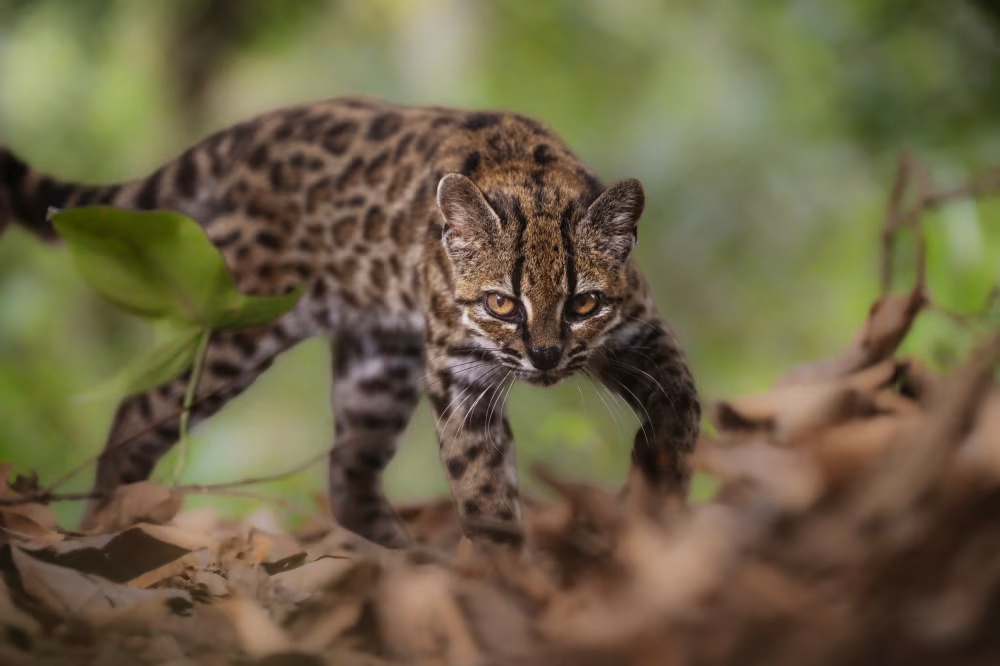
Scientists have discovered a new species of wild cat in Bolivia. It is smaller than a house cat and has leopard-like spots. A local man found it as a kitten and brought it to a wildlife sanctuary. Researchers confirmed it is a new species through genetic testing. Local people call it "tilcayo." Scientists still need to learn what it eats and how it reproduces.
翻译 Translation
科学家在玻利维亚发现了一种新的野生猫科动物。这种猫比家猫还要小,身上有像豹子一样的斑点,耳朵又短又圆,还有长长的胡须。它的名字叫Leopardus tilcayo。研究报告发表在《当代生物学》期刊上。这是100多年来第一次发现新的猫科物种。上一次发现新的猫科动物是在1923年。
Scientists have discovered a new species of wild cat in Bolivia. This cat is smaller than a house cat, has leopard-like spots on its body, short round ears, and long whiskers. Its name is Leopardus tilcayo. The research report was published in the journal Current Biology. This is the first time in more than 100 years that a new cat species has been discovered. The last time a new cat species was discovered was in 1923.
这个发现要从2016年说起。当时,生物学家宝拉·诺加莱斯-阿斯卡伦斯接到一个电话。电话是安第斯山脉附近的“森达维尔德”野生动物收容所打来的。原来,一位当地人一年前在森林里发现了一只小猫,以为它是家猫,就把它带回了家。他给小猫喂面条、米饭和鸡蛋。一年以后,他才发现这是一只野生动物,自己无法照顾它,于是把它送到了收容所。
This discovery begins in 2016. At that time, biologist Paola Nogales-Ascarrunz received a phone call. The call came from the Senda Verde wildlife sanctuary near the Andes mountains. It turned out that a local man had found a kitten in the forest a year earlier, thought it was a domestic cat, and took it home. He fed the kitten noodles, rice, and eggs. A year later, he realised it was a wild animal and that he could not take care of it, so he sent it to the sanctuary.
猫科
felid; cat family
noun
狮子、老虎和猫都属于猫科动物。
Lions, tigers, and cats all belong to the felid family.
物种
species
noun
保护濒危物种非常重要。
Protecting endangered species is very important.
斑点
spot; speckle
noun
这只豹子身上有很多黑色的斑点。
This leopard has many black spots on its body.
胡须
whiskers; beard
noun
猫的胡须可以帮助它感觉周围的东西。
A cat's whiskers can help it sense things around it.
期刊
journal; periodical
noun
这篇论文发表在一本科学期刊上。
This paper was published in a scientific journal.
生物学家
biologist
noun
生物学家正在研究这种植物的生长过程。
The biologist is studying the growth process of this plant.
收容所
shelter; sanctuary
noun
这家动物收容所救助了很多流浪猫狗。
This animal shelter has rescued many stray cats and dogs.
照顾
to take care of; to look after
verb
妈妈在家照顾弟弟。
Mom takes care of my younger brother at home.
参考
to refer to; reference
verb/noun
写论文的时候要参考很多资料。
When writing a paper, you need to refer to a lot of materials.
基因
gene
noun
科学家正在研究这种疾病的基因。
Scientists are researching the gene for this disease.
测试
to test; test
verb/noun
老师用测试来检查学生的学习情况。
The teacher uses tests to check students' learning.
全新
completely new; brand new
adjective
这是一款全新的手机。
This is a brand new phone.
建议
to suggest; suggestion
verb/noun
老师建议我们多读中文书。
The teacher suggested we read more Chinese books.
命名
to name
verb
这颗星星以发现者的名字命名。
This star is named after its discoverer.
繁殖
to reproduce; to breed
verb
大熊猫的繁殖非常困难。
Giant pandas are very difficult to breed.
确认
to confirm
verb
请确认你的电话号码是否正确。
Please confirm whether your phone number is correct.
个体
individual
noun
每只动物都是一个独立的个体。
Every animal is an independent individual.
栖息地
habitat
noun
森林砍伐破坏了很多动物的栖息地。
Deforestation has destroyed the habitats of many animals.
农业
agriculture
noun
这个地区的农业很发达。
Agriculture in this region is well developed.
威胁
threat; to threaten
noun/verb
气候变化对所有物种都构成了威胁。
Climate change poses a threat to all species.
红外
infrared
adjective
红外相机可以在晚上拍到动物。
Infrared cameras can capture animals at night.
踪迹
trace; track
noun
猎人在雪地上发现了动物的踪迹。
The hunter found traces of the animal in the snow.
兴奋
excited
adjective
听到这个消息,大家都很兴奋。
Hearing this news, everyone was very excited.
包括
to include
verb
水果包括苹果、香蕉和橘子。
Fruits include apples, bananas, and oranges.
提醒
to remind
verb
请提醒我明天带书。
Please remind me to bring the book tomorrow.
保护
to protect; protection
verb/noun
我们应该保护环境。
We should protect the environment.
自然
nature; natural
noun/adjective
我喜欢在大自然里散步。
I like walking in nature.
环境
environment
noun
我们要保护自然环境。
We must protect the natural environment.
关心
to care about; to be concerned about
verb
他很关心家人的健康。
He cares a lot about his family's health.
努力
to work hard; hard-working
verb/adjective
只要努力,就能成功。
As long as you work hard, you can succeed.
继续
to continue
verb/adverb
他决定继续学习中文。
He decided to continue studying Chinese.
到……为止 (dào... wéizhǐ)
“到……为止” means “until...” or “up to...” It is used to indicate the end point of a period of time or a range. The structure is “到 + time/point + 为止.” It is similar to “直到……才……” but it focuses on the end point itself, not on a delayed action. It is very common in both spoken and written Chinese.
到2019年为止,科学家从来没有见过这种猫。
Up until 2019, scientists had never seen this kind of cat.
到昨天晚上为止,我已经看完了三本书。
As of last night, I had already finished reading three books.
到报名为止,一共有五十个人参加了活动。
Up to the registration deadline, a total of fifty people participated in the activity.
在……当中 (zài... dāngzhōng)
“在……当中” means “among...” or “in the midst of...” It is used to indicate that something is within a certain group or range. The structure is “在 + noun + 当中.” It is very common in both spoken and written Chinese and is similar to “在……中” but slightly more emphatic. It can be used with people, things, or abstract concepts.
在已知的五种南美虎猫当中,这种新猫的栖息地正在快速消失。
Among the five known South American tiger cat species, this new cat's habitat is rapidly disappearing.
在我们班当中,他的中文说得最好。
Among our class, he speaks Chinese the best.
在所有的水果当中,我最喜欢苹果。
Among all fruits, I like apples the most.
不再……了 (bú zài... le)
“不再……了” means “no longer...” or “not anymore.” It is used to say that a situation has changed and something is not happening anymore. The structure is “不再 + verb/adjective + 了.” It is very common in both spoken and written Chinese and is different from “不” alone because it emphasises a change from a previous state.
这种猫的栖息地不再像以前那么大了。
This cat's habitat is no longer as large as it used to be.
他不再抽烟了。
He no longer smokes.
下雨了,我们不再去公园了。
It is raining; we are no longer going to the park.
无论……都…… (wúlùn... dōu...)
“无论……都……” means “no matter... always...” It is used to say that a result does not change under any condition. The structure is “无论 + question word/choice + 都 + result.” It is very common in both spoken and written Chinese and is essential for expressing unconditional statements.
无论我们在哪里,都应该关心自然环境。
No matter where we are, we should care about the natural environment.
无论下雨还是晴天,他都坚持跑步。
No matter whether it rains or is sunny, he persists in running.
无论多难,我们都要试一试。
No matter how difficult it is, we should give it a try.
只有……才…… (zhǐyǒu... cái...)
“只有……才……” means “only if... then...” It is used to say that one specific condition is necessary for a result to happen. The structure is “只有 + condition + 才 + result.” It is different from “只要……就……” because “只有” emphasises that this is the only condition, while “只要” emphasises that this condition is sufficient. It is very common in both spoken and written Chinese.
只有大家一起努力,才能让这些美丽的动物继续生活下去。
Only when everyone works together can these beautiful animals continue to live on.
只有多听多说,才能学好中文。
Only by listening and speaking more can you learn Chinese well.
只有保护森林,才能保护野生动物。
Only by protecting forests can we protect wild animals.

You may also like

China’s High-Speed Rail Network Extends Further into Remote Areas
September 22, 2026

Europe Revives Night Sleeper Trains as Demand for Green Travel Grows
September 15, 2026
Japan Now Has More Than 100,000 People Who Are 100 or Older
September 14, 2026
Subscribe
Login
0 Comments
Oldest