
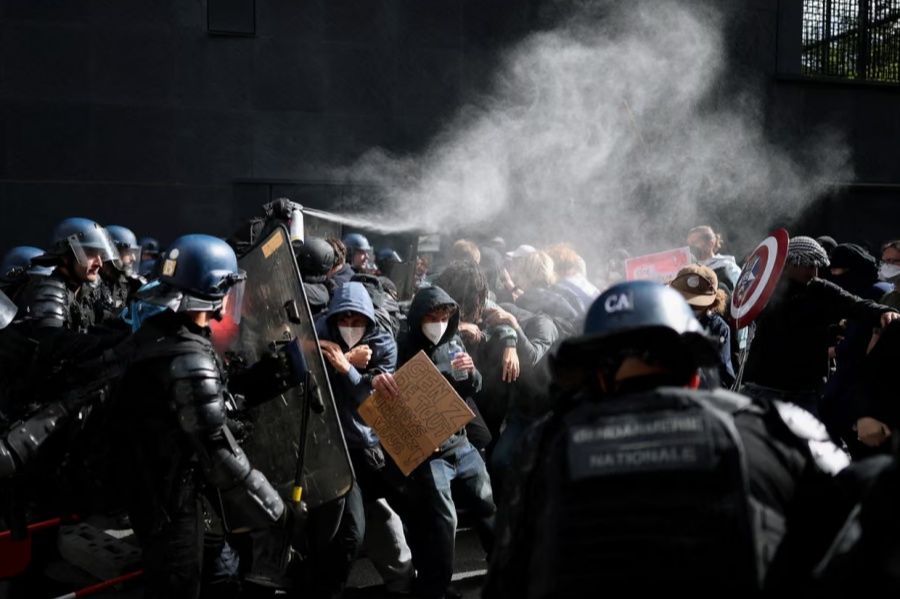
French Students Protest Against Deteriorating Education Conditions
法国学生抗议教育环境恶化
Fǎguó xuéshēng kàngyì jiàoyù huánjìng èhuà
Since mid-September 2026, French high school and university students have been protesting across the country against overcrowded classrooms, teacher shortages, and dilapidated school buildings. The protests escalated into a nationwide movement involving 266,000 participants and 488 arrests. The Prime Minister has pledged to improve conditions, but students vow to continue.
翻译 Translation
2026年9月以来,法国各地的高中生和大学生持续举行抗议活动,反对教育环境的恶化。示威活动从巴黎郊区的一所高中开始,现在已经蔓延到全国。学生们的诉求包括增加教师人数、改善校舍条件,以及增加高等教育名额。
Since September 2026, high school and university students across France have been holding continuous protests against the deterioration of the education environment. The demonstrations began at a high school in the Paris suburbs and have now spread nationwide. The students' demands include increasing the number of teachers, improving school building conditions, and increasing higher education places.
抗议的主要原因与教育资源的严重匮乏有关。学生们指出,教室里学生太多,老师却不够。有的老师缺勤后没有人代课,课表排得太满。部分校舍年久失修,设施陈旧。学生组织要求政府紧急拨款100亿欧元重修校舍,并大规模招聘教师。
The main reason for the protests is related to the severe shortage of educational resources. Students pointed out that there are too many students in classrooms but not enough teachers. When some teachers are absent, there is no substitute; the timetable is too packed. Some school buildings are dilapidated and facilities are outdated. Student organisations are demanding that the government urgently allocate 10 billion euros to renovate school buildings and recruit teachers on a large scale.
抗议
to protest; protest
verb/noun
学生们在校园里举行抗议活动。
The students held a protest on campus.
恶化
to worsen; to deteriorate
verb
他的病情最近有所恶化。
His condition has worsened recently.
蔓延
to spread; to creep
verb
大火迅速蔓延到了附近的森林。
The fire quickly spread to the nearby forest.
诉求
demand; to demand
noun/verb
工人们提出了加薪的诉求。
The workers put forward a demand for a pay rise.
匮乏
scarce; deficient
adjective
这个地区水资源非常匮乏。
This region is very short of water resources.
缺勤
to be absent from work or school
verb
他因为生病缺勤了三天。
He was absent for three days because of illness.
代课
to substitute for a teacher
verb
张老师今天请假了,李老师来代课。
Teacher Zhang asked for leave today, so Teacher Li came to substitute.
年久失修
long neglected and in disrepair
idiom
那座老桥年久失修,已经不能通行了。
That old bridge has been in disrepair for years and is no longer passable.
陈旧
old; outdated
adjective
这台电脑太陈旧了,需要换新的。
This computer is too old and needs to be replaced.
紧急
urgent; emergency
adjective
情况紧急,我们必须马上行动。
The situation is urgent; we must act immediately.
拨款
to allocate funds; allocation
verb/noun
政府拨款修建了一所新学校。
The government allocated funds to build a new school.
大规模
large-scale
adjective
这是一次大规模的救援行动。
This is a large-scale rescue operation.
招聘
to recruit; to hire
verb
公司正在招聘新的工程师。
The company is recruiting new engineers.
升级
to escalate; to upgrade
verb
冲突很快升级为暴力事件。
The conflict quickly escalated into violence.
示威
to demonstrate; demonstration
verb/noun
数千人参加了和平示威。
Thousands of people took part in a peaceful demonstration.
封锁
to blockade; blockade
verb/noun
道路被大雪封锁了。
The road was blockaded by heavy snow.
工会
trade union
noun
工会正在与公司谈判。
The trade union is negotiating with the company.
口号
slogan
noun
他们喊着口号走进了会场。
They walked into the venue shouting slogans.
演变为
to evolve into; to turn into
verb phrase
小争论慢慢演变为激烈的争吵。
The small argument slowly evolved into a heated quarrel.
冲突
conflict; to clash
noun/verb
两国之间发生了边境冲突。
A border conflict occurred between the two countries.
闪光弹
stun grenade; flash grenade
noun
警方使用了闪光弹驱散人群。
The police used stun grenades to disperse the crowd.
防暴
anti-riot
adjective
防暴警察在街上维持秩序。
Anti-riot police maintained order on the street.
失明
to lose one's sight; to go blind
verb
那次事故导致他左眼失明。
That accident caused him to lose sight in his left eye.
催泪瓦斯
tear gas
noun
警察使用催泪瓦斯控制了局面。
The police used tear gas to control the situation.
人权
human rights
noun
人权组织呼吁保护难民的权利。
Human rights organisations called for protecting refugees' rights.
批评
to criticise; criticism
verb/noun
老师批评了他的迟到行为。
The teacher criticised his lateness.
升温
to heat up; to intensify
verb
两国关系最近有所升温。
Relations between the two countries have recently warmed up.
电视讲话
televised address
noun
总统发表了电视讲话,宣布了新政策。
The president gave a televised address and announced the new policy.
着手
to set about; to begin
verb
我们明天开始着手准备这个项目。
We will begin preparing for this project tomorrow.
替代
to replace; replacement
verb/noun
这种材料可以替代木材。
This material can replace wood.
过密
overcrowded; too dense
adjective
这个地区人口过密,住房紧张。
This area is overcrowded, and housing is tight.
倾听
to listen attentively
verb
领导应该倾听员工的意见。
Leaders should listen attentively to employees' opinions.
缺乏
to lack; lacking
verb/adjective
他缺乏工作经验,但很努力。
He lacks work experience but is very hard-working.
具体
concrete; specific
adjective
请你说得具体一点。
Please speak more concretely.
走向
direction; to move toward
noun/verb
这件事的走向还不确定。
The direction of this matter is still uncertain.
总统选举
presidential election
noun phrase
明年的总统选举将在四月举行。
Next year's presidential election will be held in April.
高涨
to surge; high
verb/adjective
节日期间,人们的消费热情高涨。
During the holiday, people's enthusiasm for consumption surged.
镇压
to suppress; suppression
verb/noun
政府使用武力镇压了叛乱。
The government used force to suppress the rebellion.
平息
to subside; to calm down
verb
风波终于平息了。
The disturbance finally subsided.
僵持
to be at a standstill
verb
双方僵持了很久,谁也不肯让步。
The two sides were deadlocked for a long time, and neither would give in.
介入
to intervene
verb
政府介入了这场纠纷。
The government intervened in this dispute.
集会
assembly; rally
noun/verb
他们在广场举行了一场和平集会。
They held a peaceful assembly in the square.
煽动
to incite; to instigate
verb
他被指控煽动暴力。
He was accused of inciting violence.
蔓延至
to spread to
verb phrase
火灾蔓延至邻近的建筑物。
The fire spread to neighbouring buildings.
与……有关 (yǔ... yǒuguān)
"与……有关" means "to be related to" or "to have something to do with." It is used to show a connection between two things. The structure is "A 与 B 有关." It is very common in news reports and formal writing when explaining causes or relationships.
这次考试的成绩与平时的努力有关。
The result of this exam is related to your usual effort.
他的成功与家庭的支持有关。
His success is related to his family's support.
这种疾病与饮食习惯有关。
This disease is related to eating habits.
在……之际 (zài... zhī jì)
"在……之际" means "on the occasion of..." or "at the time of..." It is a formal expression used to indicate a specific moment or event. The structure is "在 + event + 之际." It is very common in news reports, speeches, and formal writing.
在新年到来之际,我祝大家身体健康。
On the occasion of the New Year, I wish everyone good health.
在公司成立十周年之际,我们举办了一场庆祝活动。
On the occasion of the company's tenth anniversary, we held a celebration.
在毕业之际,他向老师们表达了感谢。
At the time of graduation, he expressed his gratitude to his teachers.
Tag:Global Affairs

You may also like

Tesla’s Third-Quarter Profit Falls 29%
October 29, 2026

China’s Baidu Tests Robotaxi on London Streets
October 28, 2026

Subscribe
Login
0 Comments
Oldest