
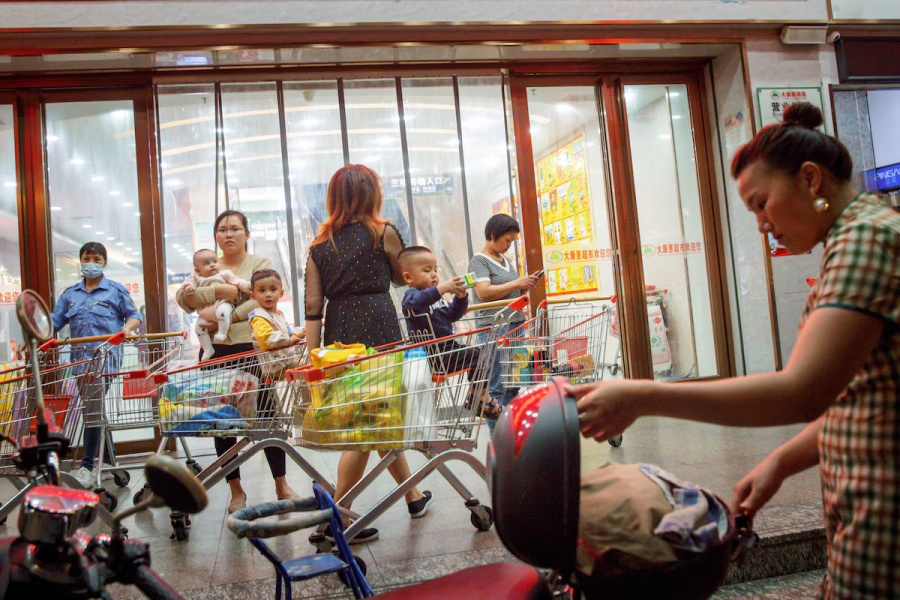
China Aims to Stabilise Number of New Births with Policy Support
中国以政策支持稳定新出生人口规模
Zhōngguó yǐ zhèngcè zhīchí wěndìng xīn chūshēng rénkǒu guīmó
On October 23, 2026, China’s State Council pledged to “strive to stabilise the number of new births,” calling for a “birth-friendly society” with improved marriage, childbirth, parenting, and education policies, alongside tax, social security, and housing support for families. The move comes as experts push for higher and longer childcare subsidies, expanded free preschool education, and a family-based income tax system. Analysts say the challenge is not simply adding incentives, but turning fragmented measures into a coherent, full-life-cycle support system.
翻译 Translation
2026年10月23日,中国国务院总理李强主持召开国务院常务会议,研究统筹人口与经济社会发展有关工作。会议明确提出,要加快建设生育友好型社会,持续完善婚嫁、生育、养育、教育等政策,优化面向家庭的财税、社保、住房等支持举措,努力稳定新出生人口规模。这一表述将人口问题置于经济社会发展的基础位置,标志着政策重心从单纯的数量管理转向以家庭为中心的系统性支持。
On October 23, 2026, Chinese Premier Li Qiang chaired a State Council executive meeting to study work related to coordinating population and economic and social development. The meeting explicitly proposed accelerating the building of a birth-friendly society, continuously improving policies on marriage, childbirth, parenting, and education, and optimising family-oriented support measures in taxation, social security, and housing, so as to strive to stabilise the number of new births. This formulation places the population issue at the foundation of economic and social development, marking a shift in policy focus from simple numerical management to systematic, family-centred support.
这一政策方向并非孤立出现。2026年3月发布的“十五五”规划纲要草案已经明确提出,优化生育支持政策和激励措施,有效降低家庭生育、养育、教育成本,努力稳定新出生人口规模,促进人口长期均衡发展。这意味着稳定新出生人口已被纳入中长期发展战略,而非短期应急措施。10月的国务院常务会议,是在这一框架下对具体政策工具的进一步部署。
This policy direction did not emerge in isolation. The draft outline of the 15th Five-Year Plan, released in March 2026, had already explicitly proposed optimising birth support policies and incentive measures, effectively reducing the costs of childbirth, parenting, and education for families, striving to stabilise the number of new births, and promoting long-term balanced population development. This means that stabilising new births has been incorporated into a medium- and long-term development strategy, rather than a short-term emergency measure. The October State Council meeting was a further deployment of specific policy tools under this framework.
统筹
to coordinate; coordination
verb/noun
政府需要统筹城乡发展,缩小差距。
The government needs to coordinate urban and rural development and narrow the gap.
生育友好型
birth-friendly
adjective phrase
建设生育友好型社会需要全社会的共同努力。
Building a birth-friendly society requires the joint efforts of the whole society.
婚嫁
marriage
noun
一些地方通过集体婚礼倡导简约的婚嫁风尚。
Some places promote simple marriage customs through collective weddings.
养育
to raise; parenting
verb/noun
养育孩子需要付出大量的时间和精力。
Raising children requires a great deal of time and energy.
财税
fiscal and taxation
noun
财税政策是调节经济的重要工具。
Fiscal and tax policy is an important tool for regulating the economy.
社保
social security
noun
完善的社保体系可以增强人们的获得感。
A sound social security system can enhance people’s sense of gain.
举措
measure; step
noun
这些举措旨在降低企业的经营成本。
These measures are aimed at reducing enterprises’ operating costs.
规模
scale; size
noun
该项目的投资规模超出了最初的计划。
The investment scale of the project exceeded the original plan.
纲要
outline; programme
noun
这份纲要将指导未来五年的工作。
This outline will guide work for the next five years.
激励
to incentivise; incentive
verb/noun
合理的激励机制能够调动员工的积极性。
A reasonable incentive mechanism can mobilise employees’ enthusiasm.
均衡
balanced; to balance
adjective/verb
促进教育资源的均衡分配是一项长期任务。
Promoting the balanced distribution of educational resources is a long-term task.
部署
to deploy; deployment
verb/noun
公司对下一阶段的工作进行了部署。
The company made arrangements for the next stage of work.
育儿补贴
childcare subsidy
noun
一些城市已经提高了育儿补贴的标准。
Some cities have already raised the standard for childcare subsidies.
覆盖
to cover; coverage
verb/noun
这项保险计划覆盖了大部分常见疾病。
This insurance plan covers most common illnesses.
产假
maternity leave
noun
法律规定女职工享有至少98天的产假。
The law stipulates that female employees are entitled to at least 98 days of maternity leave.
陪产假
paternity leave
noun
越来越多的男性愿意休陪产假来照顾妻子和孩子。
More and more men are willing to take paternity leave to care for their wives and children.
免除
to exempt; to waive
verb
符合条件的家庭可以免除部分学费。
Eligible families can be exempted from part of the tuition fees.
从根本上
fundamentally
adverbial phrase
要解决这个问题,必须从根本上改变思路。
To solve this problem, we must fundamentally change our approach.
决策
decision-making; decision
noun/verb
科学的决策需要充分的数据支持。
Scientific decision-making requires sufficient data support.
力度
intensity; strength
noun
政府加大了治理污染的政策力度。
The government increased the policy intensity for pollution control.
专项附加扣除
special additional deduction
noun phrase
纳税人可以申报子女教育专项附加扣除。
Taxpayers can declare the special additional deduction for children’s education.
物价指数
consumer price index
noun phrase
物价指数的变动会影响实际购买力。
Changes in the consumer price index affect real purchasing power.
递减
to decrease progressively
verb/adjective
随着时间推移,政策的激励效应可能递减。
Over time, the incentive effect of a policy may decrease progressively.
税制
tax system
noun
税制改革需要兼顾效率和公平。
Tax system reform needs to balance efficiency and fairness.
联合申报
joint filing
verb phrase
一些国家允许夫妻进行联合申报。
Some countries allow married couples to file jointly.
税率
tax rate
noun
收入越高,适用的税率通常也越高。
The higher the income, the higher the applicable tax rate usually is.
负担
burden; to bear
noun/verb
降低家庭教育负担是政策的重要目标。
Reducing the family education burden is an important policy goal.
正外部性
positive externality
noun phrase
教育具有明显的正外部性,社会整体会从中受益。
Education has clear positive externalities, and society as a whole benefits from it.
合理性
rationality; reasonableness
noun
这项政策的合理性还需要进一步论证。
The rationality of this policy still needs further justification.
整合
to integrate; integration
verb/noun
公司整合了多个部门,提高了效率。
The company integrated several departments and improved efficiency.
全生命周期
full life cycle
noun phrase
健康管理应该覆盖全生命周期。
Health management should cover the full life cycle.
单点
single point; isolated point
noun/adjective
单点突破容易,系统性改善困难。
Breakthroughs at a single point are easy, but systematic improvement is difficult.
结构性
structural
adjective
这是一个结构性问题,不能靠短期措施解决。
This is a structural problem and cannot be solved by short-term measures.
性别分工
gender division of labour
noun phrase
传统的性别分工正在慢慢改变。
The traditional gender division of labour is slowly changing.
可预期
predictable
adjective
稳定的政策环境能给企业带来可预期的回报。
A stable policy environment can bring predictable returns to enterprises.
可持续
sustainable
adjective
可持续发展需要平衡经济、社会和环境目标。
Sustainable development requires balancing economic, social, and environmental goals.
焦虑
anxiety; anxious
noun/adjective
育儿成本过高让许多年轻家庭感到焦虑。
The high cost of childcare makes many young families anxious.
边际
marginal
noun/adjective
当补贴达到一定水平后,其边际效果可能下降。
After subsidies reach a certain level, their marginal effect may decline.
信号
signal
noun
这项政策向市场释放了积极的信号。
This policy sent a positive signal to the market.
协同
to coordinate; synergy
verb/noun
各部门需要协同推进这项改革。
All departments need to coordinate in advancing this reform.
要……,努力…… (yào..., nǔlì...)
This pattern appears in policy statements and formal documents: “要” introduces the required action or direction, and “努力” introduces the goal being striven for. The structure is “要 + action/measure, 努力 + goal.” It expresses a policy commitment without guaranteeing a specific outcome, and is very common in Chinese government documents and news reports.
要完善社区服务设施,努力提升居民的生活便利度。
We must improve community service facilities and strive to enhance residents’ convenience in daily life.
要加大职业培训投入,努力帮助更多年轻人找到合适的工作。
We must increase investment in vocational training and strive to help more young people find suitable jobs.
要加强食品安全监管,努力让老百姓吃得放心。
We must strengthen food safety supervision and strive to give ordinary people peace of mind about what they eat.
关键在于…… (guānjiàn zàiyú...)
“关键在于……” means “the key lies in...” It is used to identify the most important factor or condition for achieving a goal. The structure is “关键在于 + noun/clause.” It is very common in analysis, commentary, and formal discussion, and is often used to shift attention from surface phenomena to underlying mechanisms.
一个团队能否成功,关键在于成员之间是否相互信任。
Whether a team can succeed depends on whether its members trust each other.
学习一门语言,关键在于坚持每天练习。
In learning a language, the key lies in persisting in daily practice.
改革能否取得实效,关键在于能否调动基层的积极性。
Whether reform can achieve real results depends on whether the enthusiasm of the grassroots can be mobilised.
不仅取决于……也取决于…… (bùjǐn qǔjué yú... yě qǔjué yú...)
“不仅取决于……也取决于……” means “depends not only on... but also on...” It is used to show that a result or outcome is determined by more than one factor, and that the second factor is equally or additionally important. The structure is “不仅取决于 + factor A + 也取决于 + factor B.” It is common in analytical writing and formal discussion.
一个人的健康不仅取决于基因,也取决于生活习惯。
A person’s health depends not only on genes but also on lifestyle habits.
一个城市的吸引力不仅取决于经济机会,也取决于公共服务水平。
A city’s attractiveness depends not only on economic opportunities but also on the level of public services.
孩子的成长不仅取决于学校的教育,也取决于家庭的环境。
A child’s development depends not only on school education but also on the family environment.
Tag:Social News

You may also like



Subscribe
Login
0 Comments
Oldest