
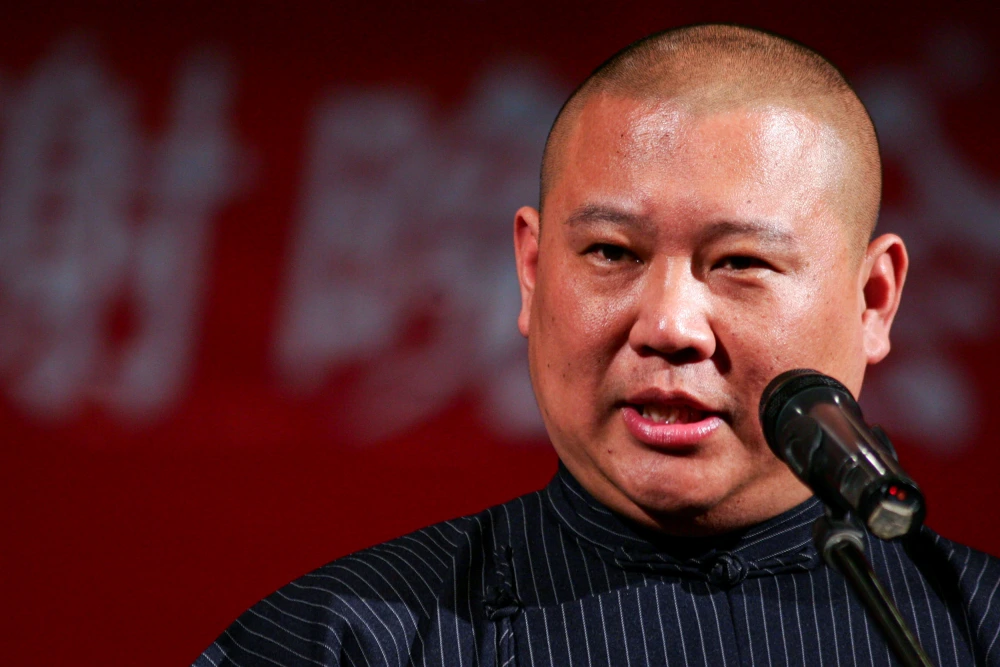
Chinese Comedian Guo Degang Under Investigation
中国喜剧演员郭德纲接受调查
Zhōngguó xǐjù yǎnyuán Guō Dégāng jiēshòu diàochá
When famous Chinese comedian Guo Degang modified a single lyric of a classic patriotic song during a live performance in Wuhan, it ignited a major controversy. This HSK 5 level learning material explores the event, examining the regulatory landscape, public reaction, and strict performance oversight in contemporary China.
翻译 Translation
中国著名相声演员郭德纲最近因在演出中擅自修改经典革命歌曲的歌词,引发了社会广泛关注与热议。
Famous Chinese crosstalk comedian Guo Degang recently sparked widespread public attention and heated debate for unauthorized changes to the lyrics of a classic revolutionary song during a performance.
据报道,在武汉举行的一场商业演出中,郭德纲将经典歌曲《弹起我心爱的土琵琶》中的“微山湖上静悄悄”临场改成了“紫禁城里静悄悄”。
According to reports, during a commercial show held in Wuhan, Guo improvised a line from the classic song "Playing My Beloved Pipa," changing "all is quiet on Weishan Lake" to "all is quiet in the Forbidden City."
相声
Crosstalk; traditional Chinese comedic dialogue
Noun
他非常喜欢听中国传统相声。
He likes listening to traditional Chinese crosstalk very much.
擅自
Without authorization; unauthorized
Adverb
未经允许,任何人不得擅自离开考场。
Without permission, no one may leave the examination room without authorization.
经典
Classic; quintessential
Adjective / Noun
这部电影是世界影史上的经典之作。
This movie is a classic work in world film history.
革命
Revolution; revolutionary
Noun / Adjective
博物馆里陈列着许多革命历史文物。
Many revolutionary historical relics are displayed in the museum.
歌词
Lyrics
Noun
这首歌的歌词写得非常有诗意。
The lyrics of this song are written very poetically.
引发
To trigger; to give rise to
Verb
他的发言在会上引发了热烈的讨论。
His speech triggered a heated discussion at the meeting.
广泛
Wide; broad; extensive
Adjective
这项新政策获得了社会的广泛支持。
This new policy received widespread support from society.
热议
Heated discussion; to discuss heatedly
Noun / Verb
这个话题成为了网民热议的焦点。
This topic became the focus of heated discussion among netizens.
商业
Commerce; commercial
Noun / Adjective
这部纪录片取得了巨大的商业成功。
This documentary achieved great commercial success.
临场
On the spot; extemporaneous
Adverb / Adjective
演员的临场发挥让整场演出更加生动。
The actor's on-the-spot performance made the whole show more vivid.
举报
To report (an offense) to authorities
Verb
市民可以向警方举报违法行为。
Citizens can report illegal activities to the police.
指责
To criticize; to accuse
Verb
我们不应该在没有证据的情况下指责他人。
We should not criticize others without evidence.
篡改
To falsify; to distort; to tamper with
Verb
篡改历史事实是不可接受的行为。
Falsifying historical facts is an unacceptable behavior.
低俗化
To vulgarize; vulgarization
Verb / Noun
文艺作品不应当靠低俗化来吸引眼球。
Literary and artistic works should not rely on vulgarization to attract attention.
违背
To run counter to; to violate
Verb
这种做法人人都会反对,因为它违背了道德。
Everyone will oppose this practice because it runs counter to morality.
公序良俗
Public order and good customs
Idiom / Noun
任何合同的签订都不得违反公序良俗。
The signing of any contract must not violate public order and good customs.
证实
To confirm; to verify
Verb
专家证实了这份古老文件的真实性。
Experts confirmed the authenticity of this ancient document.
针对
To target; aimed at; in response to
Preposition / Verb
学校针对学生的安全问题召开了家长会。
The school held a parent meeting regarding student safety issues.
初步
Initial; preliminary
Adjective
根据初步调查结果,事故是由机械故障引起的。
According to initial investigation results, the accident was caused by mechanical failure.
即兴
Improvised; off-hand
Adjective / Adverb
他在宴会上即兴弹奏了一首钢琴曲。
He improvised a piano piece at the banquet.
提交
To submit
Verb
请在周五之前提交你的研究报告。
Please submit your research report before Friday.
审核
To review; to audit; vetting
Verb / Noun
所有申请表格都需要经过严格审核。
All application forms need to go through strict review.
条例
Regulations; rules
Noun
公司最近出台了新的员工管理条例。
The company recently introduced new employee management regulations.
深入
Deep; thorough; to deepen
Adjective / Verb
双方就经济合作进行了深入的交流。
Both sides conducted deep exchanges on economic cooperation.
巡演
Performance tour; to tour
Noun / Verb
乐队将于下个月开启他们的亚洲巡演。
The band will start their Asian tour next month.
相继
One after another; in succession
Adverb
会议结束后,代表们相继离开了会场。
After the meeting ended, the delegates left the venue one after another.
延期
To postpone; to defer
Verb
由于天气原因,运动会将延期举行。
Due to weather reasons, the sports meeting will be postponed.
手续
Procedures; formalities
Noun
入职手续将在明天办理完毕。
Onboarding procedures will be completed tomorrow.
分化
To split; polarization
Verb / Noun
公众对这个议题的看法出现了严重的分化。
Public views on this issue showed severe polarization.
承载
To bear; to carry
Verb
这座老桥承载着几代人的童年回忆。
This old bridge carries childhood memories of several generations.
侵犯
To infringe upon; to violate
Verb
法律严厉打击侵犯知识产权的行为。
The law strictly cracks down on acts infringing upon intellectual property rights.
戏谑
To banter; to tease mocking
Verb / Noun
他用戏谑的语气回答了记者的提问。
He answered the reporter's question in a playful tone.
欠妥
Inappropriate; improper
Adjective
这样做恐怕有些欠妥,建议再考虑一下。
Doing this might be a bit inappropriate; I suggest reconsidering it.
限制
To restrict; limitation
Verb / Noun
城市部分路段对大型货车实施限行限制。
Some city road sections impose driving restrictions on large trucks.
损害
To damage; to harm
Verb / Noun
吸烟会严重损害身体健康。
Smoking damages physical health severely.
文艺界
Literary and artistic circles
Noun
许多文艺界人士出席了昨晚的颁奖典礼。
Many figures from literary and artistic circles attended last night's award ceremony.
整治
To renovate; to clean up / rectify
Verb / Noun
政府正在大力整治环境污染问题。
The government is vigorously rectifying environmental pollution issues.
合规
Compliance; compliant
Noun / Adjective
企业必须确保自身的经营行为合法合规。
Enterprises must ensure their operational behavior is legal and compliant.
课题
Issue; task; subject for study
Noun
如何保护环境是全人类共同面临的课题。
How to protect the environment is a common issue facing all humanity.
涉嫌 (shèxián)
Structure: 涉嫌 + [verb phrase / noun phrase]
A formal verb used in legal, news, or official contexts meaning "to be suspected of" doing an illegal, improper, or rule-breaking action.
It is directly followed by a verb phrase or noun phrase detailing the violation.
该公司因涉嫌非法集资而被警方立案调查。
The company is under police investigation for suspected illegal fundraising.
他的言论涉嫌侵犯他人的名誉权。
His speech is suspected of infringing upon others' right to reputation.
几名涉嫌操纵股票市场的人士已被逮捕。
Several individuals suspected of manipulating the stock market have been arrested.
随着…… (suí zhe...)
Structure: 随着 + [change / event 1] + [change / result 2]
A prepositional structure meaning "along with," "as," or "following." It indicates that when one situation, event, or condition changes or progresses, another situation changes accordingly.
随着科技的发展,人们的生活变得越来越便利。
With the development of technology, people's lives have become increasingly convenient.
随着季节的变化,这里的风景呈现出不同的色彩。
As the seasons change, the scenery here exhibits different colors.
随着调查的深入,真相终于浮出了水面。
As the investigation deepened, the truth finally surfaced.
不容…… (bù róng...)
Structure: 不容 + [dynamic transitive verb]
A formal structure meaning "not allow / not tolerate / leave no room for." It is typically combined with dynamic transitive verbs such as 怀疑 (doubt), 忽视 (ignore), 侵犯 (violate), or 更改 (alter) to emphasize an absolute stance or principle.
国家的主权和领土完整不容侵犯。
The sovereignty and territorial integrity of the country do not tolerate violation.
这是一个不容忽视的安全隐患。
This is a safety hazard that cannot be ignored.
事实胜于雄辩,历史真相不容篡改。
Facts speak louder than words, and historical truth allows no distortion.
并非…… (bìng fēi...)
Structure: 并非 + [noun / verb phrase]
An emphatic formal negation meaning "is not really," "is by no means," or "is far from." It is often used to clarify a misunderstanding, correct a misconception, or qualify a statement.
成功并非偶然,而是长期努力的结果。
Success is by no means accidental, but the result of long-term effort.
解决这个问题并非易事,需要各方共同协作。
Solving this issue is by no means easy and requires joint collaboration from all parties.
他并非故意隐瞒真相,只是当时不确定细节。
He was not intentionally hiding the truth; he was just uncertain about the details at that time.
对……而言 (duì ... ér yán)
Structure: 对 + [group / entity / individual] + 而言 + [opinion / condition / impact]
A prepositional phrase meaning "as far as... is concerned" or "from the perspective of..."
It is used to frame an opinion, condition, or impact relative to a specific group, entity, or individual.
对语言学习者而言,保持日常练习至关重要。
For language learners, maintaining daily practice is paramount.
对这家企业而言,这次合作是一个罕见的发展机遇。
For this enterprise, this cooperation is a rare development opportunity.
对初学者而言,掌握基础语法是第一步。
For beginners, mastering basic grammar is the very first step.

You may also like



Subscribe
Login
0 Comments
Oldest