
Humanoid Robots Smash Human Records at Beijing Games
人形机器人在北京运动会上打破人类纪录
Rénxíng jīqìrén zài Běijīng yùndònghuì shàng dǎpò rénlèi jìlù
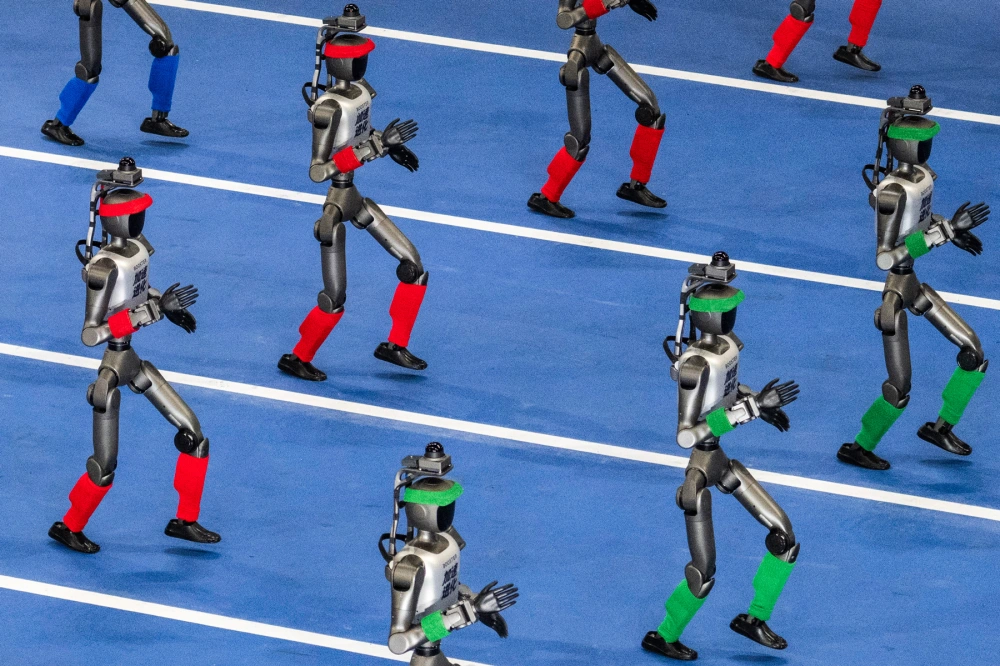
At Beijing's World Humanoid Robot Games, Chinese robots broke human records in sprinting and high jumping. The event shows China's rapid progress in robotics and its growing tech competition with the U.S., but experts say everyday use is still some time away.
翻译 Translation
在北京,一场特别的运动会开始了。
In Beijing, a special sports event began.
两千多个人形机器人参加了比赛。这个运动会叫世界人形机器人运动会,持续五天,有五十一个项目、一千多场比赛,包括跑步、乒乓球和足球。
More than 2,000 humanoid robots took part. The event is called the World Humanoid Robot Games. It lasts five days and has 51 events and more than 1,000 competitions, including running, table tennis and soccer.
人形
humanoid; human-shaped
Adjective
这个机器人有人形的身体。
This robot has a humanoid body.
机器人
robot
Noun
机器人正在跑步。
The robot is running.
运动会
sports meet; games
Noun
学校每年举办一次运动会。
The school holds a sports meet once a year.
持续
to last; to continue
Verb
比赛持续了五天。
The competition lasted for five days.
项目
event; item; project
Noun
这次运动会有五十一个项目。
This sports meet has fifty-one events.
包括
to include
Verb
比赛包括跑步和足球。
The competitions include running and soccer.
举办
to hold (an event)
Verb
北京举办了机器人大会。
Beijing held a robot conference.
地点
place; venue
Noun
比赛地点是速度滑冰馆。
The competition venue is the speed skating oval.
短跑
sprint
Noun
他在短跑中跑得很快。
He ran very fast in the sprint.
运动员
athlete
Noun
这位运动员创造了新纪录。
This athlete set a new record.
创造
to create; to set (a record)
Verb
博尔特创造了世界纪录。
Bolt set a world record.
纪录
record
Noun
机器人打破了人类纪录。
The robot broke the human record.
超过
to exceed; to surpass
Verb
机器人超过了人类纪录。
The robot surpassed the human record.
来自
to come from
Verb
这两个机器人来自北京。
These two robots come from Beijing.
企业
enterprise; company
Noun
这家企业生产机器人。
This company produces robots.
速度
speed
Noun
它的最高速度达到每秒14.5米。
Its top speed reaches 14.5 meters per second.
生产
to produce; to manufacture
Verb
中国生产很多人形机器人。
China produces many humanoid robots.
多数
majority
Noun
世界上多数人形机器人由中国生产。
Most of the world's humanoid robots are produced by China.
加强
to strengthen
Verb
美国加强了审查。
The U.S. strengthened its scrutiny.
审查
to scrutinize; to review
Verb / Noun
美国正在审查外国机器人。
The U.S. is reviewing foreign robots.
禁止
to ban; to prohibit
Verb
美国禁止进口新的外国机器人。
The U.S. banned imports of new foreign robots.
进口
to import; import
Verb / Noun
美国禁止进口这类机器人。
The U.S. banned importing this kind of robot.
制造
to manufacture; to make
Verb
这些机器人是在中国制造的。
These robots were manufactured in China.
领先
leading; to lead
Adjective / Verb
宇树是中国领先的机器人企业。
Unitree is a leading robot company in China.
列入
to list; to include (in a list)
Verb
五角大楼把宇树列入名单。
The Pentagon put Unitree on a list.
名单
list; roster
Noun
宇树被列入一份名单。
Unitree was put on a list.
军方
military
Noun
美国军方认为它与中国军方有关系。
The U.S. military says it has ties with the Chinese military.
关系
relation; ties
Noun
这家企业与军方没有关系。
This company has no ties with the military.
反驳
to refute; to rebut
Verb
北京反驳了这些说法。
Beijing refuted these claims.
专家
expert
Noun
专家说机器人还需要时间。
Experts say robots still need time.
表演
performance; to perform
Noun / Verb
机器人目前主要用于表演。
Robots are currently mainly used for performances.
展示
display; to show
Noun / Verb
这些机器人被用于展示。
These robots are used for display.
研究
research; to research
Noun / Verb
人形机器人也用于研究。
Humanoid robots are also used for research.
观众
spectator; audience
Noun
观众对机器人很感兴趣。
The spectators are very interested in the robots.
兴奋
excited
Adjective
很多观众很兴奋。
Many spectators were very excited.
进步
to improve; progress
Verb / Noun
机器人进步很快。
Robots are improving very quickly.
取代
to replace
Verb
她担心人工智能会取代人类。
She worries that AI will replace humans.
阻挡
to stop; to block
Verb
这种发展不可阻挡。
This development cannot be stopped.
神奇
amazing; magical
Adjective
机器人能做这些运动很神奇。
It's amazing that robots can do these sports.
参加
to participate; to take part
Verb
今年有16个国家参加。
This year 16 countries are taking part.
举重
weightlifting
Noun
比赛还有举重项目。
The competition also includes weightlifting events.
拔河
tug of war
Noun
拔河也是比赛项目之一。
Tug of war is also one of the competition events.
随着…… (suízhe...)
Structure: 随着 + [change 1] + [change 2]
"随着" means "as; along with." It introduces a change that happens together with another change. It is often used in written or formal Chinese.
"随着" means "as; along with." It introduces a change that happens together with another change. It is often used in written or formal Chinese.
随着科技发展,机器人越来越聪明。
As technology develops, robots are becoming smarter.
随着比赛开始,观众兴奋起来。
As the competition began, the spectators became excited.
随着时间过去,他慢慢习惯了新工作。
As time passed, he gradually got used to the new job.
在……中 (zài...zhōng)
Structure: 在 + [range / process / situation] + 中
This pattern means "in; among; during." It shows the range, process, or situation in which something happens.
This pattern means "in; among; during." It shows the range, process, or situation in which something happens.
在100米短跑中,机器人跑得很快。
In the 100-meter sprint, the robot ran very fast.
在学习中,我们会遇到困难。
In learning, we will meet difficulties.
在比赛中,他表现得很出色。
In the competition, he performed excellently.
比……更…… (bǐ... gèng...)
Structure: A + 比 + B + 更 + [adjective]
This pattern means "more ... than ..." It compares two things, and "更" emphasizes a higher degree.
This pattern means "more ... than ..." It compares two things, and "更" emphasizes a higher degree.
这个机器人比那个更快。
This robot is faster than that one.
北京比我的家乡更热闹。
Beijing is livelier than my hometown.
他说中文比我说得更流利。
He speaks Chinese more fluently than I do.
以……为…… (yǐ... wéi...)
Structure: 以 + [A] + 为 + [B]
This formal pattern means "take ... as ..." or "use ... as ..." It is common in news and written Chinese.
This formal pattern means "take ... as ..." or "use ... as ..." It is common in news and written Chinese.
美国以国家安全为理由。
The U.S. used national security as the reason.
我们以这个目标为中心。
We take this goal as the center.
他以帮助别人为快乐。
He takes helping others as happiness.
把……列入…… (bǎ... lièrù...)
Structure: 把 + [object] + 列入 + [list / plan / category]
This pattern means "put/include ... in/on ..." It is used when someone officially adds a person, company, or item to a list, plan, or category.
This pattern means "put/include ... in/on ..." It is used when someone officially adds a person, company, or item to a list, plan, or category.
五角大楼把宇树列入名单。
The Pentagon put Unitree on a list.
老师把她的名字列入参赛名单。
The teacher put her name on the competition list.
请把这个项目列入计划。
Please include this project in the plan.

You may also like


Subscribe
Login
0 Comments
Oldest