
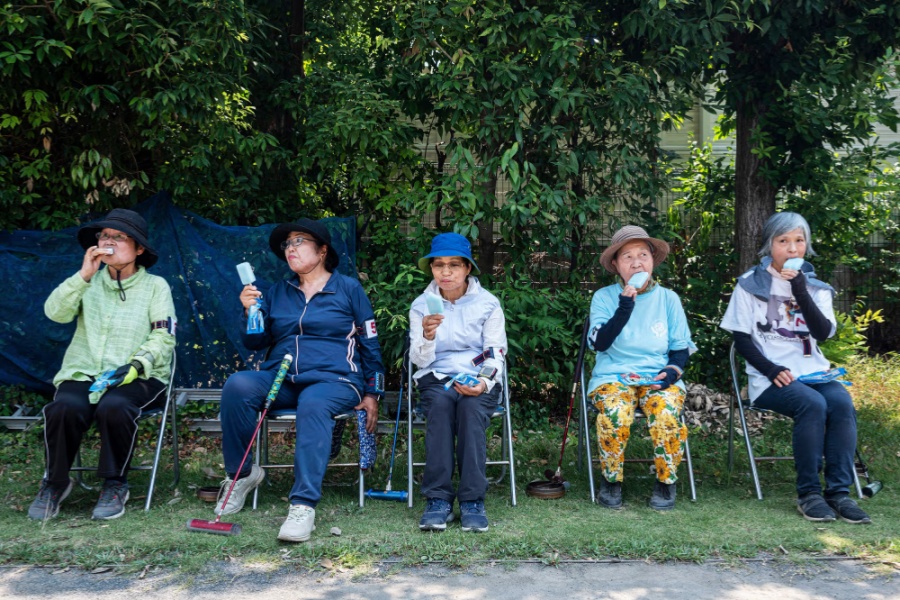
Japan Now Has More Than 100,000 People Who Are 100 or Older
日本百岁老人突破10万,人口老龄化问题日益严重
Rìběn bǎisuì lǎorén tūpò shí wàn, rénkǒu lǎolínghuà wèntí rìyì yánzhòng
Japan now has more than 100,000 people aged 100 or older, a record high. Nearly 88% of them are women. The government released the figures on Respect the Aged Day. Japan's population is rapidly aging and declining: the fertility rate dropped to a record low of 1.14 in 2025, and more than 20% of young singles do not plan to marry. Experts predict the population will fall to 87 million by 2070.
翻译 Translation
日本政府最新数据显示,今年日本百岁以上老人的人数超过了10万,创下历史新高。目前,日本共有107677名百岁老人,比去年增加了7914人,这是首次突破10万大关。其中,女性占了将近88%。这些数据表明,日本的人口正在快速老龄化和减少。
The latest Japanese government data shows that this year the number of people aged 100 or older in Japan exceeded 100,000, setting a record high. Currently, Japan has 107,677 centenarians, an increase of 7,914 from last year, and this is the first time it has surpassed the 100,000 mark. Among them, women account for nearly 88%. These data indicate that Japan's population is rapidly aging and declining.
京都府岸本芙美代今年114岁,最近被认定为日本最高龄的女性。日本最高龄的男性是来自熊本县的加藤光,今年112岁。这些数据是在9月15日“敬老日”发布的。在这一天,政府会向健康活跃的百岁老人赠送首相高市早苗的贺信和一只银杯,以表示对他们的尊敬。
Fuyo Kishimoto from Kyoto Prefecture is 114 years old this year and was recently recognised as Japan's oldest woman. Japan's oldest man is Hikaru Kato from Kumamoto Prefecture, who is 112 this year. These figures were released on September 15, Respect the Aged Day. On this day, the government gives healthy and active centenarians a congratulatory letter from Prime Minister Sanae Takaichi and a silver sake cup to show respect for them.
百岁
one hundred years old; centenarian
noun/adjective
这位百岁老人身体还很健康。
This centenarian is still in good health.
突破
to break through; breakthrough
verb/noun
他的销售额突破了100万元。
His sales exceeded one million yuan.
大关
mark; threshold
noun
人口数量首次突破1亿大关。
The population exceeded the 100 million mark for the first time.
老龄化
aging (of population)
noun/verb
老龄化是社会面临的重要问题。
Aging is an important issue facing society.
减少
to decrease; to reduce
verb
今年游客数量减少了很多。
The number of tourists decreased a lot this year.
数据
data
noun
这些数据说明了问题的严重性。
These data illustrate the seriousness of the problem.
表明
to indicate; to show
verb
调查表明,大多数人支持这个计划。
The survey indicates that most people support this plan.
创下
to set (a record)
verb
他创下了新的世界纪录。
He set a new world record.
纪录
record
noun
这个纪录保持了十年。
This record has been held for ten years.
认定
to determine; to confirm
verb
他被认定为最佳演员。
He was confirmed as the best actor.
赠送
to give as a gift
verb
学校向每位老师赠送了一本书。
The school gave each teacher a book as a gift.
尊敬
to respect; respect
verb/noun
我们应该尊敬老人。
We should respect the elderly.
厚生劳动
health, labour and welfare
noun
厚生劳动省发布了最新数据。
The Ministry of Health, Labour and Welfare released the latest data.
大臣
minister
noun
外务大臣出席了会议。
The Foreign Minister attended the meeting.
积极
active; positive
adjective
他积极参加各种活动。
He actively participates in various activities.
医疗
medical treatment
noun
这个地区的医疗水平很高。
The medical standards in this area are very high.
饮食
diet; food and drink
noun
健康的饮食对长寿很重要。
A healthy diet is important for longevity.
可持续
sustainable
adjective
我们需要可持续发展的模式。
We need a sustainable development model.
保障
to guarantee; guarantee
verb/noun
政府保障每个孩子都有学上。
The government guarantees every child can go to school.
体系
system
noun
教育体系需要不断改进。
The education system needs continuous improvement.
因素
factor
noun
努力是成功的重要因素。
Hard work is an important factor in success.
普查
census; general survey
noun/verb
人口普查每十年进行一次。
The census is conducted every ten years.
总和生育率
total fertility rate
noun
总和生育率下降是一个全球问题。
The decline in the total fertility rate is a global problem.
急剧
rapid; drastic
adjective/adverb
气温急剧下降。
The temperature dropped drastically.
不可避免
inevitable
adjective
这场冲突不可避免。
This conflict is inevitable.
单身
single; unmarried
adjective/noun
他目前还是单身。
He is still single at the moment.
研究所
research institute
noun
他在一家研究所工作。
He works at a research institute.
调查
to survey; survey
verb/noun
调查显示,很多人喜欢网上购物。
The survey shows that many people like online shopping.
好处
benefit; advantage
noun
运动对身体有很多好处。
Exercise has many benefits for the body.
承认
to admit; to acknowledge
verb
他承认自己犯了错误。
He admitted he made a mistake.
养育
to raise; to bring up
verb/noun
养育孩子需要很多时间和精力。
Raising children requires a lot of time and energy.
成本
cost
noun
教育成本越来越高。
The cost of education is getting higher and higher.
身心
body and mind
noun
运动有益于身心健康。
Exercise is good for physical and mental health.
扭转
to reverse; to turn around
verb
我们要努力扭转这种不利局面。
We must work hard to reverse this unfavourable situation.
少子化
declining birthrate
noun/verb
少子化问题需要全社会关注。
The declining birthrate problem requires society-wide attention.
趋势
trend
noun
这个趋势还会继续下去。
This trend will continue.
预测
to predict; prediction
verb/noun
专家预测明年的经济增长会更快。
Experts predict that next year's economic growth will be faster.
前所未有
unprecedented
idiom
这是前所未有的挑战。
This is an unprecedented challenge.
水平
level; standard
noun
他的中文水平很高。
His Chinese level is very high.
挑战
challenge; to challenge
noun/verb
面对挑战,我们不能放弃。
Facing challenges, we cannot give up.
保持
to maintain; to keep
verb
他每天跑步,保持健康。
He runs every day to maintain his health.
稳定
stable; to stabilise
adjective/verb
物价保持稳定。
Prices remain stable.
女性
female; women
noun
女性的平均寿命比男性长。
Women's average lifespan is longer than men's.
占
to account for; to make up
verb
女生占全班人数的三分之二。
Girls make up two-thirds of the class.
将近
nearly; almost
adverb
这本书将近500页。
This book is nearly 500 pages.
指出
to point out
verb
老师指出了我的错误。
The teacher pointed out my mistake.
关键
key; crucial
noun/adjective
这是解决问题的关键。
This is the key to solving the problem.
继续
to continue
verb/adverb
他决定继续学习中文。
He decided to continue studying Chinese.
重大
major; significant
adjective
这是一个重大决定。
This is a major decision.
使/让/令 (shǐ/ràng/lìng)
“使”“让”“令” all mean “to make” or “to cause” someone/something to do something or to be in a certain state.
They are used in the causative structure: “A + 使/让/令 + B + verb/adjective.”
“使” is more formal and common in writing; “让” is more colloquial and common in speech; “令” is the most formal and often appears in news and official statements. These three words are extremely common in Chinese and are essential for expressing cause and effect.
这些数据表明,日本的人口正在快速老龄化和减少。
These data indicate that Japan's population is rapidly aging and declining.
这个消息让大家都很高兴。
This news made everyone very happy.
他的进步令老师非常满意。
His progress made the teacher very satisfied.
在……上 (zài... shàng)
“在……上” means “in terms of...” or “regarding...”
It is used to specify the aspect or field being discussed.
The structure is “在 + noun + 上.” It is very common in both spoken and written Chinese and can be used with abstract nouns like “学习”“工作”“生活”“经济” etc.
在医疗上,日本已经处于世界前列。
In terms of medical care, Japan is already at the forefront of the world.
在学习上,他非常努力。
In terms of studying, he is very hard-working.
在生活上,她遇到了一些困难。
In terms of daily life, she encountered some difficulties.
与此同时 (yǔ cǐ tóngshí)
“与此同时” means “at the same time” or “meanwhile.” It is used to introduce a second event or situation that is happening at the same time as the first one. It is very common in news reports, formal writing, and analytical essays. It helps the writer connect two related developments and is similar to “同时” but slightly more formal.
与此同时,他也指出,随着人口持续老龄化和减少,维持可持续的社会保障体系非常重要。
At the same time, he also pointed out that as the population continues to age and decline, maintaining a sustainable social security system is very important.
他在学习中文,与此同时,他也在学习日语。
He is studying Chinese, and at the same time, he is also studying Japanese.
公司正在开发新产品,与此同时,也在拓展海外市场。
The company is developing new products, and at the same time, it is also expanding into overseas markets.
经过…… (jīngguò...)
“经过” means “after” or “through.” It is used to indicate that something has gone through a process or period of time before reaching a certain result.
The structure is “经过 + process/time, + result.”
It's often used to describe how something has developed or changed over time.
经过多年的发展,日本的医疗水平已经处于世界前列。
After years of development, Japan's medical standards have reached the forefront of the world.
经过三个小时的努力,他终于完成了作业。
After three hours of effort, he finally finished his homework.
经过大家的讨论,我们决定改变计划。
After everyone's discussion, we decided to change the plan.
直到……才…… (zhídào... cái...)
“直到……才……” means “not until... did...” or “only when... did...”
It is used to emphasise that something did not happen until a certain time or condition was met.
The structure is “直到 + time/condition, + 才 + result.”
It is very common in both spoken and written Chinese and is different from “一……就……” because it emphasises a delay before the result happens.
直到现在,百岁老人突破10万,日本社会的老龄化程度已经达到了前所未有的水平。
Not until now, with centenarians surpassing 100,000, has the degree of aging in Japanese society reached an unprecedented level.
直到老师来了,我们才开始上课。
We did not start class until the teacher arrived.
直到昨天,我才知道这个消息。
I did not know this news until yesterday.

You may also like

China’s High-Speed Rail Network Extends Further into Remote Areas
September 22, 2026


Europe Revives Night Sleeper Trains as Demand for Green Travel Grows
September 15, 2026
Subscribe
Login
0 Comments
Oldest