
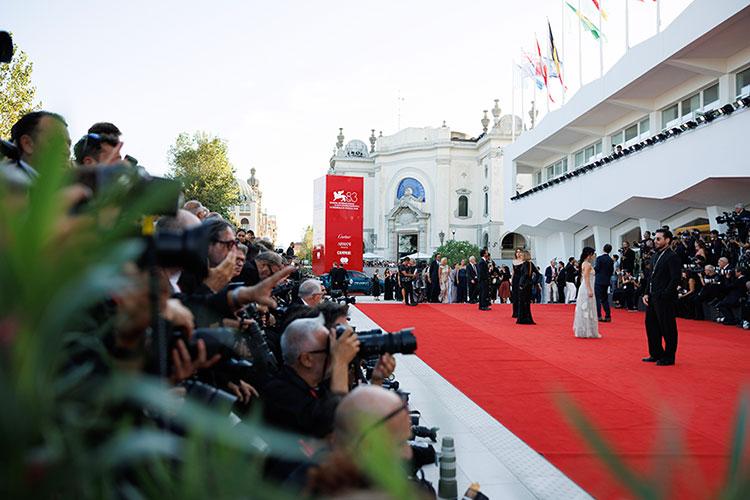
The 83rd Venice International Film Festival Opens
第83届威尼斯国际电影节开幕
Dì bāshísān jiè Wēinísī Guójì Diànyǐng Jié kāimù
The 83rd Venice International Film Festival opened on September 2, 2026, on the Lido island. British director Danny Boyle's "Ink" premiered as the opening film. Twenty-one films are competing for the Golden Lion, including Korean director Lee Chang-dong's "Possible Love" and Japanese director Kore-eda Hirokazu's "Look Back."
翻译 Translation
2026年9月2日,第83届威尼斯国际电影节在意大利水城威尼斯开幕。本届电影节将持续至9月12日,共设主竞赛、地平线、威尼斯沉浸等多个单元。威尼斯国际电影节创立于1932年,与法国戛纳国际电影节、德国柏林国际电影节并称欧洲三大国际电影节,是世界上历史最悠久的电影节。
On September 2, 2026, the 83rd Venice International Film Festival opened in the Italian water city of Venice. This year's festival will run until September 12 and features multiple sections including the main competition, Orizzonti, and Venice Immersive. Founded in 1932, the Venice International Film Festival, along with the Cannes International Film Festival in France and the Berlin International Film Festival in Germany, is known as one of Europe's three major international film festivals and is the oldest film festival in the world.
英国导演丹尼·博伊尔执导的影片《墨》作为开幕影片在利多岛首映。该片讲述了媒体大亨鲁珀特·默多克早年收购《太阳报》并将其打造为英国最畅销小报的故事。博伊尔表示,这是他第一次为威尼斯电影节开幕,感到非常荣幸。影片由杰克·奥康奈尔、盖·皮尔斯和克莱尔·福伊主演。
The film "Ink," directed by British director Danny Boyle, premiered on the Lido as the opening film. The film tells the story of media tycoon Rupert Murdoch's early acquisition of The Sun and his transformation of it into Britain's best-selling tabloid. Boyle said it was his first time opening the Venice Film Festival and he felt very honored. The film stars Jack O'Connell, Guy Pearce, and Claire Foy.
电影节
film festival
noun
戛纳电影节每年在法国举行。
The Cannes Film Festival is held in France every year.
开幕
to open; to inaugurate
verb
展览会明天上午开幕。
The exhibition opens tomorrow morning.
闭幕
to close; to conclude
verb
运动会将在下周闭幕。
The sports meet will close next week.
水城
water city
noun
威尼斯是著名的水城。
Venice is a famous water city.
单元
section; unit
noun
这部电影入围了主竞赛单元。
This film was selected for the main competition section.
创立
to found; to establish
verb
这所学校创立于1950年。
This school was founded in 1950.
悠久
long-standing; age-old
adjective
中国有悠久的历史。
China has a long history.
导演
director; to direct
noun/verb
他是这部电影的导演。
He is the director of this film.
首映
to premiere; premiere
verb/noun
这部新片下个月首映。
This new film premieres next month.
媒体
media
noun
媒体报道了这个消息。
The media reported this news.
大亨
tycoon; magnate
noun
他是一位地产大亨。
He is a real estate tycoon.
收购
to acquire; to purchase
verb
这家公司收购了竞争对手。
This company acquired its competitor.
打造
to create; to build
verb
他们想打造一个国际品牌。
They want to build an international brand.
畅销
best-selling
adjective/verb
这本书非常畅销。
This book is a bestseller.
荣幸
honored
adjective
能参加这次会议,我感到非常荣幸。
I feel very honored to attend this meeting.
角逐
to compete for
verb
三支球队将角逐冠军。
Three teams will compete for the championship.
奖项
award; prize
noun
他获得了最佳男演员奖项。
He won the Best Actor award.
评委
judge; juror
noun
评委们正在讨论获奖名单。
The judges are discussing the winners list.
荣誉
honor; glory
noun
这是他一生中最大的荣誉。
This is the greatest honor of his life.
入围
to be selected; to be shortlisted
verb
她的作品入围了决赛。
Her work was selected for the final.
云集
to gather; to converge
verb
各地明星云集于此。
Stars from all over gathered here.
关注
to pay attention to; attention
verb/noun
这个问题引起了广泛关注。
This issue attracted widespread attention.
阶层
social class; stratum
noun
不同阶层的人有不同的生活方式。
People from different social classes have different lifestyles.
交集
intersection; overlap
noun
他们的生活有了交集。
Their lives had an intersection.
口碑
public praise; reputation
noun
这部电影口碑很好。
This film has a very good reputation.
榜上有名
to be on the list; to be among the selected
idiom
他的新作品榜上有名。
His new work is on the list.
缺席
to be absent
verb
他因为生病缺席了会议。
He was absent from the meeting because he was sick.
展映
to screen; screening
verb/noun
电影节期间将展映多部经典影片。
Many classic films will be screened during the festival.
推广
to promote; to popularize
verb
他们正在推广这项新技术。
They are promoting this new technology.
交流
to exchange; exchange
verb/noun
两国之间的文化交流越来越频繁。
Cultural exchanges between the two countries are becoming more and more frequent.
专场
special screening; special session
noun
这部电影举行了专场放映。
This film held a special screening.
档案
archive; file
noun
这些档案记录了重要的历史。
These archives record important history.
载体
carrier; medium
noun
文字是文化的重要载体。
Writing is an important carrier of culture.
华侨
overseas Chinese
noun
很多华侨在海外生活了很多年。
Many overseas Chinese have lived abroad for many years.
守望
to keep watch; to stand guard
verb
他们一直守望着家乡。
They have been keeping watch over their hometown.
突破
to break through; breakthrough
verb/noun
这是一个重要的技术突破。
This is an important technological breakthrough.
沉浸
immersive; to immerse
verb
这个展览给观众带来了沉浸式体验。
This exhibition brought an immersive experience to the audience.
线索
clue; thread
noun
警察找到了一条重要线索。
The police found an important clue.
亲情
family affection
noun
亲情是世界上最珍贵的东西。
Family affection is the most precious thing in the world.
评审团
jury; panel of judges
noun
评审团由五位专家组成。
The jury is composed of five experts.
纪录片
documentary
noun
这部纪录片讲述了一个真实的故事。
This documentary tells a true story.
鼓掌
to applaud; to clap
verb
观众为演员热烈鼓掌。
The audience applauded warmly for the actors.
授予
to award; to confer
verb
他被授予了最佳导演奖。
He was awarded the Best Director prize.
落下帷幕
to come to an end; to conclude
idiom
这场精彩的比赛终于落下帷幕。
This wonderful competition finally came to an end.
探索
to explore
verb
人类一直在探索宇宙的奥秘。
Humanity has been exploring the mysteries of the universe.
提名
to nominate; nomination
verb/noun
她获得了最佳女主角提名。
She received a Best Actress nomination.
汇集
to gather; to collect
verb
来自世界各地的艺术家汇集在这里。
Artists from all over the world gathered here.
生机
vitality; life
noun
春天的田野充满了生机。
The spring fields are full of vitality.
真挚
sincere; genuine
adjective
他表达了对朋友真挚的感谢。
He expressed sincere gratitude to his friend.
辉煌
brilliant; glorious
adjective
这座建筑有着辉煌的历史。
This building has a glorious history.
被授予 (bèi shòuyǔ)
"被授予" is the passive form of "授予," meaning "to be awarded" or "to be conferred." The structure is "A 被授予 + award." It is commonly used in news reports about awards and honors. It emphasizes the recipient rather than the giver. This pattern is very common in HSK 5-6 level reading materials.
这位老教师被授予了"终身成就奖",全场起立鼓掌。
This old teacher was awarded the "Lifetime Achievement Award," and the whole audience stood up and applauded.
那家小公司因为环保技术出色,被授予了绿色创新奖。
That small company was awarded the Green Innovation Prize for its outstanding environmental technology.
他在毕业典礼上被授予了优秀学生称号。
He was awarded the title of Outstanding Student at the graduation ceremony.
虽然……但…… (suīrán... dàn...)
This pattern means "although... but..." It is used to contrast two clauses, where the second clause presents a fact that is surprising or different from what the first clause might suggest.
The "但" can also be replaced by "但是" or "可是." It is one of the most common concession structures in Chinese and is essential for HSK 5-6 learners.
虽然这家餐厅看起来不起眼,但菜的味道特别好。
Although this restaurant looks unremarkable, the food tastes especially good.
虽然他已经学了三年中文,但写汉字还是有点慢。
Although he has studied Chinese for three years, he is still a bit slow at writing Chinese characters.
虽然外面下着大雨,但快递员还是按时把包裹送到了。
Although it was raining heavily outside, the delivery person still delivered the package on time.
以……为…… (yǐ... wéi...)
"以……为……" means "to take... as..." or "to use... as..." It is a formal pattern used to indicate that something is regarded, used, or treated as something else.
The structure is "以 + A + 为 + B."
It is very common in formal writing, news reports, and academic texts. It adds a sense of formality and precision to the sentence.
这家公司以质量为生命,从不偷工减料。
This company takes quality as its life and never cuts corners.
他以自己的经历为素材,写了一本小说。
He used his own experiences as material and wrote a novel.
这个社区以老年人为主要服务对象。
This community takes elderly people as its main service target.
值得……的是 (zhídé... de shì)
"值得……的是" means "what is worth... is" or "it is worth noting that..."
It is used to highlight an important or noteworthy point.
The structure is "值得 + verb/adjective + 的是, + clause." It draws the reader's attention to a particularly significant detail.
值得高兴的是,奶奶的身体比去年好多了。
What is worth being happy about is that Grandma's health is much better than last year.
值得思考的是,为什么有些孩子不喜欢阅读。
What is worth thinking about is why some children do not like reading.
值得表扬的是,他主动帮助了新同学。
What is worth praising is that he took the initiative to help the new classmate.
不仅……而且…… (bùjǐn... érqiě...)
This pattern means "not only... but also..." It is used to add more information and emphasize that there is an additional, often more important, point.
The structure is "不仅 + A + 而且 + B." It is very common in both spoken and written Chinese, and it can connect nouns, verbs, adjectives, or clauses.
It is different from "不仅……也……" in that "而且" is slightly more formal and emphatic.
这家小店不仅价格便宜,而且服务态度特别好。
This small shop is not only cheap but also has especially good service.
他不仅会弹钢琴,而且还会拉小提琴。
He can not only play the piano but also play the violin.
这次旅行不仅让我放松了心情,而且让我认识了很多新朋友。
This trip not only helped me relax but also let me meet many new friends.

You may also like


Subscribe
Login
0 Comments
Oldest