
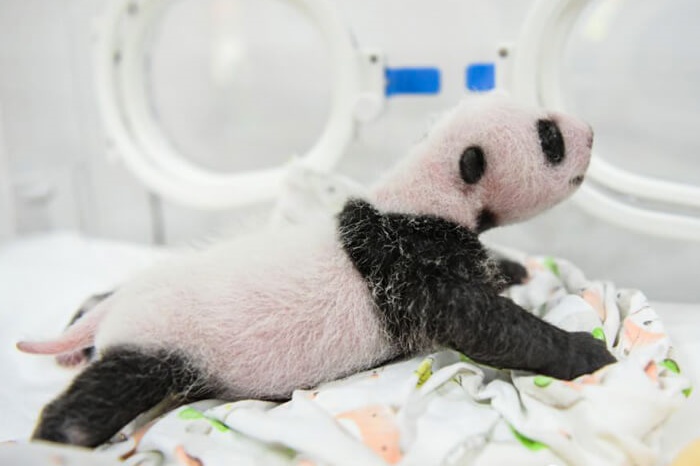
Chengdu Panda Base Welcomes Newborn Panda Cubs
成都大熊猫繁育基地迎来新生熊猫宝宝
Chéngdū Dàxióngmāo Fányù Jīdì yínglái xīnshēng xióngmāo bǎobao
In September 2026, newborn panda cubs at Chengdu's Panda Base met visitors outdoors for the first time. They were carried by keepers, looked around curiously, and tried to climb. The cubs stay in the Sun Nursery and Star Nursery. Visitors must be quiet and cannot use flash when taking photos.
翻译 Translation
今年九月,成都大熊猫繁育研究基地有了好消息。2026年出生的熊猫宝宝第一次到室外活动场,和大家见面了。这是它们第一次在外面玩。
This September, there was good news from the Chengdu Research Base of Giant Panda Breeding. The panda cubs born in 2026 came to the outdoor activity area for the first time to meet everyone. This was their first time playing outside.
那天天气很好。下了几天雨以后,太阳出来了,不冷也不热。在活动场里,饲养员轻轻地抱着熊猫宝宝。宝宝们很好奇,抬头看来看去。它们还想爬旁边的架子。
The weather that day was very good. After several days of rain, the sun came out, and it was neither cold nor hot. In the activity area, keepers gently held the panda cubs. The cubs were very curious and raised their heads to look around. They also wanted to climb the frame next to them.
熊猫
panda
noun
我最喜欢的动物是熊猫。
My favorite animal is the panda.
繁育
to breed; to reproduce
verb
这个基地繁育了很多大熊猫。
This base has bred many giant pandas.
基地
base; center
noun
我们参观了熊猫基地。
We visited the panda base.
宝宝
baby
noun
熊猫宝宝在睡觉。
The panda baby is sleeping.
出生
to be born
verb
我出生在北京。
I was born in Beijing.
室外
outdoors; outdoor
noun/adjective
室外比室内凉快。
It is cooler outdoors than indoors.
见面
to meet
verb
我们明天见面吧。
Let's meet tomorrow.
天气
weather
noun
今天的天气很好。
Today's weather is very good.
太阳
sun
noun
太阳出来了。
The sun has come out.
冷
cold
adjective
冬天很冷。
Winter is very cold.
热
hot
adjective
夏天很热。
Summer is very hot.
饲养员
keeper; animal caretaker
noun
饲养员在给熊猫喂奶。
The keeper is feeding milk to the panda.
抱
to hold; to carry in arms
verb
妈妈抱着小宝宝。
Mom is holding the little baby.
好奇
curious
adjective
小孩子对什么都很好奇。
Little children are curious about everything.
抬头
to raise one's head; to look up
verb phrase
他抬头看天空。
He raised his head to look at the sky.
爬
to climb; to crawl
verb
小猫爬到了树上。
The kitten climbed up the tree.
架子
frame; rack; shelf
noun
书放在架子上。
The books are on the shelf.
产房
nursery; birthing room
noun
熊猫宝宝住在太阳产房。
The panda cubs live in the Sun Nursery.
专门
specially; special
adverb/adjective
这是专门给你做的。
This was specially made for you.
照顾
to take care of; to look after
verb
妈妈在家照顾弟弟。
Mom takes care of my younger brother at home.
喂
to feed
verb
我给小兔子喂菜。
I feed vegetables to the little rabbit.
奶
milk
noun
宝宝每天喝奶。
The baby drinks milk every day.
量
to measure
verb
老师给我们量了身高。
The teacher measured our height.
体重
weight (of a body)
noun
这只熊猫的体重是多少?
What is this panda's weight?
游客
tourist; visitor
noun
公园里有很多游客。
There are many tourists in the park.
注意
to pay attention to
verb
过马路要注意安全。
Pay attention to safety when crossing the road.
大声
loudly; loud
adverb/adjective
请不要大声说话。
Please do not talk loudly.
害怕
to be afraid; scared
verb/adjective
小妹妹害怕狗。
The little sister is afraid of dogs.
拍照
to take a photo
verb
我们在这里拍照吧。
Let's take a photo here.
关掉
to turn off; to switch off
verb
睡觉前请关掉灯。
Please turn off the lights before sleeping.
闪光灯
flash (of a camera)
noun
在博物馆里不能用闪光灯。
You cannot use flash in the museum.
保护
to protect
verb
我们要保护小动物。
We should protect small animals.
可爱
cute; lovely
adjective
这只小猫真可爱。
This kitten is really cute.
高兴
happy; glad
adjective
今天我很高兴。
I am very happy today.
小家伙
little one; little guy
noun
这个小家伙很调皮。
This little guy is very naughty.
早点
earlier; a bit early
adverb
我们早点出发吧。
Let's set off a bit earlier.
世界
world
noun
全世界的人都喜欢熊猫。
People all over the world like pandas.
朋友
friend
noun
他是我的好朋友。
He is my good friend.
欢迎
to welcome
verb
欢迎来我家。
Welcome to my home.
地方
place
noun
这个地方很漂亮。
This place is very beautiful.
第一次…… (dì-yī cì...)
Structure: 第一次 + [verb phrase]
This pattern means "the first time (doing something)." "第一次" is placed before a verb phrase to show that the action is happening for the first time.
It can also be used at the beginning of a sentence or after the subject. This structure is very common when talking about new experiences or milestones.
熊猫宝宝第一次到室外活动场和大家见面了。
The panda cubs came to the outdoor activity area to meet everyone for the first time.
我第一次去北京的时候,觉得很兴奋。
When I went to Beijing for the first time, I felt very excited.
这是她第一次自己做中国菜。
This is her first time making Chinese food by herself.
不……也不…… (bù... yě bù...)
Structure: 不 + [adjective/verb 1] + 也不 + [adjective/verb 2]
This pattern means "neither... nor..." It is used to describe something that is not one thing and also not another thing.
It is very useful for describing weather, feelings, or situations that are moderate or neutral.
下了几天雨以后,太阳出来了,不冷也不热。
After several days of rain, the sun came out; it was neither cold nor hot.
这件衣服不贵也不便宜。
This piece of clothing is neither expensive nor cheap.
他不太高也不矮,正好。
He is neither too tall nor too short, just right.
因为…… (yīnwèi...)
Structure: 因为 + [reason / cause] + [result]
"因为" means "because." It introduces a reason or cause. It can be used alone or together with "所以" (so/therefore). When used alone, the reason is emphasized.
When used with "所以," the result is emphasized. This is one of the most basic and important conjunctions in Chinese.
不要大声说话,因为熊猫宝宝会害怕。
Do not talk loudly, because the panda cubs will be scared.
因为下雨,我们没有去公园。
Because it rained, we did not go to the park.
因为今天很忙,所以我没吃午饭。
Because I was very busy today, I did not eat lunch.
如果……可以…… (rúguǒ... kěyǐ...)
Structure: 如果 + [condition] + 可以 + [suggestion / action]
This pattern means "if... you can..." It is used to give advice or suggestions. The first part with "如果" sets up a condition, and the second part with "可以" gives a possible action or suggestion.
It is very useful in everyday conversation when giving advice.
如果你也想去成都看熊猫宝宝,可以早点去。
If you also want to go to Chengdu to see the panda cubs, you can go earlier.
如果明天天气好,我们可以去爬山。
If the weather is good tomorrow, we can go hiking.
如果你有问题,可以问我。
If you have questions, you can ask me.
好好地…… (hǎohǎo de...)
Structure: 好好地 + [verb phrase]
"好好地" means "properly," "well," or "carefully." It is placed before a verb to emphasize that the action should be done in a good, proper, or serious way.
It often appears in advice, warnings, or when someone is being told to do something with care.
大家都要好好地保护它们。
Everyone should protect them well.
你要好好地学习,不要玩太多游戏。
You should study properly and not play too many games.
他好好地睡了一觉,现在精神很好。
He had a good sleep and now he is full of energy.

You may also like
Specialty Mooncakes Hit the Market as Mid-Autumn Festival Approaches
September 23, 2026

Top Mid-Autumn Moon Watching Spots
September 21, 2026
24-Hour Automated Public Libraries in Chinese Cities
September 16, 2026
Subscribe
Login
0 Comments
Oldest