
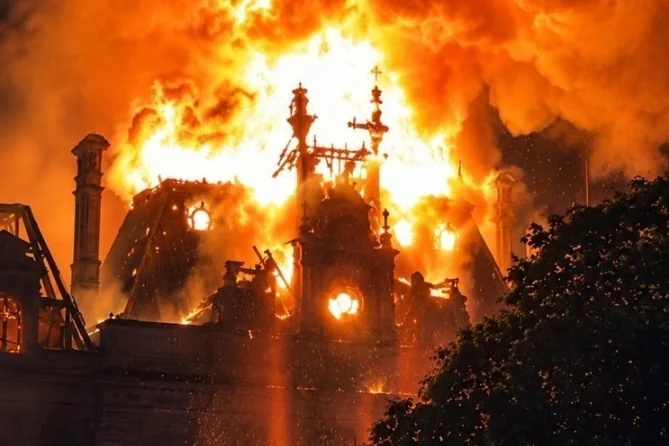
Historic Limoges Town Hall Collapses in Flames Amid Mass Protests in France
法国利摩日市政厅在抗议中起火倒塌
Fǎguó Límójì shìzhèngtīng zài kàngyì zhōng qǐhuǒ dǎotā
On October 17, 2026, the historic town hall in Limoges, France, was set on fire during nationwide protests over the cost of living. Masked people broke into the 143-year-old building and started the fire. The clock tower collapsed, and the building was largely destroyed. Across France, about 550,000 to 800,000 people protested, and around 1,200 people were arrested.
翻译 Translation
2026年10月17日,法国很多城市发生了抗议活动。在法国中南部的小城利摩日,一座老市政厅被人放火烧了。这座建筑有143年的历史。当天,一些蒙面的人打破了窗户,进入大楼,然后点了火。
On October 17, 2026, protests took place in many cities in France. In Limoges, a small city in central-southern France, an old town hall was set on fire. This building has a history of 143 years. That day, some masked people broke the windows, entered the building, and then set it on fire.
火很大。消防员很快到了,但是火还是烧了很久。市政厅的钟楼很高,有43米。大火中,钟楼倒塌了。当地官员说,市政厅的屋顶坏了,大部分外墙也没有了。这座建筑“大部分已经毁了”。很多利摩日的居民看到后,非常难过。
The fire was very big. Firefighters arrived quickly, but the fire still burned for a long time. The town hall’s clock tower was very tall, 43 metres. In the fire, the clock tower collapsed. Local officials said the town hall’s roof was ruined, and most of the outer walls were gone too. The building was “largely destroyed.” Many residents of Limoges were very sad to see this.
城市
city
noun
上海是一个大城市。
Shanghai is a big city.
发生
to happen
verb
昨天这里发生了一起事故。
An accident happened here yesterday.
抗议
to protest; protest
verb/noun
工人们在工厂门口抗议。
The workers protested at the factory gate.
市政厅
town hall; city hall
noun
市政厅前面有一个大广场。
There is a big square in front of the town hall.
放火
to set on fire; arson
verb
放火是非常危险的犯罪行为。
Arson is a very dangerous criminal act.
建筑
building; architecture; to build
noun/verb
这座建筑很有名。
This building is very famous.
历史
history
noun
我很喜欢看历史书。
I really like reading history books.
蒙面
masked; to cover one’s face
adjective/verb
电影里的坏人常常蒙面。
Bad people in movies are often masked.
窗户
window
noun
请把窗户打开。
Please open the window.
进入
to enter
verb
他进入了房间,关上了门。
He entered the room and closed the door.
消防员
firefighter
noun
消防员正在灭火。
Firefighters are putting out the fire.
钟楼
clock tower
noun
这座钟楼有一百多年的历史。
This clock tower is over a hundred years old.
倒塌
to collapse
verb
那座旧房子在地震中倒塌了。
That old house collapsed in the earthquake.
官员
official
noun
政府官员参加了会议。
Government officials attended the meeting.
屋顶
roof
noun
屋顶上有一只猫。
There is a cat on the roof.
外墙
outer wall
noun
这栋楼的外墙是红色的。
The outer wall of this building is red.
居民
resident
noun
这个社区的居民互相帮助。
The residents of this community help each other.
难过
sad
adjective
听到这个消息,我很难过。
I was very sad to hear this news.
物价
prices (of goods)
noun
最近物价上涨了很多。
Prices have risen a lot recently.
上涨
to rise; to go up
verb
房价一直在上涨。
Housing prices keep rising.
公共服务
public services
noun phrase
政府应该改善公共服务。
The government should improve public services.
参加
to participate; to join
verb
我要参加明天的比赛。
I will take part in tomorrow’s competition.
变
to become; to change
verb
天气变冷了。
The weather has become cold.
暴力
violence; violent
noun/adjective
我们反对一切形式的暴力。
We oppose all forms of violence.
砸
to smash; to break
verb
他生气地砸了杯子。
He smashed the cup in anger.
攻击
to attack; attack
verb/noun
那只狗攻击了陌生人。
That dog attacked a stranger.
催泪瓦斯
tear gas
noun
警察使用催泪瓦斯控制了局面。
The police used tear gas to control the situation.
统计
to count; statistics
verb/noun
据统计,今年游客增加了。
According to statistics, tourists increased this year.
被捕
to be arrested
verb phrase
小偷被捕了。
The thief was arrested.
受伤
to be injured
verb
他的手受伤了。
His hand is injured.
总统
president
noun
总统发表了电视讲话。
The president gave a televised address.
容忍
to tolerate
verb
我们不能容忍不诚实的行为。
We cannot tolerate dishonest behaviour.
破坏
to destroy; destruction
verb/noun
不要破坏公共财物。
Do not destroy public property.
起诉
to prosecute; to sue
verb
公司起诉了那名员工。
The company sued that employee.
惩罚
to punish; punishment
verb/noun
做错事就要受到惩罚。
If you do something wrong, you will be punished.
市长
mayor
noun
市长访问了这所学校。
The mayor visited this school.
表达
to express
verb
他表达了感谢。
He expressed his thanks.
意见
opinion
noun
大家提出了很多意见。
Everyone put forward many opinions.
方式
way; method
noun
这是解决问题的一种方式。
This is one way to solve the problem.
更
more; even more
adverb
今天比昨天更热。
Today is even hotter than yesterday.
糟
bad; terrible
adjective
情况很糟。
The situation is very bad.
烧毁
to burn down; to destroy by fire
verb
大火烧毁了森林。
The fire burned down the forest.
心中
in one’s heart
noun
他心中有一个梦想。
He has a dream in his heart.
永远
forever
adverb
我会永远记得你。
I will remember you forever.
遗憾
regret; regrettable
noun/adjective
没能去旅行,我很遗憾。
I regret not being able to travel.
被 (bèi)
“被” is used to make a passive sentence. It shows that the subject receives an action. The structure is “A 被 (B) + verb.” We often use “被” to say that someone or something was hurt, destroyed, or affected.
我的杯子被弟弟打破了。
My cup was broken by my younger brother.
那棵大树被风吹倒了。
That big tree was blown down by the wind.
他的自行车被偷了。
His bicycle was stolen.
一边……一边…… (yìbiān... yìbiān...)
“一边……一边……” means “doing one thing while doing another.” It is used when two actions happen at the same time. The structure is “一边 + verb 1 + 一边 + verb 2.”
他一边吃饭一边看手机。
He looks at his phone while eating.
我们一边走路一边聊天。
We chat while walking.
妹妹一边唱歌一边跳舞。
My younger sister sings while dancing.
然后 (ránhòu)
“然后” means “then” or “after that.” It is used to show the order of events. It comes after the first action and before the second action.
我先洗手,然后吃饭。
I wash my hands first, then eat.
他先做作业,然后出去玩。
He does his homework first, then goes out to play.
我们坐地铁到火车站,然后坐火车去北京。
We take the subway to the train station, then take the train to Beijing.
Tag:Global Affairs

You may also like


A 7.0-Magnitude Earthquake Hits Tibet
October 26, 2026

Man Lives 271 Days with Pig Kidney, Setting a New Record
October 19, 2026
Subscribe
Login
0 Comments
Oldest