
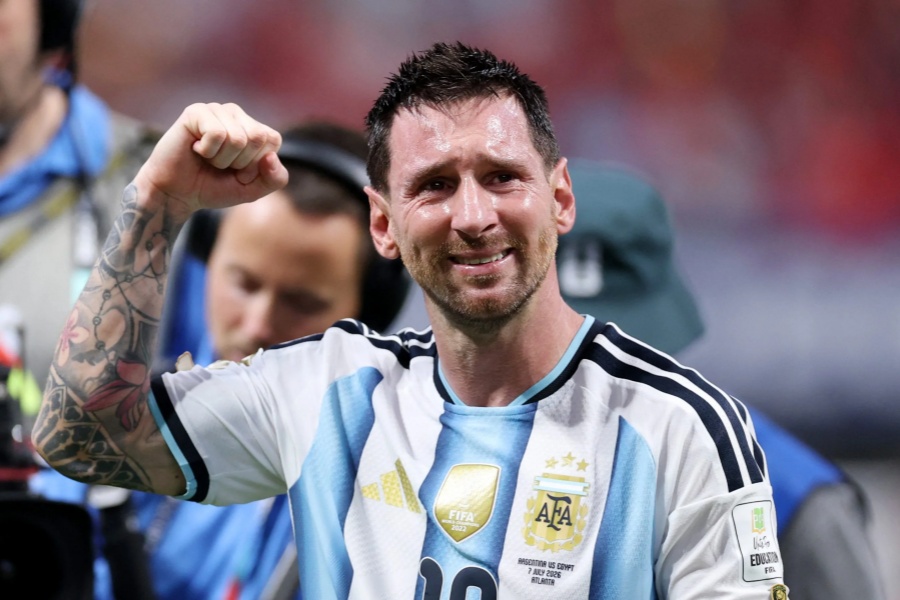
Lionel Messi Announces Retirement from International Football
梅西宣布从国家队退役
Méixī xuānbù cóng guójiāduì tuìyì
On August 31, 2026, 39-year-old Lionel Messi announced his retirement from Argentina's national team. He wrote a handwritten letter saying he had given everything to the team and that it was time for a new generation. Messi leaves as Argentina's all-time leading scorer and appearance holder, with 207 caps and 125 goals.
翻译 Translation
2026年8月31日深夜,阿根廷足球明星梅西宣布从国家队退役。这个消息很快传遍了全世界。梅西今年39岁。他通过个人社交媒体发布了一封手写告别信,正式结束了长达21年的国家队生涯。
Late at night on August 31, 2026, Argentine football star Lionel Messi announced his retirement from the national team. This news quickly spread around the world. Messi is 39 years old this year. He posted a handwritten farewell letter on his personal social media, officially ending his 21-year national team career.
梅西在信中说:“这是一个让我心痛的决定,但我明白,时候到了。”他还写道:“我已经掏空了自己,再也无力给予更多。”他感谢球迷20年来的支持,并表示以后会像普通球迷一样,从场外支持阿根廷队。
In the letter, Messi said, “This is a decision that hurts my heart, but I understand that the time has come.” He also wrote, “I have emptied myself and have no more strength to give.” He thanked the fans for their support over the past 20 years and said that in the future he would support the Argentina team from off the pitch like an ordinary fan.
退役
to retire (from sports)
verb
他决定在赛季结束后退役。
He decided to retire after the season ended.
宣布
to announce
verb
公司宣布了新的计划。
The company announced a new plan.
明星
star; celebrity
noun
她是一个很有名的电影明星。
She is a very famous movie star.
传遍
to spread everywhere
verb
好消息很快传遍了整个学校。
The good news quickly spread throughout the whole school.
社交媒体
social media
noun
他经常在社交媒体上分享照片。
He often shares photos on social media.
手写
handwritten; to write by hand
adjective/verb
这是一封手写信。
This is a handwritten letter.
告别
to say goodbye; farewell
verb/noun
他向大家告别,去了另一个城市。
He said goodbye to everyone and went to another city.
生涯
career
noun
他的音乐生涯超过三十年。
His music career spans over thirty years.
心痛
heartbroken; to feel pain in the heart
adjective/verb
听到这个消息,她很心痛。
Hearing this news, she was heartbroken.
无力
powerless; unable
adjective
他生病了,无力完成工作。
He was sick and unable to finish the work.
给予
to give; to provide
verb
老师给予了我很多帮助。
The teacher gave me a lot of help.
球迷
sports fan
noun
很多球迷来到现场看比赛。
Many fans came to the venue to watch the match.
支持
to support; support
verb/noun
我支持你的决定。
I support your decision.
回顾
to look back; review
verb/noun
回顾过去,他觉得自己很幸运。
Looking back, he feels very lucky.
代表
to represent; representative
verb/noun
他代表学校参加了比赛。
He represented the school in the competition.
出场
to appear; to play (in a match)
verb
这位球员今天没有出场。
This player did not appear in today's match.
率领
to lead; to command
verb
他率领球队赢得了冠军。
He led the team to win the championship.
夺得
to win; to capture
verb
她在比赛中夺得了金牌。
She won the gold medal in the competition.
冠军
champion; championship
noun
他们是去年的冠军。
They are last year's champions.
决赛
final (match)
noun
决赛将在明天举行。
The final will be held tomorrow.
输给
to lose to
verb phrase
我们输给了更强的对手。
We lost to a stronger opponent.
贡献
to contribute; contribution
verb/noun
他为球队贡献了很多进球。
He contributed many goals to the team.
出色
outstanding; excellent
adjective
她的表现非常出色。
Her performance was outstanding.
原因
reason; cause
noun
他离开的原因是想念家人。
The reason he left was that he missed his family.
影响
to affect; influence
verb/noun
这件事对他影响很大。
This matter had a great impact on him.
补充
to add; to supplement
verb
他在信的末尾补充了几句话。
He added a few words at the end of the letter.
确信
to be convinced; to firmly believe
verb
我确信他会成功。
I am convinced he will succeed.
合同
contract
noun
他和公司签了一份三年的合同。
He signed a three-year contract with the company.
履行
to fulfill; to carry out
verb
我们要履行自己的承诺。
We must fulfill our promises.
继续
to continue
verb/adverb
他决定继续留在俱乐部。
He decided to continue staying at the club.
力量
strength; force
noun
团队的力量比个人大。
The strength of a team is greater than that of an individual.
值得
to be worth; worthwhile
verb/adjective
这个展览很值得一看。
This exhibition is well worth seeing.
机会
opportunity; chance
noun
这是一个很好的学习机会。
This is a very good learning opportunity.
表达
to express
verb
他向我表达了感谢。
He expressed his thanks to me.
敬意
respect; tribute
noun
我向他表达了我的敬意。
I expressed my respect to him.
足协
football association
noun
足协发布了新的规定。
The football association issued new rules.
现实
reality
noun
理想和现实有时不一样。
Ideals and reality are sometimes different.
伟大
great
adjective
他是一位伟大的音乐家。
He is a great musician.
总统
president (of a country)
noun
总统发表了电视讲话。
The president gave a televised speech.
了不起
amazing; extraordinary
adjective
他一个人完成了这个项目,真了不起。
He completed this project alone; truly amazing.
适应
to adapt; to adjust
verb
他很快就适应了新环境。
He quickly adapted to the new environment.
属于
to belong to
verb
这个奖属于整个团队。
This award belongs to the whole team.
未来
future
noun
我们要为未来做好准备。
We need to prepare for the future.
经历
to experience; experience
verb/noun
他经历了很多困难才成功。
He experienced many difficulties before succeeding.
战胜
to defeat; to overcome
verb
他们战胜了强大的对手。
They defeated a powerful opponent.
保持
to maintain; to keep
verb
他每天跑步,保持健康。
He runs every day to maintain his health.
精神
spirit; morale
noun
他的精神值得我们学习。
His spirit is worth learning from.
消息
news; message
noun
我刚刚收到一个好消息。
I just received good news.
退役仪式
retirement ceremony
noun phrase
俱乐部为他举办了退役仪式。
The club held a retirement ceremony for him.
传奇
legend; legendary
noun/adjective
他的故事已经成为一个传奇。
His story has already become a legend.
之后 (zhīhòu)
之后 means "after..." It is used to show the order of events.
The structure is "(在) + event/time + 之后, + result."
It is different from simply saying "以后" because "在……之后" is more formal and clearly marks the previous event as a specific reference point.
经历了父亲的事情之后,他比以往更加确信这个决定。
After experiencing his father's passing, he was more convinced of this decision than ever.
在比赛结束之后,球员们向观众鼓掌致谢。
After the match ended, the players applauded the audience in thanks.
在吃完晚饭之后,我们一起去散步。
After finishing dinner, we went for a walk together.
正如……所说 (zhèngrú... suǒ shuō)
This pattern means "just as... said" or "as... put it." It is used to quote or refer to someone's words to support your point.
The structure is "正如 + person + 所说." It is common in formal writing, speeches, and news reports, and it adds credibility or emphasis to what follows.
正如梅西自己所说,足球的未来属于年轻人。
Just as Messi himself said, the future of football belongs to the young.
正如老师所说,努力才会有收获。
Just as the teacher said, only with effort will there be rewards.
正如大家所知,他是一位非常有才华的歌手。
As everyone knows, he is a very talented singer.

You may also like

China’s High-Speed Rail Network Extends Further into Remote Areas
September 22, 2026


Europe Revives Night Sleeper Trains as Demand for Green Travel Grows
September 15, 2026
Subscribe
Login
0 Comments
Oldest