
24-Hour Automated Public Libraries in Chinese Cities
城市公共图书馆“24小时不打烊”服务
Chéngshì gōnggòng túshūguǎn “èrshísì xiǎoshí bù dǎyáng” fúwù
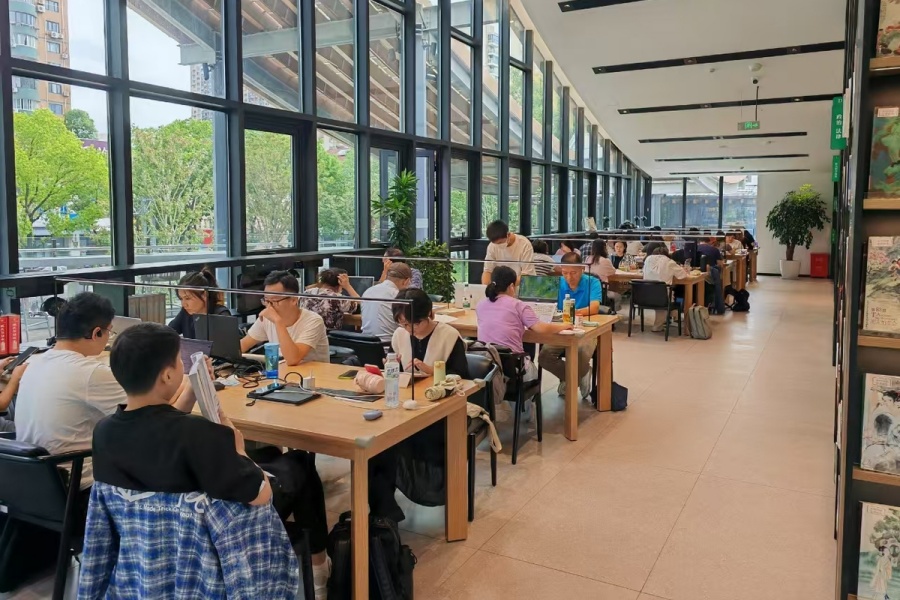
Many cities in China now have 24-hour libraries. They are open all day and all night, and there are no staff at night. People use a card to enter and machines to borrow books. Students study there, and workers read there after their jobs. These libraries are quiet and free, and they help many people.
翻译 Translation
现在,中国很多城市有24小时图书馆。这些图书馆白天开门,晚上也开门。它们一天24个小时都不关门。晚上,图书馆里没有工作人员,但是灯一直亮着,门一直开着。人们可以随时来图书馆看书、借书、还书。
Now, many cities in China have 24-hour libraries. These libraries open during the day and also open at night. They do not close for 24 hours a day. At night, there are no staff in the library, but the lights stay on and the door stays open. People can come to the library anytime to read, borrow books, and return books.
公共
public
adjective
这是一个公共图书馆。
This is a public library.
图书馆
library
noun
我周末喜欢去图书馆看书。
I like going to the library to read on weekends.
小时
hour
noun
我看了一个小时的书。
I read for one hour.
白天
daytime
noun
白天我在学校上课。
During the day I have class at school.
开门
to open (the door)
verb
商店早上八点开门。
The shop opens at eight in the morning.
关门
to close (the door)
verb
图书馆晚上十点关门。
The library closes at ten at night.
工作人员
staff; worker
noun
工作人员很热情。
The staff are very warm.
一直
always; continuously
adverb
他一直在看书。
He has been reading continuously.
随时
at any time
adverb
你可以随时来我家。
You can come to my home at any time.
时间
time
noun
你有时间吗?
Do you have time?
看书
to read books
verb phrase
我喜欢在图书馆看书。
I like reading in the library.
借书
to borrow books
verb phrase
我去图书馆借书。
I go to the library to borrow books.
还书
to return books
verb phrase
你还书了吗?
Did you return the books?
怎么
how
pronoun
这个字怎么写?
How do you write this character?
简单
simple
adjective
这个问题很简单。
This question is very simple.
卡
card
noun
我有图书卡。
I have a library card.
刷
to swipe; to brush
verb
请刷卡进门。
Please swipe your card to enter.
进去
to go in; to enter
verb
我们可以进去看看吗?
Can we go in and take a look?
机器
machine
noun
这台机器很方便。
This machine is very convenient.
自己
oneself; by oneself
pronoun
我自己做饭。
I cook by myself.
帮忙
to help
verb
你可以帮我一个忙吗?
Can you help me with something?
桌子
table; desk
noun
桌子上有一本书。
There is a book on the table.
椅子
chair
noun
这把椅子很舒服。
This chair is very comfortable.
安静
quiet
adjective
图书馆里很安静。
The library is very quiet.
写作业
to do homework
verb phrase
我晚上写作业。
I do homework in the evening.
大声
loudly; loud
adverb/adjective
请不要大声说话。
Please do not talk loudly.
说话
to talk; to speak
verb
他们正在说话。
They are talking.
学生
student
noun
我是中文学生。
I am a Chinese student.
学习
to study; study
verb/noun
我每天学习中文。
I study Chinese every day.
上学
to go to school
verb
我每天七点上学。
I go to school at seven every day.
上班
to go to work
verb
爸爸每天八点上班。
Dad goes to work at eight every day.
下班
to finish work
verb
妈妈六点下班。
Mom finishes work at six.
学英语
to study English
verb phrase
我每天晚上学英语。
I study English every evening.
准备
to prepare
verb
我在准备考试。
I am preparing for an exam.
考试
exam; to take an exam
noun/verb
明天有中文考试。
There is a Chinese exam tomorrow.
吵
noisy; to be noisy
adjective/verb
外面太吵了,我不能看书。
It is too noisy outside; I cannot read.
免费
free (of charge)
adjective
这个公园是免费的。
This park is free.
舒服
comfortable
adjective
这个沙发很舒服。
This sofa is very comfortable.
一定
definitely; certainly
adverb
我一定会来。
I will definitely come.
城市
city
noun
上海是一个大城市。
Shanghai is a big city.
帮助
to help; help
verb/noun
他帮助我学习中文。
He helps me study Chinese.
晚上
evening; night
noun
晚上我喜欢看书。
I like reading in the evening.
问题
question; problem
noun
我有一个问题。
I have a question.
看看
to take a look
verb
你去看看外面下雨了吗。
Go and see if it is raining outside.
需要
to need
verb
我需要一杯水。
I need a glass of water.
一些
some
quantity word
我买了一个一些水果。
I bought some fruit.
比较
relatively; quite
adverb
今天比较冷。
Today is relatively cold.
喜欢
to like
verb
我喜欢看书。
I like reading.
快
fast; soon
adjective/adverb
火车很快。
The train is very fast.
一……就…… (yī... jiù...)
“一……就……” means “as soon as... then...” It is used to say that as soon as one thing happens, another thing happens immediately. The structure is “一 + verb/action + 就 + result.” This pattern is very common in everyday Chinese and is different from “如果……就……” because it emphasizes that the second action happens immediately, not just as a result.
你一刷卡,门就开了。
As soon as you swipe the card, the door opens.
我一回家就写作业。
As soon as I get home, I do my homework.
他一坐下就看书。
As soon as he sits down, he reads.
又……又…… (yòu... yòu...)
“又……又……” means “both... and...” or “not only... but also...” It is used to describe something that has two qualities at the same time. The structure is “又 + adjective/verb + 又 + adjective/verb.” It is very common in spoken Chinese and is used to describe people, places, or things.
机器又方便又简单。
The machine is both convenient and simple.
图书馆又安静又舒服。
The library is both quiet and comfortable.
这个苹果又大又甜。
This apple is both big and sweet.
快要……了 (kuàiyào... le)
“快要……了” means “about to...” or “going to... soon.” It is used to say that something will happen very soon. The structure is “快要 + verb/adjective + 了.” The “了” at the end is very important. It is different from “要……了” because “快要” emphasizes that the time is very close.
中国的24小时图书馆快要越来越多了。
China's 24-hour libraries are about to become more and more numerous.
火车快要开了。
The train is about to leave.
快要下雨了,我们回家吧。
It is about to rain; let's go home.
正在…… (zhèngzài...)
“正在” means “in the middle of” or “currently doing something.” It is used to say that an action is happening right now. The structure is “正在 + verb.” It is different from “在” alone because “正在” emphasizes the ongoing nature of the action more strongly. It is very common in both spoken and written Chinese.
他们正在准备考试。
They are preparing for exams.
妈妈正在做饭。
Mom is cooking.
他正在打电话。
He is on the phone.
只要……就…… (zhǐyào... jiù...)
“只要……就……” means “as long as... then...” It is used to say that one condition is enough for a result to happen. The structure is “只要 + condition + 就 + result.” It is different from “如果……就……” because “只要” emphasizes that this one condition is sufficient, and no other conditions are needed.
只要你喜欢看书,就可以去24小时图书馆看看。
As long as you like reading, you can go and see the 24-hour library.
只要明天不下雨,我们就去公园。
As long as it does not rain tomorrow, we will go to the park.
只要努力,就能学好中文。
As long as you work hard, you can learn Chinese well.

You may also like
Specialty Mooncakes Hit the Market as Mid-Autumn Festival Approaches
September 23, 2026

Top Mid-Autumn Moon Watching Spots
September 21, 2026
The Rise of China-Chic Cultural Blind Boxes
September 11, 2026
Subscribe
Login
0 Comments
Oldest