
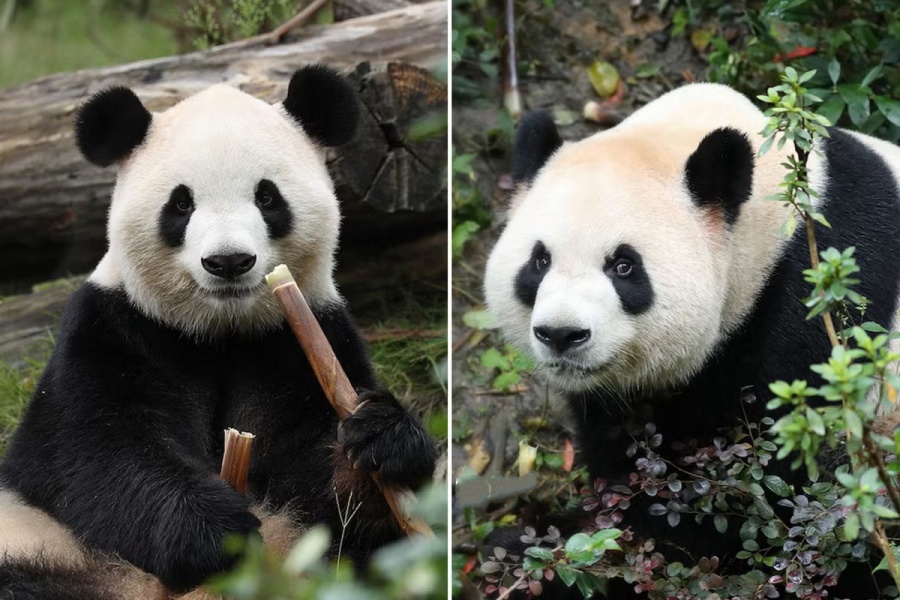
Giant Pandas Pingping and Fushuang Depart for the United States
大熊猫“平平”“福双”启程前往美国
Dàxióngmāo “Píngpíng”“Fúshuāng” qǐchéng qiánwǎng Měiguó
Two giant pandas, Pingping and Fushuang, left Chengdu for the United States on September 27, 2026. They took a special plane to Atlanta Zoo and will stay there for ten years. A keeper and a doctor went with them to take care of them. The pandas will rest for about one month before people can see them.
翻译 Translation
2026年9月27日,两只大熊猫从中国出发,去美国了。一只叫“平平”,一只叫“福双”。它们坐飞机去美国亚特兰大动物园。它们要在美国住十年。
On September 27, 2026, two giant pandas left China and went to the United States. One is called “Pingping” and one is called “Fushuang.” They took a plane to Atlanta Zoo in the United States. They will live in the United States for ten years.
“平平”是一只男熊猫,今年六岁。它很会爬树,喜欢在树上休息。“福双”是一只女熊猫,也六岁。它很聪明,很会找东西吃。因为它们都很健康,也很可爱,所以大家很喜欢它们。
“Pingping” is a male panda, six years old this year. He is very good at climbing trees and likes to rest in the trees. “Fushuang” is a female panda, also six years old. She is very smart and very good at finding food. Because they are both very healthy and also very cute, everyone likes them very much.
大熊猫
giant panda
noun
大熊猫是中国最受欢迎的动物。
Giant pandas are China's most popular animal.
出发
to set off; to depart
verb
我们明天早上八点出发。
We set off at eight tomorrow morning.
飞机
airplane
noun
我坐飞机去北京。
I take a plane to Beijing.
动物园
zoo
noun
周末我们去了动物园看熊猫。
We went to the zoo to see pandas on the weekend.
住
to live; to stay
verb
我住在学校旁边。
I live next to the school.
男
male
adjective
他是我的男同学。
He is my male classmate.
女
female
adjective
她是我姐姐,她是女的。
She is my older sister; she is female.
岁
years old
noun
我的弟弟今年五岁。
My younger brother is five years old this year.
爬树
to climb a tree
verb phrase
小猫很会爬树。
Kittens are very good at climbing trees.
休息
to rest
verb
我们休息一下,再走吧。
Let's rest a bit before going on.
聪明
smart; clever
adjective
这个孩子很聪明。
This child is very smart.
找
to look for; to find
verb
我在找我的手机。
I am looking for my phone.
健康
healthy
adjective
多吃水果对身体很健康。
Eating more fruit is very healthy for your body.
可爱
cute
adjective
这只小猫真可爱。
This kitten is really cute.
喜欢
to like
verb
我喜欢听音乐。
I like listening to music.
饲养员
keeper; animal caretaker
noun
饲养员每天给熊猫喂竹子。
The keeper feeds bamboo to the pandas every day.
医生
doctor
noun
医生说我需要多休息。
The doctor said I need more rest.
照顾
to take care of; to look after
verb
妈妈在家照顾弟弟。
Mom takes care of my younger brother at home.
竹子
bamboo
noun
大熊猫最喜欢吃竹子。
Giant pandas like eating bamboo the most.
苹果
apple
noun
我每天吃一个苹果。
I eat an apple every day.
水
water
noun
请给我一杯水。
Please give me a glass of water.
先
first
adverb
我先吃饭,然后去看电影。
I will eat first, then go watch a movie.
一个月
one month
noun phrase
我下一个月要去中国。
I am going to China next month.
准备
to prepare
verb
我在准备考试。
I am preparing for an exam.
新家
new home
noun phrase
它们到了新家,很开心。
They arrived at their new home and were very happy.
非常
very
adverb
今天非常热。
Today is very hot.
高兴
happy
adjective
今天我很高兴。
I am very happy today.
欢迎
to welcome
verb
欢迎你来我家玩。
Welcome to my home.
以后
after; later
noun
下课以后,我们去打球。
After class, we go to play ball.
可以
can; may
verb
你可以帮我一下吗?
Can you help me for a moment?
看
to see; to look
verb
我们去看电影吧。
Let's go watch a movie.
也
also
adverb
我也喜欢喝茶。
I also like drinking tea.
它们
they (for animals/things)
pronoun
它们是两只小狗。
They are two little dogs.
一直
always; continuously
adverb
他一直在看书。
He has been reading continuously.
已经
already
adverb
我已经吃过饭了。
I have already eaten.
还
still; yet
adverb
他还没有来。
He still has not come.
因为……所以…… (yīnwèi... suǒyǐ...)
“因为……所以……” means “because... therefore...” or “because... so...” We use it to show cause and effect. The part after “因为” is the reason, and the part after “所以” is the result. In English, we usually use only “because” or only “so,” but in Chinese, we often use both together.
因为今天下雨,所以我没有去公园。
Because it rained today, I did not go to the park.
因为他很努力,所以考试考得很好。
Because he worked very hard, he did very well on the exam.
因为大熊猫很可爱,所以大家都很喜欢它们。
Because giant pandas are very cute, everyone likes them very much.
虽然……但是…… (suīrán... dànshì...)
“虽然……但是……” means “although... but...” We use it when we want to say something surprising. The first part after “虽然” tells us a fact, and the second part after “但是” tells us something different from what we expect. In English, we do not use “but” with “although,” but in Chinese, we use both together.
虽然今天很冷,但是我还是去跑步了。
Although it was very cold today, I still went running.
虽然这个盒子很小,但是里面的东西很好。
Although this box is very small, the things inside are very good.
虽然现在大家还不能看它们,但是动物园已经准备好了新家。
Although everyone cannot see them yet, the zoo has already prepared a new home.
如果……就…… (rúguǒ... jiù...)
“如果……就……” means “if... then...” We use it to talk about a possible situation and what will happen as a result. The part after “如果” is the situation, and the part after “就” is the result. In English, we can use “if... then...” in the same way.
如果明天不下雨,我们就去公园。
If it does not rain tomorrow, we will go to the park.
如果你喜欢这本书,我就送给你。
If you like this book, I will give it to you.
如果你也喜欢大熊猫,就可以去美国看它们!
If you also like giant pandas, you can go to the United States to see them!
Tag:Social News

You may also like


A 7.0-Magnitude Earthquake Hits Tibet
October 26, 2026

Subscribe
Login
0 Comments
Oldest