National Day Holiday Approaches: Cities Across China Decorate to Celebrate
国庆假期将至,各地装扮一新喜迎国庆
Guóqìng jiàqī jiāng zhì, gèdì zhuāngbàn yìxīn yíng Guóqìng
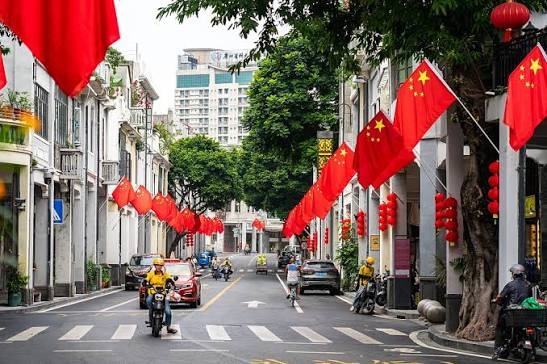
National Day is coming soon. Cities in China are putting up red flags and beautiful flowers. People are happy and ready for the holiday. The holiday is seven days long. Come and see China!
翻译 Translation
国庆节快到了。中国很多地方都在装扮,准备迎接国庆。街上挂了红旗,看起来很漂亮。人们也买了小国旗,拿在手里。
National Day is coming soon. Many places in China are decorating to welcome National Day. Red flags are hung on the streets, and they look very beautiful. People also bought small national flags and hold them in their hands.
公园里有很多花,非常好看。人们在那里拍照,跟家人一起玩。晚上,很多大楼亮了灯,灯光很美。大家都很高兴。
There are many flowers in the park, very beautiful. People take photos there and play with their families. At night, many tall buildings light up, and the lights are beautiful. Everyone is very happy.
国庆
National Day
noun
十月一日是中国的国庆节。
October 1st is China's National Day.
假期
holiday; vacation
noun
暑假是我最喜欢的假期。
Summer vacation is my favorite holiday.
装扮
to decorate; to dress up
verb
妈妈用花装扮房间。
Mom decorates the room with flowers.
迎接
to welcome; to meet
verb
我们在门口迎接客人。
We welcome guests at the door.
街
street
noun
街上有很多人。
There are many people on the street.
挂
to hang
verb
墙上挂着一张照片。
A photo is hanging on the wall.
红旗
red flag
noun
红旗在风中飘。
The red flag flutters in the wind.
漂亮
beautiful; pretty
adjective
她的裙子很漂亮。
Her dress is very beautiful.
人们
people
noun
人们都喜欢这个公园。
People all like this park.
国旗
national flag
noun
我买了一个小国旗。
I bought a small national flag.
公园
park
noun
周末我去公园散步。
I go to the park for a walk on weekends.
花
flower
noun
这朵花很香。
This flower is very fragrant.
拍照
to take a photo
verb
我们在公园拍照。
We take photos in the park.
家人
family members
noun
过年的时候,家人一起吃饺子。
During the New Year, family members eat dumplings together.
晚上
evening; night
noun
晚上我喜欢看书。
I like reading in the evening.
大楼
tall building
noun
这座城市有很多大楼。
This city has many tall buildings.
灯
light; lamp
noun
请开一下灯。
Please turn on the light.
高兴
happy
adjective
今天我很高兴。
I am very happy today.
孩子
child
noun
那个孩子在画画。
That child is drawing.
开心
happy
adjective
玩得很开心。
Had a lot of fun.
爸爸
dad
noun
爸爸去上班了。
Dad went to work.
妈妈
mom
noun
妈妈在做饭。
Mom is cooking.
跑
to run
verb
他跑得很快。
He runs very fast.
朋友
friend
noun
他是我的好朋友。
He is my good friend.
打电话
to make a phone call
verb phrase
我给妈妈打电话。
I call my mom.
快乐
happy
adjective
祝你生日快乐!
Happy birthday to you!
生日
birthday
noun
今天是我的生日。
Today is my birthday.
爱
to love
verb
我爱我的家人。
I love my family.
休息
to rest
verb
我们休息十分钟吧。
Let's rest for ten minutes.
出去
to go out
verb
我们出去吃饭吧。
Let's go out to eat.
玩
to play
verb
孩子们在公园玩。
The children are playing in the park.
看到
to see
verb
我看到了一只小猫。
I saw a kitten.
鲜花
fresh flowers
noun
桌子上有鲜花。
There are fresh flowers on the table.
欢迎
to welcome
verb
欢迎你来我家。
Welcome to my home.
中国
China
noun
中国是一个很大的国家。
China is a very big country.
地方
place
noun
这个地方很漂亮。
This place is very beautiful.
准备
to prepare
verb
我在准备考试。
I am preparing for an exam.
好看
good-looking; beautiful
adjective
这件衣服很好看。
This piece of clothing is very beautiful.
非常
very
adverb
今天非常热。
Today is very hot.
一起
together
adverb
我们去公园一起。
Let's go to the park together.
……里 (zài... lǐ)
"……里" means "in" or "inside." It is used to show the place where something is or happens. The structure is "place + 里." It is very common in everyday Chinese.
公园里有很多花。
There are many flowers in the park.
书包里有一本书。
There is a book in the backpack.
房间里很安静。
The room is very quiet.
给…… (gěi...)
"给" means "to give." It is used when someone gives something to another person. The structure is "A 给 B + something." It is a very basic and useful verb in Chinese.
妈妈给我一个苹果。
Mom gives me an apple.
他给朋友一本书。
He gives a friend a book.
老师给学生很多作业。
The teacher gives the students a lot of homework.
跟……一起 (gēn... yìqǐ)
"跟……一起" means "together with..." It is used when two or more people do something together. The structure is "A 跟 B 一起 + verb." It is very common in daily conversation.
我跟家人一起吃饭。
I eat together with my family.
他跟朋友一起看电影。
He watches a movie together with his friend.
我们跟老师一起拍照。
We take photos together with the teacher.

You may also like


A 7.0-Magnitude Earthquake Hits Tibet
October 26, 2026

Subscribe
Login
0 Comments
Oldest