
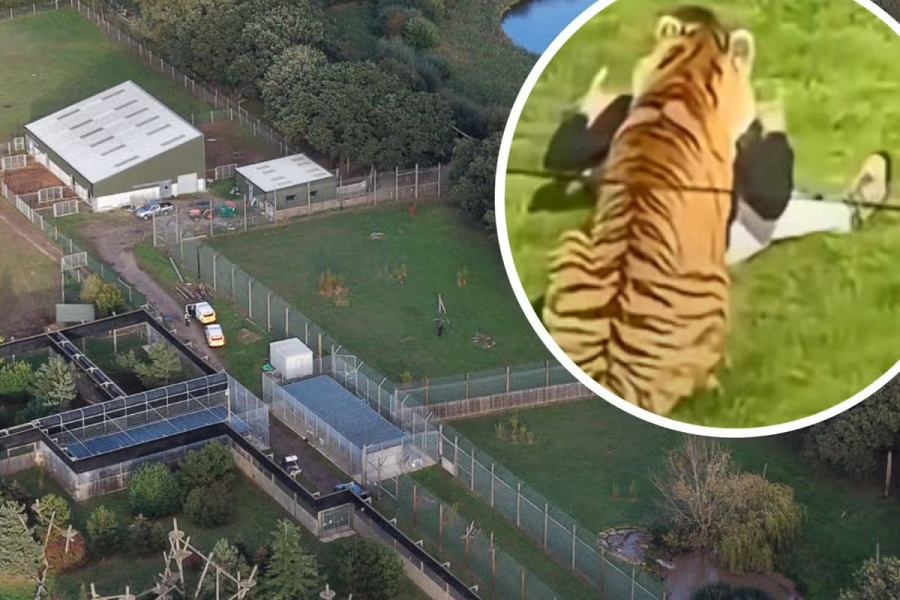
Man Dies After Jumping into Tiger Enclosure at Yorkshire Zoo
英国男子跳入老虎围栏后死亡
Yīngguó nánzǐ tiào rù lǎohǔ wéilán hòu sǐwáng
A man in his 20s jumped into a tiger enclosure at Yorkshire Wildlife Park in England on October 10, 2026. A tiger attacked him. The man died at the scene. Police said the tiger was not hurt and stayed inside the enclosure. The park was closed and will stay closed on Sunday. The man's family has been told.
翻译 Translation
2026年10月10日,在英国的一个动物园里,发生了一件让人难过的事。一个二十多岁的男人跳进了老虎的围栏。围栏里面有一只很大的老虎。老虎看到了他,然后攻击了他。
On October 10, 2026, a sad thing happened at a zoo in England. A man in his twenties jumped into the tiger's enclosure. Inside the enclosure there was a very big tiger. The tiger saw him and then attacked him.
这个男人受伤很严重。动物园的人马上打了电话叫救护车和警察。医生很快来了,但是这个男人已经死了。警察说,这个男人的家人已经知道了这件事。他们非常难过。警察会帮助他们。
The man was seriously injured. The zoo staff immediately called an ambulance and the police. The doctors came quickly, but the man was already dead. Police said the man's family has been told about this. They are very sad. The police will help them.
英国
England; the UK
proper noun
我朋友在英国学习。
My friend is studying in the UK.
动物园
zoo
noun
周末我们去了动物园看熊猫。
We went to the zoo to see pandas on the weekend.
发生
to happen; to occur
verb
昨天这里发生了一起事故。
An accident happened here yesterday.
难过
sad
adjective
听到这个消息,我很难过。
I was very sad to hear this news.
男人
man
noun
那个男人是我的爸爸。
That man is my dad.
跳
to jump
verb
小猫从桌子上跳了下来。
The kitten jumped down from the table.
围栏
enclosure; fence
noun
羊圈外面有围栏。
There is a fence around the sheep pen.
老虎
tiger
noun
老虎是森林之王。
The tiger is the king of the forest.
攻击
to attack; attack
verb/noun
那只狗攻击了陌生人。
That dog attacked a stranger.
受伤
to be injured
verb
他的手受伤了。
His hand is injured.
严重
serious; severe
adjective
他的病很严重。
His illness is very serious.
马上
immediately; right away
adverb
请马上来我家。
Please come to my home right away.
打电话
to make a phone call
verb phrase
我给妈妈打电话。
I call my mom.
救护车
ambulance
noun
救护车很快就到了。
The ambulance arrived quickly.
警察
police
noun
警察抓住了那个坏人。
The police caught that bad person.
医生
doctor
noun
医生说我要多休息。
The doctor said I need more rest.
死
to die
verb
那棵老树死了。
That old tree died.
家人
family members
noun
过年的时候,家人一起吃饺子。
During the New Year, family members eat dumplings together.
帮助
to help; help
verb/noun
同学之间要互相帮助。
Classmates should help each other.
一直
always; continuously
adverb
他一直在看书。
He has been reading continuously.
出来
to come out
verb
太阳出来了。
The sun came out.
游客
tourist; visitor
noun
公园里有很多游客。
There are many tourists in the park.
带走
to take away
verb
他把我的书带走了。
He took my book away.
保证
to guarantee; guarantee
verb/noun
我保证明天不迟到。
I guarantee I will not be late tomorrow.
安全
safe; safety
adjective/noun
过马路要注意安全。
Pay attention to safety when crossing the road.
关门
to close
verb
商店晚上九点关门。
The shop closes at nine in the evening.
开门
to open
verb
图书馆早上八点开门。
The library opens at eight in the morning.
为什么
why
pronoun
你为什么迟到了?
Why were you late?
知道
to know
verb
我不知道他的名字。
I do not know his name.
调查
to investigate; investigation
verb/noun
警察正在调查这件事。
The police are investigating this matter.
一起
together
adverb
我们一起去吃饭吧。
Let's go eat together.
工作
to work; work
verb/noun
我爸爸在医院工作。
My dad works at a hospital.
清楚
clear
adjective
他的话说得很清楚。
He spoke very clearly.
工作人员
staff; worker
noun
工作人员很热情。
The staff are very warm.
动物
animal
noun
我喜欢小动物。
I like small animals.
重要
important
adjective
健康比什么都重要。
Health is more important than anything.
事情
matter; thing
noun
我有一件重要的事情要告诉你。
I have something important to tell you.
看到
to see
verb
我看到了一只小猫。
I saw a kitten.
非常
very
adverb
今天非常热。
Today is very hot.
已经
already
adverb
我已经吃过饭了。
I have already eaten.
很快
quickly; very fast
phrase
他跑得很快。
He runs very fast.
其他
other; others
pronoun/adjective
我只认识小王,其他人都不认识。
I only know Xiao Wang; I do not know the others.
大家
everyone
pronoun
大家都喜欢这个公园。
Everyone likes this park.
然后 (ránhòu)
“然后” means “then” or “after that.” It is used to show the order of events. It comes after the first action and before the second action. The structure is “First action, 然后 + second action.”
我先吃饭,然后去看电影。
I will eat first, then go watch a movie.
他先做作业,然后出去玩。
He does his homework first, then goes out to play.
我们坐地铁到火车站,然后坐火车去上海。
We take the subway to the train station, then take the train to Shanghai.
Tag:Social News

You may also like


A 7.0-Magnitude Earthquake Hits Tibet
October 26, 2026

Subscribe
Login
0 Comments
Oldest