
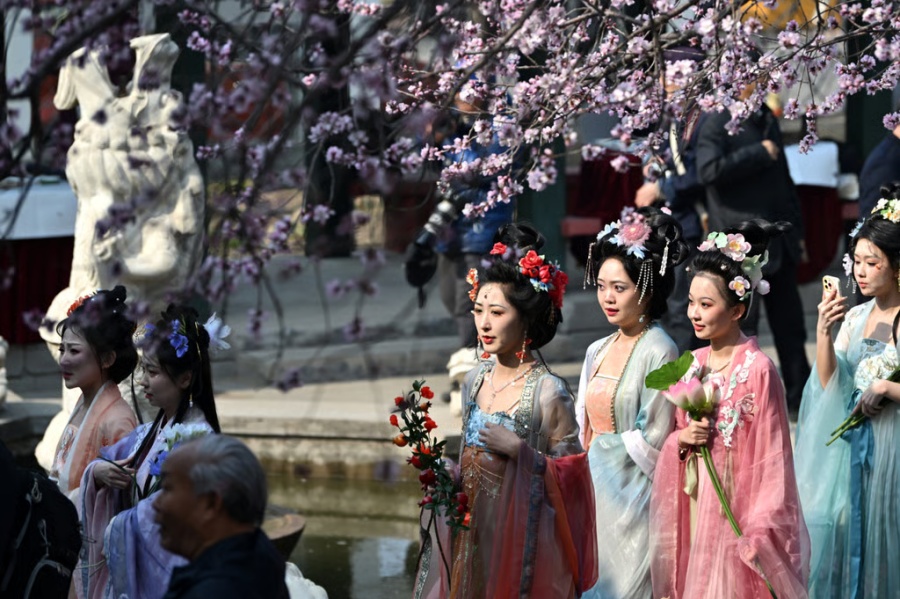
Traditional Hanfu Culture Continues to Be Popular Among Young People
传统汉服文化在青年群体中持续流行
Chuántǒng hànfú wénhuà zài qīngnián qúntǐ zhōng chíxù liúxíng
More and more young Chinese people are wearing hanfu in daily life, not just during festivals. The hanfu market is growing quickly, and a small county called Caoxian makes over half of China's hanfu. Young people say hanfu makes them feel proud of Chinese culture.
翻译 Translation
汉服是中国的传统衣服。以前,人们只在节日穿汉服。现在,很多青年平时也穿汉服。他们穿汉服去学校、咖啡馆、书店和公园。周末,他们穿汉服拍照。汉服成了他们生活的一部分。
Hanfu is traditional Chinese clothing. In the past, people only wore hanfu during festivals. Now, many young people also wear hanfu in daily life. They wear hanfu to school, cafes, bookstores, and parks. On weekends, they wear hanfu and take photos. Hanfu has become a part of their lives.
汉服
hanfu; traditional Chinese clothing
noun
我妹妹今天穿汉服去公园。
My younger sister wore hanfu to the park today.
传统
traditional; tradition
adjective/noun
这是中国的一个传统节日。
This is a traditional Chinese festival.
节日
festival; holiday
noun
节日的时候,街上人很多。
During festivals, there are many people on the street.
青年
youth; young people
noun
这家咖啡馆里有很多青年。
There are many young people in this cafe.
平时
usually; in normal times
noun/adverb
我平时七点起床。
I usually get up at seven.
周末
weekend
noun
周末我喜欢去书店看书。
On weekends, I like to read in bookstores.
咖啡馆
cafe; coffee shop
noun
我们在咖啡馆聊天。
We chat in the cafe.
书店
bookstore
noun
学校旁边有一家小书店。
There is a small bookstore next to the school.
公园
park
noun
他每天早上在公园跑步。
He runs in the park every morning.
拍照
to take a photo
verb
我们在这里拍张照吧。
Let's take a photo here.
流行
to be popular; fashionable
verb/adjective
这首歌很流行。
This song is very popular.
年轻人
young people
noun
很多年轻人喜欢运动。
Many young people like sports.
文化
culture
noun
我对中国历史和历史很感兴趣。
I am very interested in Chinese history and culture.
美丽
beautiful
adjective
这里的风景很美丽。
The scenery here is very beautiful.
意义
meaning; significance
noun
这次活动很有意义。
This activity is very meaningful.
上班族
office workers; commuters
noun
很多上班族坐地铁去上班。
Many office workers take the subway to work.
方便
convenient
adjective
坐地铁去机场很方便。
Taking the subway to the airport is very convenient.
走路
我每天走路去学校。
I walk to school every day.
verb
to walk
骑车
to ride a bike
verb phrase
他喜欢骑车去公园。
He likes to ride a bike to the park.
上班
to go to work
verb
妈妈每天八点上班。
Mom goes to work at eight every day.
市场
market
noun
这个市场的水果很新鲜。
The fruit at this market is very fresh.
超过
to exceed; to surpass
verb
我们班有超过三十个学生。
Our class has more than thirty students.
县
county
noun
他的家乡是一个小县。
His hometown is a small county.
一半
half
noun
我吃了一半,剩下的给你。
I ate half, and I'll give the rest to you.
便宜
cheap; inexpensive
adjective
这家店的鞋很便宜。
The shoes in this shop are very cheap.
裁剪
to cut (fabric); tailoring
verb/noun
做衣服的第一步是裁剪。
The first step in making clothes is cutting.
刺绣
embroidery; to embroider
noun/verb
这件衣服上的刺绣很漂亮。
The embroidery on this piece of clothing is very beautiful.
缝制
to sew; to tailor
verb
这条裙子是手工缝制的。
This skirt is hand-sewn.
公里
kilometer
noun
我家离学校有三公里。
My home is three kilometers from the school.
完成
今天的作业我已经完成了。
I have already finished today's homework.
verb
to complete; to finish
活动
activity; event
noun
学校下周有一个音乐活动。
The school has a music activity next week.
嘉年华
carnival
noun
周末这里有一个音乐嘉年华。
There is a music carnival here on the weekend.
清明节
Qingming Festival; Tomb-Sweeping Day
noun
清明节的时候,我们去公园看花。
During the Qingming Festival, we go to the park to see flowers.
花朝节
Flower Festival (a traditional Chinese festival)
noun
花朝节的时候,人们会去赏花。
During the Flower Festival, people go to enjoy flowers.
游戏
game
noun
孩子们在公园玩游戏。
The children are playing games in the park.
自豪
proud
adjective
我为我的国家感到自豪。
I feel proud of my country.
专家
expert
noun
专家说多运动对身体好。
Experts say exercising more is good for your health.
了解
to understand; to learn about
verb
我想了解中国的历史。
I want to learn about Chinese history.
历史
history
noun
他很喜欢看历史书。
He really likes reading history books.
方面
aspect; area
noun
在学习方面,他非常努力。
In terms of studying, he is very hard-working.
拿……来说 (ná... lái shuō)
Structure: 拿 + [example] + 来说, + [explanation]
"拿……来说" means "take... for example" or "speaking of...". It introduces a specific example to support a general statement.
It is common in spoken and written Chinese when you want to make your point clearer by giving a concrete case.
拿年轻人来说,他们喜欢中国文化,觉得穿汉服很美丽。
Take young people, for example: they like Chinese culture and think wearing hanfu is beautiful.
拿北京来说,那里的秋天非常漂亮。
Take Beijing, for example: its autumn is very beautiful.
拿学中文来说,多听多说很重要。
Take learning Chinese, for example: listening and speaking more is very important.
连……也…… (lián... yě...)
Structure: 连 + [noun/pronoun] + 也 + [verb]
"连……也……" means "even...". It emphasizes something surprising or extreme. It shows that if even this person or thing does something, then others certainly do too, or the situation is more serious than expected.
连一些上班族也穿汉服去上班。
Even some office workers wear hanfu to work.
他连早饭也没吃就去上学了。
He went to school even without eating breakfast.
这道题太难了,连老师也不会做。
This problem is too difficult; even the teacher cannot solve it.
越……越…… (yuè... yuè...)
Structure: 越 + [adjective/verb 1] + 越 + [adjective/verb 2]
"越……越……" means "the more... the more...". It shows that as one thing changes, another thing changes along with it.
It is different from "越来越" because it connects two changes that happen together.
他们越穿汉服,越喜欢中国文化。
The more they wear hanfu, the more they like Chinese culture.
中文越学越有意思。
The more you learn Chinese, the more interesting it becomes.
他越跑越快。
The more he runs, the faster he gets.
在……方面 (zài... fāngmiàn)
Structure: 在 + [noun] + 方面
"在……方面" means "in the area of..." or "in terms of...". It specifies a particular aspect or field when talking about something.
It is common in formal writing and speeches, and also useful in daily conversation when you want to focus on one part of a topic.
在文化方面,汉服是一个重要的形式。
In terms of culture, hanfu is an important form.
在学习方面,他非常努力。
In terms of studying, he is very hard-working.
在价格方面,这家店很有优势。
In terms of price, this shop has a big advantage.
为……而…… (wèi... ér...)
Structure: 为 + [noun/pronoun] + 而 + [verb]
"为……而……" means "for... to..." or "because of... and therefore...". It shows the purpose or reason for an action.
It is more formal and often appears in written Chinese, speeches, and news. It adds a sense of purpose or cause.
很多年轻人为中国文化而自豪。
Many young people feel proud because of Chinese culture.
我们为理想而努力。
We work hard for our ideals.
他为帮助别人而牺牲了自己的时间。
He sacrificed his own time to help others.