- 4 Sections
- 15 Lessons
- Lifetime
Expand all sectionsCollapse all sections
- PART 1: 美猴王出世 The Birth of the Monkey King3
- PART 2: 大闹天宫 The Monkey King Defies Heaven5
- PART 3: 取经缘起 The Journey Begins3
- PART 4: 师徒聚齐 The Pilgrims Gather5
Lesson 1: 石猴出世 The Birth of the Stone Monkey
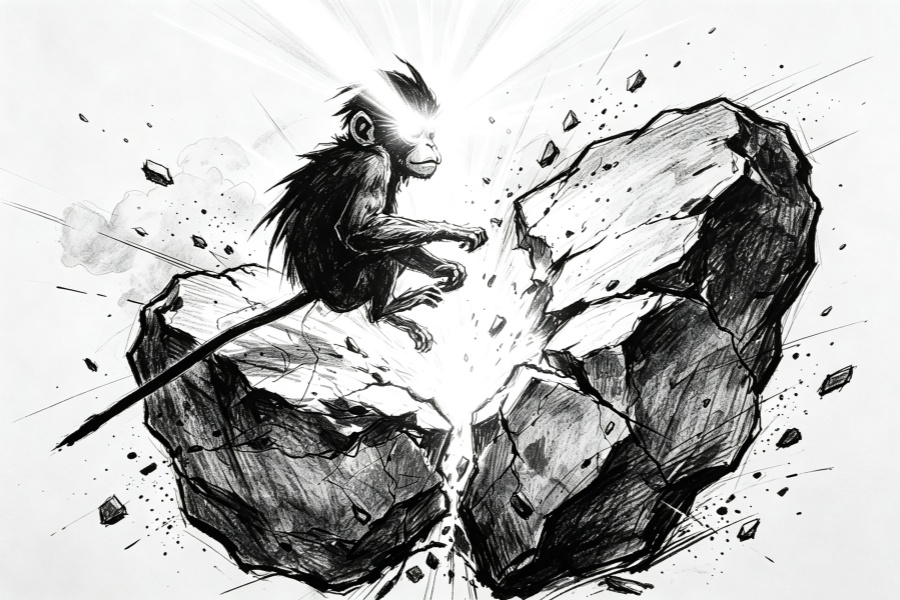
Imagine a stone that waits for thousands of years, drinking in the light of the sun and the moon. Then one day, it cracks open like thunder. A monkey bursts out. With golden light shooting from his eyes and a spirit unafraid of anything, the stone monkey was born to be more than just another creature of the mountain. He would leap through a waterfall, claim a hidden cave, and win the hearts of a hundred monkeys. This is where the legend begins...
Chuánshuō zài hěn jiǔ hěn jiǔ yǐqián, tiāndì gānggāng xíngchéng. Tiānxià fēn wéi sì dà bùzhōu: Dōngshèng Shénzhōu, Xīniú Hèzhōu, Nánshàn Bùzhōu hé Běijù Lúzhōu.
传说在很久很久以前,天地刚刚形成。天下分为四大部洲:东胜神洲、西牛贺洲、南赡部洲和北俱芦洲。
Legend has it that in ancient times, when heaven and earth were first formed, the world was divided into four great continents: the Eastern Continent of Superior Body, the Western Continent of Cattle-Gift, the Southern Continent of Jambu, and the Northern Continent of Kuru.
Zài Dōngshèng Shénzhōu, yǒu yí ge Àolái Guó. Àolái Guó de dàhǎi zhī zhōng, yǒu yí zuò xiānshān, míng jiào Huāguǒshān. Huāguǒshān de shāndǐng shàng, yǒu yí kuài xiānshí. Zhè kuài shítou bú shì pǔtōng de shítou. Tā xīshōu le tiāndì zhī língqì, rìyuè zhī jīnghuá, jīngguò le hěn duō hěn duō nián, mànmàn de yǒu le língxìng.
在东胜神洲,有一个傲来国。傲来国的大海之中,有一座仙山,名叫花果山。花果山的山顶上,有一块仙石。这块石头不是普通的石头。它吸收了天地之灵气、日月之精华,经过了很多很多年,慢慢地有了灵性。
On the Eastern Continent, there was a kingdom called Aolai. In the sea near Aolai, there was a magical mountain called the Mountain of Flowers and Fruit. At the top of this mountain, there was a magical stone. This was no ordinary stone. It had absorbed the essence of heaven and earth, the power of the sun and the moon. After many, many years, it slowly developed spiritual power.
Yǒu yì tiān, xiānshí tūrán lièkāi le! Cóng shítou lǐ gǔn chū yí ge shíluǎn. Shíluǎn yí jiàn fēng, jiù biànchéng le yí ge shí hóu. Zhè ge shí hóu yì chūshēng, jiù huì xíngzǒu tiàoyuè, tā de liǎng zhī yǎnjīng lǐ shè chū jīnguāng, zhí chōng shàng tiān, jīngdòng le tiānshàng de Yùhuáng Dàdì. Yùhuáng Dàdì pài Qiānlǐyǎn hé Shùnfēng'ěr qù chákàn. Tāmen huílái bàogào shuō: "Zhǐshì yí ge shí hóu chūshì le, méi shénme qíguài de." Yùhuáng Dàdì jiù méiyǒu zàiyì.
有一天,仙石突然裂开了!从石头里滚出一个石卵。石卵一见风,就变成了一个石猴。这个石猴一出生,就会行走跳跃,他的两只眼睛里射出金光,直冲上天,惊动了天上的玉皇大帝。玉皇大帝派千里眼和顺风耳去查看。他们回来报告说:“只是一个石猴出世了,没什么奇怪的。”玉皇大帝就没有在意。
One day, the magic stone suddenly split open! A stone egg rolled out. As soon as the stone egg touched the wind, it transformed into a stone monkey. This monkey could walk and jump as soon as he was born. Two beams of golden light shot from his eyes, straight up into the sky, alarming the Jade Emperor in heaven. The Jade Emperor sent Thousand-League Eye and Wind-Listening Ear to investigate. They returned with a report: "It's just a stone monkey being born — nothing unusual." The Jade Emperor did not pay it any further attention.
Shí hóu zài Huāguǒshān shàng hé yì qún hóuzi yìqǐ shēnghuó, měitiān wánshuǎ xīxì, guò de hěn kuàilè.
石猴在花果山上和一群猴子一起生活,每天玩耍嬉戏,过得很快乐。
The stone monkey lived on the Mountain of Flowers and Fruit with a troop of other monkeys, playing and frolicking every day, living a very happy life.
Yǒu yì nián xiàtiān, tiānqì fēicháng yánrè. Hóuzi men zài shānjiàn lǐ xǐzǎo, hūrán xiǎng qù zhǎozhǎo zhè shuǐ shì cóng nǎlǐ liú chūlái de. Tāmen shùnzhe shuǐliú wǎng shàng zǒu, zhǎodào le yí dào dà pùbù. Pùbù cóng gāogāo de shān shàng chōng xiàlái, xiàng yí dào jùdà de shuǐlián.
有一年夏天,天气非常炎热。猴子们在山涧里洗澡,忽然想去找找这水是从哪里流出来的。他们顺着水流往上走,找到了一道大瀑布。瀑布从高高的山上冲下来,像一道巨大的水帘。
One summer, the weather was scorching hot. The monkeys were bathing in a mountain stream when they suddenly wondered where the water came from. They followed the stream upward and found a huge waterfall. The waterfall cascaded down from the high mountain like a giant curtain of water.
Yì zhī lǎo hóuzi shuō: "Shuí gǎn zuān jìn zhè pùbù lǐ, zhǎodào shuǐ de yuántóu, wǒmen jiù bài tā wéi dàwáng!"
一只老猴子说:“谁敢钻进这瀑布里,找到水的源头,我们就拜他为大王!”
One old monkey said, "Whoever dares to jump through this waterfall and find the source of the water — we will make him our king!"
Shí hóu dàshēng shuō: "Wǒ qù! Wǒ qù!"
石猴大声说:“我去!我去!”
The stone monkey shouted, "I'll go! I'll go!"
Tā bì shàng yǎnjīng, zòngshēn yí tiào, zuān jìn le pùbù. Děng tā zhēngkāi yǎnjīng, fāxiàn lǐmiàn méiyǒu shuǐ, ér shì yí ge hěn dà de shídòng. Dòngkǒu lì zhe yí kuài shíbēi, shàngmian kè zhe shí ge dà zì: "Huāguǒshān Fúdì, Shuǐliándòng Dòngtiān". Dòng lǐ hěn kuānchǎng, yǒu shí zhuō, shí yǐ, shí wǎn, shí chuáng, jiù xiàng yí ge tiānrán de jiā.
他闭上眼睛,纵身一跳,钻进了瀑布。等他睁开眼睛,发现里面没有水,而是一个很大的石洞。洞口立着一块石碑,上面刻着十个大字: “花果山福地,水帘洞洞天” 。洞里很宽敞,有石桌、石椅、石碗、石床,就像一个天然的家。
He closed his eyes, leaped, and jumped through the waterfall. When he opened his eyes, he found that there was no water inside — only a large stone cave. At the entrance stood a stone tablet, engraved with ten large characters: "The Blessed Land of the Mountain of Flowers and Fruit; The Cave Heaven of the Water Curtain." The cave was spacious, with stone tables, stone chairs, stone bowls, and stone beds — like a natural home.
Shí hóu gāoxìng jí le, gǎnjǐn tiào chū pùbù, bǎ lǐmiàn de qíngkuàng gàosu le qítā hóuzi. Hóuzi men tīng le dōu fēicháng xīngfèn, gēnzhe shí hóu yìqǐ tiào jìn le Shuǐliándòng. Tāmen zài dòng lǐ wánshuǎ, gāoxìng de bùdéliǎo.
石猴高兴极了,赶紧跳出瀑布,把里面的情况告诉了其他猴子。猴子们听了都非常兴奋,跟着石猴一起跳进了水帘洞。他们在洞里玩耍,高兴得不得了。
The stone monkey was overjoyed. He quickly jumped back through the waterfall and told the other monkeys what he had found. The monkeys were thrilled. They followed the stone monkey into the Water Curtain Cave, playing and celebrating inside with great joy.
Ànzhào zhīqián de yuēdìng, hóuzi men bài shí hóu wéi wáng. Shí hóu bǎ "shí" zì qùdiào, zìchēng "Měihóuwáng". Cóngcǐ, Měihóuwáng dàilǐng zhe Huāguǒshān de qún hóu, guò zhe zìyóuzìzài, wúyōuwúlǜ de shēnghuó.
按照之前的约定,猴子们拜石猴为王。石猴把“石”字去掉,自称 “美猴王” 。从此,美猴王带领着花果山的群猴,过着自由自在、无忧无虑的生活。
According to their earlier agreement, the monkeys bowed and made the stone monkey their king. He removed the word "stone" from his name and called himself the "Handsome Monkey King." From then on, the Handsome Monkey King led the troop on the Mountain of Flowers and Fruit, living a free and carefree life.
传说
chuán shuō
legend; tradition; it is said that...
Noun / Verb
传说中,孙悟空是从石头里变出来的。
Chuánshuō zhōng, Sūn Wùkōng shì cóng shítou lǐ biàn chūlái de.
In legend, Sun Wukong was born from a stone.
仙山
xiān shān
celestial mountain; mountain of immortals
Noun
花果山是一座仙山。
Huā guǒ shān shì yí zuò xiān shān.
Flower-Fruit Mountain is a celestial mountain.
仙石
xiān shí
magical stone; immortal stone
Noun
那块仙石最终孕育出孙悟空。
Nà kuài xiān shí zuì zhōng yùn yù chū Sūn Wù kōng.
That magical stone eventually gave birth to Sun Wukong.
灵性
líng xìng
spiritual awareness; intelligence
Noun
万物皆有灵性。
Wàn wù jiē yǒu líng xìng.
All things have spiritual awareness.
裂开
liè kāi
to split open; to crack apart
Verb
地震过后,地面上裂开了一条很长的缝。
Dìzhèn guòhòu, dìmiàn shàng lièkāi le yì tiáo hěn cháng de fèng.
After the earthquake, a long crack split open on the ground.
石卵
shí luǎn
stone egg; an egg-shaped stone
Noun
考古学家在山洞里发现了一些圆形的石卵。
Kǎogǔxuéjiā zài shāndòng lǐ fāxiàn le yìxiē yuánxíng de shíluǎn.
Archaeologists found some round stone eggs in the cave.
玉皇大帝
Yù Huáng Dà Dì
The Jade Emperor; the supreme ruler of heaven in Chinese mythology
Proper Noun
玉皇大帝是中国神话中最高的神。
Yùhuáng Dàdì shì Zhōngguó shénhuà zhōng zuì gāo de shén.
The Jade Emperor is the highest deity in Chinese mythology.
千里眼
Qiān Lǐ Yǎn
Thousand-League Eye; a mythological figure who can see for a thousand miles
Proper Noun
神话中,千里眼可以看到很远的地方。
Shénhuà zhōng, Qiānlǐyǎn kěyǐ kàn dào hěn yuǎn de dìfāng.
In mythology, Thousand-League Eye can see places far away.
顺风耳
Shùn Fēng Ěr
Wind-Listening Ear; a mythological figure who can hear sounds from far away
Proper Noun
顺风耳能听到千里之外的声音。
Shùnfēng'ěr néng tīng dào qiānlǐ zhī wài de shēngyīn.
Wind-Listening Ear can hear sounds from thousands of miles away.
玩耍
wán shuǎ
to play; to have fun (often used for children or animals)
Verb
周末的时候,我喜欢带孩子们去公园玩耍。
Zhōumò de shíhou, wǒ xǐhuān dài háizi men qù gōngyuán wánshuǎ.
On weekends, I like to take the children to the park to play.
嬉戏
xī xì
to frolic; to play happily (often describes lively, carefree play, especially of children or animals)
Verb
草地上有几个小孩子在阳光下追逐嬉戏。
Cǎodì shàng yǒu jǐ gè xiǎo háizi zài yángguāng xià zhuīzhú xīxì.
There are several children frolicking and chasing each other on the grass in the sunlight.
瀑布
pù bù
waterfall
Noun
夏天去山里看瀑布是特别受欢迎的旅游活动。
Xiàtiān qù shān lǐ kàn pùbù shì tèbié shòu huānyíng de lǚyóu huódòng.
Going to the mountains to see waterfalls in summer is a very popular tourist activity.
水帘
shuǐ lián
water curtain; water falling like a curtain
Noun
瀑布从高处落下,远远看去就像一道水帘。
Pùbù cóng gāo chù luòxià, yuǎn yuǎn kàn qù jiù xiàng yí dào shuǐlián.
The waterfall falls from a great height, looking like a curtain of water from afar.
拜
bài
to worship; to pay respect to; to appoint or acknowledge as (a leader, teacher, etc.)
Verb
在古代,学生们都要拜孔子为师。
Zài gǔdài, xuéshēng men dōu yào bài Kǒngzǐ wéi shī.
In ancient times, students would all acknowledge Confucius as their teacher.
石碑
shí bēi
stone tablet; stone stele (with carved inscriptions)
Noun
公园里立着一块石碑,上面刻着公园的名字。
Gōngyuán lǐ lì zhe yí kuài shíbēi, shàngmian kè zhe gōngyuán de míngzi.
There is a stone tablet standing in the park, with the park's name carved on it.
宽敞
kuān chǎng
spacious; roomy; wide and open
Adjective
他们的新房子很大,客厅尤其宽敞。
Tāmen de xīn fángzi hěn dà, kètīng yóuqí kuānchǎng.
Their new house is very big, and the living room is especially spacious.
自由自在
zìyóuzìzài
free and unrestrained; doing whatever one wants without restrictions
Idiom / Adverb
毕业以后,他决定先旅行一年,过自由自在的生活。
Bìyè yǐhòu, tā juédìng xiān lǚxíng yì nián, guò zìyóuzìzài de shēnghuó.
After graduation, he decided to travel for a year first and live a free and carefree life.
无忧无虑
wú yōu wú lǜ
carefree; without worries or concerns
Idiom / Adverb
童年总是无忧无虑的,没有生活的压力。
Tóngnián zǒng shì wúyōuwúlǜ de, méiyǒu shēnghuó de yālì.
Childhood is always carefree, without the pressures of life.
The Particle 之 (zhī)
In modern written Chinese, 之 is a formal, classical‑style particle. It most often acts like the possessive or attributive particle 的 (de), meaning “of” or “'s”, but it gives the expression a more elegant, concise, and literary tone.
You will frequently encounter it in news articles, essays, and set phrases.
It also appears in fixed time expressions (e.g., 久而久之) to indicate the passage of time or to refer back to a previous idea.
In everyday conversation, 的 is used instead, so 之 is a marker of more formal or written language.
中国之文化历史悠久。
Zhōngguó zhī wénhuà lìshǐ yōujiǔ.
China’s culture has a long history.
读书之乐,难以言表。
Dúshū zhī lè, nányǐ yánbiǎo.
The joy of reading is hard to put into words.
久而久之,他习惯了早起。
Jiǔ'ér jiǔ zhī, tā xíguàn le zǎoqǐ.
As time went on, he got used to getting up early.
The Expression 不得了 (bù dé liǎo)
不得了 is a very common colloquial expression. It has two main uses:
As an intensifier after an adjective or verb, it means “extremely”, “terribly”, “awfully” – often with a positive or negative connotation (e.g., 好得不得了 = “so good it’s beyond words”).
As an interjection or predicate, it indicates something is “terrible”, “dreadful”, or “out of control” (e.g., 不得了了! = “Oh no! Something terrible has happened!”).
It can also mean “remarkable” or “amazing” in certain contexts. The tone is always emphatic and informal, used mostly in spoken Chinese or casual writing.
这家餐厅的菜好吃得不得了。(intensifier)
Zhè jiā cāntīng de cài hǎochī de bùdéliǎo.
The food at this restaurant is unbelievably delicious.
今天热得不得了,我不想出门。(intensifier)
Jīntiān rè de bùdéliǎo, wǒ bù xiǎng chūmén.
It's terribly hot today; I don't want to go out.
不得了!我的钱包不见了!(interjection)
Bùdéliǎo! Wǒ de qiánbāo bùjiàn le!
Oh no! My wallet is gone!
美猴王
Měi Hóu Wáng
Handsome Monkey King; the title given to Sun Wukong when he becomes king of the monkeys
Proper Noun
美猴王是孙悟空在花果山上的称号。
Měihóuwáng shì Sūn Wùkōng zài Huāguǒshān shàng de chēnghào.
The Handsome Monkey King is Sun Wukong's title on the Mountain of Flowers and Fruit.
一…就… (yī…jiù…)
A structure meaning "as soon as… then…". It expresses that one action or situation immediately causes or is followed by another.
The pattern is 一 + Verb/Adjective + 就 + Verb/Result.
It can also be used to describe a habitual reaction: "whenever A happens, B happens".
他一回到家就开始写作业。
Tā yì huí dào jiā jiù kāishǐ xiě zuòyè.
As soon as he got home, he started doing his homework.
妹妹一看见小狗就笑。
Mèimei yì kànjiàn xiǎo gǒu jiù xiào.
My little sister smiles whenever she sees a puppy.
他一喝酒就脸红。
Tā yì hē jiǔ jiù liǎn hóng.
His face turns red whenever he drinks alcohol.
按照… (ànzhào…)
A preposition meaning "according to", "in accordance with", or "following". It introduces a basis, rule, plan, or standard for an action. It is often used in formal or written contexts, and can be followed by a noun phrase or a clause.
Compare with 根据, which emphasizes a factual basis; 按照 tends to emphasize a standard or rule.
按照学校的规定,学生不能带手机进教室。
Ànzhào xuéxiào de guīdìng, xuéshēng bù néng dài shǒujī jìn jiàoshì.
According to school rules, students are not allowed to bring phones into the classroom.
请按照这个计划执行。
Qǐng ànzhào zhège jìhuà zhíxíng.
Please proceed according to this plan.
按照他的说法,事情不是那样的。
Ànzhào tā de shuōfa, shìqing bú shì nàyàng de.
According to him, that's not how things happened.
×
📖 Vocab
术语
词性
pīn yīn
English
0:00
0:00
Subscribe
Login
0 Comments
Oldest
Newest
Most Voted
Lesson 1 Quiz
Next
