
- 4 Sections
- 15 Lessons
- Lifetime
Expand all sectionsCollapse all sections
- PART 1: 美猴王出世 The Birth of the Monkey King3
- PART 2: 大闹天宫 The Monkey King Defies Heaven5
- PART 3: 取经缘起 The Journey Begins3
- PART 4: 师徒聚齐 The Pilgrims Gather5
Lesson 8:唐僧的身世 The Story of Tang Sanzang
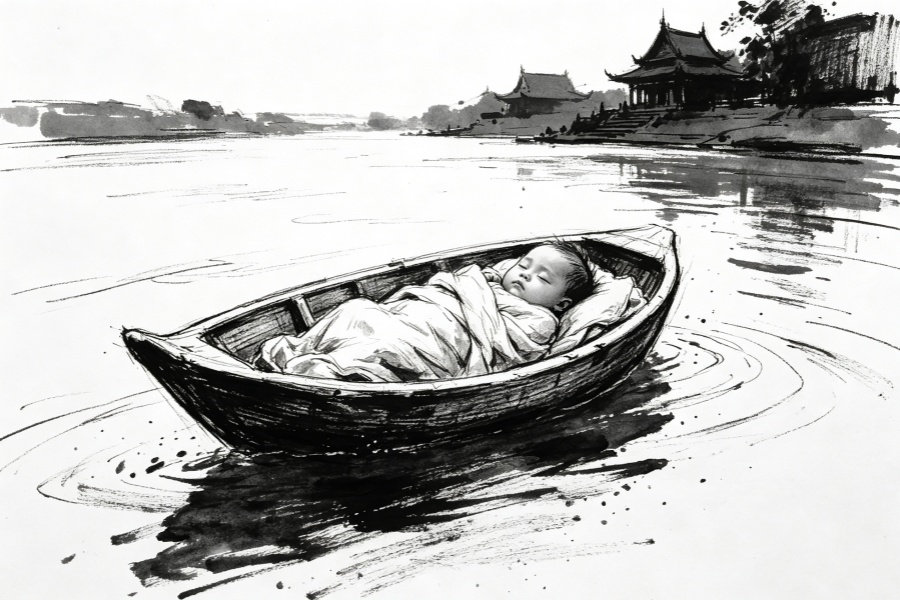
Before there was the famous monk Tang Sanzang, there was a child named Jiang Liu'er — abandoned in a river, saved by a monk, and raised in a temple. This is the story of the man who would one day lead a monkey, a pig, and a monk on a journey to the west. But his path was never easy. From the moment of his birth, fate had something far greater in store for him — a mission that would change the world.
Sūn Wùkōng bèi yā zài Wǔxíng Shān xià zhīhòu, tiānshàng tiānxià dōu píngjìng le xǔduō. Dànshì, Fózǔ de fófǎ yào chuán dào Dōngtǔ, hái xūyào yí ge rén qù Xītiān qǔjīng.
孙悟空被压在五行山下之后,天上天下都平静了许多。但是,佛祖的佛法要传到东土,还需要一个人去西天取经。
After Sun Wukong was trapped under the Five Elements Mountain, both heaven and earth grew much quieter. However, for the Buddha's teachings to reach the Eastern Lands, someone was still needed to travel to the West to fetch the scriptures.
Zài zhè zhīqián, Tángcháo de shǒudū Cháng'ān chéng lǐ, yǒu yí ge niánqīng yǒuwéi de héshang, fǎhào jiào Xuánzàng. Tā cóngxiǎo jiù cōngmíng hàoxué, duì fófǎ yǒu hěn shēn de lǐjiě.
在这之前,唐朝的首都长安城里,有一个年轻有为的和尚,法号叫玄奘。他从小就聪明好学,对佛法有很深的理解。
Before this, in the capital city of Chang'an during the Tang Dynasty, there was a young and promising monk whose dharma name was Xuanzang. He had been clever and studious since childhood, with a deep understanding of Buddhism.
Xuánzàng de shēnshì fēicháng qūzhé. Tā de fùqīn jiào Chén Guāngruǐ, shì yí wèi dúshūrén, kǎo zhòng le zhuàngyuán, bèi cháoting pài dào Jiāngzhōu qù zuò guān.
玄奘的身世非常曲折。他的父亲叫陈光蕊,是一位读书人,考中了状元,被朝廷派到江州去做官。
Xuanzang's family history was very complicated. His father was Chen Guangrui, a scholar who passed the imperial examination with the highest score and was sent by the court to Jiangzhou as an official.
Chén Guāngruǐ dài zhe huáiyùn de yùn fù qīzi Yīn Wēnjiāo, yìqǐ qiánwǎng Jiāngzhōu shàngrèn. Lùshàng, tāmen zuò chuán guò jiāng. Chuán shàng de qiángdào Liú Hóng kàn dào le Yīn Wēnjiāo de měimào, qǐ le huài xīn.
陈光蕊带着怀孕的孕妇妻子殷温娇,一起前往江州上任。路上,他们坐船过江。船上的强盗刘洪看到了殷温娇的美貌,起了坏心。
Chen Guangrui traveled with his pregnant wife Yin Wenjiao to take up his post in Jiangzhou. On the way, they crossed a river by boat. The bandit Liu Hong on the boat saw Yin Wenjiao's beauty and had evil intentions.
Liú Hóng bǎ Chén Guāngruǐ tuī jìn le jiāng lǐ, qiǎng zǒu le Yīn Wēnjiāo, hái màochōng Chén Guāngruǐ qù Jiāngzhōu shàngrèn. Yīn Wēnjiāo yīnwèi huái zhe háizi, zhǐnéng rěnrǔ tōushēng.
刘洪把陈光蕊推进了江里,抢走了殷温娇,还冒充陈光蕊去江州上任。殷温娇因为怀着孩子,只能忍辱偷生。
Liu Hong pushed Chen Guangrui into the river, kidnapped Yin Wenjiao, and pretended to be Chen Guangrui to take the official post in Jiangzhou. Because she was pregnant, Yin Wenjiao could only endure the humiliation and hold on to life.
Bùjiǔ, Yīn Wēnjiāo shēng xià le yí ge nánhái. Tā pà zhè ge háizi bèi Liú Hóng hài sǐ, jiù bǎ háizi fàng zài yí ge mùpén lǐ, xiě le yì fēng xuèshū, shuōmíng háizi de shēnshì, fàng zài háizi shēnbiān.
不久,殷温娇生下了一个男孩。她怕这个孩子被刘洪害死,就把孩子放在一个木盆里,写了一封血书,说明孩子的身世,放在孩子身边。
Soon, Yin Wenjiao gave birth to a baby boy. Fearing that Liu Hong would kill the child, she placed him in a wooden basin, wrote a letter in blood explaining his identity, and put it beside the baby.
Tā bǎ mùpén fàng jìn jiāngshuǐ lǐ, ràng tā shùnzhe jiāngshuǐ piāoliú. Mùpén piāo dào le Jīnshān Sì fùjìn, bèi sì lǐ de yí ge héshang fāxiàn le. Héshang bǎ mùpén lāo qǐlái, kàn dào le háizi hé xuèshū, zhīdào le háizi de shēnshì.
她把木盆放进江水里,让它顺着江水漂流。木盆漂到了金山寺附近,被寺里的一个和尚发现了。和尚把木盆捞起来,看到了孩子和血书,知道了孩子的身世。
She placed the wooden basin into the river and let it drift with the current. The basin floated to the vicinity of Jinshan Temple, where it was discovered by a monk. The monk pulled the basin out, saw the baby and the blood letter, and learned of the baby's identity.
Héshang gěi háizi qǔ míng jiào Jiāng Liúr, yīnwèi tā shì cóng jiāng shàng piāoliú ér lái de. Jiāng Liúr zài sì lǐ zhǎngdà, cóngxiǎo xuéxí fófǎ, cōngmíng guòrén. Shíbā suì hòu, tā zhèngshì chūjiā, fǎhào jiào Xuánzàng.
和尚给孩子取名叫江流儿,因为他是从江上漂流而来的。江流儿在寺里长大,从小学习佛法,聪明过人。十八岁后,他正式出家,法号叫玄奘。
The monk named the child Jiang Liuer, because he had drifted down the river. Jiang Liuer grew up in the temple, studying Buddhism from a young age and becoming exceptionally bright. At eighteen, he formally became a monk, with the dharma name Xuanzang.
Xuánzàng zhǎngdà zhīhòu, zhīdào le zìjǐ de shēnshì, fēicháng bēitòng. Tā zhǎo dào le zìjǐ de mǔqīn, yòu qù bàochóu, bǎ qiángdào Liú Hóng sòng jìn le guānfǔ. Dànshì, tā de fùqīn Chén Guāngruǐ bìng méiyǒu sǐ, ér shì bèi Lóngwáng jiù huó le.
玄奘长大之后,知道了自己的身世,非常悲痛。他找到了自己的母亲,又去报仇,把强盗刘洪送进了官府。但是,他的父亲陈光蕊并没有死,而是被龙王救活了。
After Xuanzang grew up, he learned of his background and was deeply saddened. He found his mother and took revenge, turning the bandit Liu Hong over to the authorities. However, his father Chen Guangrui had not died — he had been saved by the Dragon King.
Yuánlái, Chén Guāngruǐ bèi tuī xià jiāng hòu, bèi Lóngwáng jiù dào le Lónggōng. Lóngwáng chá le tā de shēnshì, zhīdào tā shì yí ge hǎorén, jiù ràng tā huózhe, děngzhe hé jiārén tuánjù.
原来,陈光蕊被推下江后,被龙王救到了龙宫。龙王查了他的身世,知道他是一个好人,就让他活着,等着和家人团聚。
It turned out that after Chen Guangrui was pushed into the river, he was saved by the Dragon King and taken to the Dragon Palace. The Dragon King looked into his background, learned that he was a good person, and kept him alive, waiting for him to be reunited with his family.
Zuìhòu, yì jiā rén zhōngyú tuánjù le. Dànshì, Xuánzàng de mǔqīn Yīn Wēnjiāo yīnwèi zhè xiē nián shòu de kǔ tài duō, xuǎnzé le líkāi rénshì. Xuánzàng bēitòng wànfēn, cóngcǐ gèngjiā jiāndìng de xiūxíng fófǎ.
最后,一家人终于团聚了。但是,玄奘的母亲殷温娇因为这些年受的苦太多,选择了离开人世。玄奘悲痛万分,从此更加坚定地修行佛法。
Finally, the family was reunited. But Xuanzang's mother, Yin Wenjiao, had suffered too much over the years and chose to leave this world. Xuanzang was overcome with grief and from then on became even more dedicated to his Buddhist practice.
Xuánzàng zài Cháng'ān chéng jiǎngjīng shuōfǎ, míngshēng yuè lái yuè dà. Tā de xuéwèn hé xiūxíng, ràng tā chéngwéi le Tángcháo zuì shòu zūnjìng de fǎshī zhī yī. Dàn tā bù zhīdào de shì, yí ge gèng wěidà de shǐmìng zhèngzài děngdài zhe tā — qù Xītiān qǔjīng, zhěngjiù tiānxià cāngshēng.
玄奘在长安城讲经说法,名声越来越大。他的学问和修行,让他成为了唐朝最受尊敬的法师之一。但他不知道的是,一个更伟大的使命正在等待着他——去西天取经,拯救天下苍生。
Xuanzang gave lectures on Buddhist scriptures in Chang'an, and his fame grew. His knowledge and dedication made him one of the most respected monks of the Tang Dynasty. But what he did not know was that a far greater mission was waiting for him — to travel to the West to fetch the scriptures and save all living beings under heaven.
身世
shēn shì
life story; background; personal history
Noun
他的身世非常可怜,从小就没有父母。
Tā de shēnshì fēicháng kělián, cóngxiǎo jiù méiyǒu fùmǔ.
His life story is very pitiful — he has had no parents since childhood.
曲折
qū zhé
complicated; winding; full of twists and turns
Adjective
他的人生经历非常曲折,充满了挑战和困难。
Tā de rénshēng jīnglì fēicháng qūzhé, chōngmǎn le tiǎozhàn hé kùnnán.
His life has been full of twists and turns, with many challenges and hardships.
读书人
dú shū rén
scholar; educated person (someone who studies traditional texts)
Noun
在古代,读书人最大的梦想就是考中状元。
Zài gǔdài, dúshūrén zuì dà de mèngxiǎng jiù shì kǎo zhòng zhuàngyuán.
In ancient times, a scholar's biggest dream was to pass the imperial examination with the highest score.
状元
zhuàng yuán
top scholar; the highest rank in the imperial examination
Noun
他考中了状元,全家人都非常高兴。
Tā kǎo zhòng le zhuàngyuán, quán jiā rén dōu fēicháng gāoxìng.
He passed the exam as the top scholar, and the whole family was very happy.
朝廷
cháo tíng
imperial court; the government of an empire
Noun
大臣们每天都要去朝廷向皇帝报告政务。
Dàchén men měitiān dōu yào qù cháoting xiàng huángdì bàogào zhèngwù.
Ministers go to the imperial court every day to report affairs to the emperor.
孕妇
yùn fù
pregnant woman; expectant mother
Noun
这位孕妇需要特别照顾。
Zhè wèi yùnfù xūyào tèbié zhàogù.
This pregnant woman needs special care.
强盗
qiáng dào
bandit; robber; outlaw
Noun
在古代,山里的强盗经常抢夺路过的商人。
Zài gǔdài, shān lǐ de qiángdào jīngcháng qiǎngduó lùguò de shāngrén.
In ancient times, bandits in the mountains would often rob passing merchants.
美貌
měi mào
beauty; beautiful appearance
Noun / Adjective
她的美貌吸引了所有人的目光。
Tā de měimào xīyǐn le suǒyǒu rén de mùguāng.
Her beauty attracted everyone's attention.
冒充
mào chōng
to impersonate; to pretend to be someone else
Verb
他冒充警察,骗了很多人的钱。
Tā màochōng jǐngchá, piàn le hěnduō rén de qián.
He impersonated a police officer and defrauded many people.
忍辱偷生
rěn rǔ tōu shēng
to endure humiliation in order to survive; to live under disgrace for the sake of staying alive
Idiom
为了孩子,她忍辱偷生,终于等到了团聚的那一天。
Wèile háizi, tā rěnrǔ tōushēng, zhōngyú děng dào le tuánjù de nà yì tiān.
For the sake of her child, she endured humiliation to survive, and finally waited until the day of reunion.
木盆
mù pén
wooden basin; a large bowl or tub made of wood
Noun
她把衣服放在木盆里清洗。
Tā bǎ yīfu fàng zài mùpén lǐ qīngxǐ.
She placed the clothes in the wooden basin to wash them.
血书
xuè shū
blood letter; a letter written in blood (often used to express extreme grief or urgency)
Noun
他用血书写下了一封求救信。
Tā yòng xuèshū xiě xià le yì fēng qiújiù xìn.
He wrote a letter for help in blood.
漂流
piāo liú
to drift; to float with the current
Verb
小船在河上漂流了三天三夜。
Xiǎo chuán zài hé shàng piāoliú le sān tiān sān yè.
The small boat drifted on the river for three days and three nights.
金山寺
Jīn Shān Sì
Jinshan Temple; the temple where the baby Xuanzang is found and raised
Proper Noun
金山寺是一座历史悠久的佛教寺庙。
Jīnshān Sì shì yí zuò lìshǐ yōujiǔ de Fójiào sìmiào.
Jinshan Temple is a Buddhist temple with a long history.
法号
fǎ hào
dharma name; a religious name given to a monk/nun upon ordination
Noun
出家之后,师父给他取了一个法号。
Chūjiā zhīhòu, shīfu gěi tā qǔ le yí ge fǎhào.
After becoming a monk, his teacher gave him a dharma name.
聪明过人
cōng míng guò rén
exceptionally clever; surpassing others in intelligence
Idiom
他从小聪明过人,任何难题都难不倒他。
Tā cóngxiǎo cōngmíng guòrén, rènhé nántí dōu nán bù dǎo tā.
He has been exceptionally clever since childhood — no difficult problem can defeat him.
出家
chū jiā
to become a monk/nun; to leave family life to join a monastic order
Verb Phrase
他二十岁那年决定出家修行。
Tā èrshí suì nà nián juédìng chūjiā xiūxíng.
At the age of twenty, he decided to become a monk and practice Buddhism.
悲痛
bēi tòng
deeply sad; grieved; heartbroken
Adjective
听到这个消息,她感到非常悲痛。
Tīng dào zhè ge xiāoxi, tā gǎndào fēicháng bēitòng.
Upon hearing the news, she felt deeply saddened.
报仇
bào chóu
to take revenge; to get revenge
Verb Phrase
他发誓要为父亲报仇。
Tā fāshì yào wèi fùqīn bàochóu.
He swore to take revenge for his father.
官府
guān fǔ
government office; authorities; officialdom
Noun
他把罪犯送到了官府。
Tā bǎ zuìfàn sòng dào le guānfǔ.
He handed the criminal over to the authorities.
龙王
Lóng Wáng
Dragon King; the ruler of the seas/oceans in Chinese mythology
Proper Noun
东海龙王住在海底的龙宫里。
Dōnghǎi Lóngwáng zhù zài hǎidǐ de Lónggōng lǐ.
The Dragon King of the Eastern Sea lives in the Dragon Palace under the sea.
团聚
tuán jù
to be reunited (with family or loved ones)
Verb
春节是全家人团聚的时候。
Chūnjié shì quán jiā rén tuánjù de shíhou.
Spring Festival is a time for family reunions.
悲痛万分
bēi tòng wàn fēn
extremely sad; overwhelmed by grief
Idiom
听到亲人去世的消息,他悲痛万分。
Tīng dào qīnrén qùshì de xiāoxi, tā bēitòng wànfēn.
Upon hearing the news of a loved one's passing, he was overcome with grief.
坚定
jiān dìng
firm; steadfast; determined
Adjective / Verb
他的目标非常坚定,从来没有放弃过。
Tā de mùbiāo fēicháng jiāndìng, cónglái méiyǒu fàngqì guo.
His goal is very firm — he has never given up.
修行
xiū xíng
to practice (religious cultivation); to engage in spiritual discipline; religious practice
Verb / Noun
他每天坚持修行,逐渐达到了很高的境界。
Tā měitiān jiānchí xiūxíng, zhújiàn dá dào le hěn gāo de jìngjiè.
He persists in daily spiritual practice, gradually reaching a high level.
讲经
jiǎng jīng
to deliver a lecture on Buddhist scriptures; to preach
Verb Phrase
高僧在寺庙里讲经,吸引了很多信徒来听。
Gāosēng zài sìmiào lǐ jiǎngjīng, xīyǐn le hěnduō xìntú lái tīng.
The eminent monk delivered a lecture on scriptures in the temple, attracting many believers to listen.
法师
fǎ shī
Dharma master; a highly respected Buddhist monk
Noun
玄奘法师是唐朝最著名的佛教学者之一。
Xuánzàng Fǎshī shì Tángcháo zuì zhùmíng de Fójiào xuézhě zhī yī.
Dharma Master Xuanzang was one of the most famous Buddhist scholars of the Tang Dynasty.
使命
shǐ mìng
mission; calling; duty
Noun
他的使命是去西天取经,造福天下百姓。
Tā de shǐmìng shì qù Xītiān qǔjīng, zàofú tiānxià bǎixìng.
His mission was to go to the West to fetch the scriptures, for the benefit of all people.
苍生
cāng shēng
common people; all living beings (literary term)
Noun
一个好的领袖应该关心天下苍生的疾苦。
Yí ge hǎo de lǐngxiù yīnggāi guānxīn tiānxià cāngshēng de jíkǔ.
A good leader should care about the sufferings of the common people.
西天
Xī Tiān
The Western Paradise; the place where Buddha lives, also known as the Western Pure Land
Proper Noun
唐僧去西天取经的旅程充满了困难和危险。
Tángsēng qù Xītiān qǔjīng de lǚchéng chōngmǎn le kùnnán hé wéixiǎn.
Tang Sanzang's journey to the Western Paradise to fetch the scriptures was full of difficulties and dangers.
取经
qǔ jīng
to fetch scriptures; to travel to obtain Buddhist scriptures
Verb Phrase
玄奘法师花了很多年去西天取经。
Xuánzàng Fǎshī huā le hěnduō nián qù Xītiān qǔjīng.
Dharma Master Xuanzang spent many years traveling to the West to fetch the scriptures.
……之后 (…zhīhòu)
A time expression meaning "after…" or "afterwards". It follows a verb phrase, noun phrase, or clause to indicate that something happens after a certain event or point in time.
It is very common in both spoken and written Chinese and can be used to connect two events in a narrative.
下课之后,我们一起去吃饭吧。
Xiàkè zhīhòu, wǒmen yìqǐ qù chīfàn ba.
After class, let's go eat together.
他毕业之后,在一家大公司工作。
Tā bìyè zhīhòu, zài yì jiā dà gōngsī gōngzuò.
After he graduated, he worked at a big company.
听完这个故事之后,她感动得哭了。
Tīng wán zhège gùshi zhīhòu, tā gǎndòng de kū le.
After hearing this story, she was so moved that she cried.
因为…只能… (yīnwèi…zhǐnéng…)
A structure meaning "because… (one) can only…".
因为 introduces the reason, and 只能 introduces the only possible action or choice given that reason.
It expresses a situation where circumstances leave no other option.
It is very common in narrative and everyday Chinese.
因为下雨了,我们只能待在家里。
Yīnwèi xià yǔ le, wǒmen zhǐnéng dāi zài jiā lǐ.
Because it rained, we could only stay at home.
因为没有公交车了,他只能走路回家。
Yīnwèi méiyǒu gōngjiāochē le, tā zhǐnéng zǒulù huí jiā.
Because there were no more buses, he could only walk home.
因为时间不够,我们只能简化计划。
Yīnwèi shíjiān bú gòu, wǒmen zhǐnéng jiǎnhuà jìhuà.
Because there wasn't enough time, we could only simplify the plan.
原来 (yuánlái)
An adverb with two main uses.
First, it means "it turns out" or "actually", introducing information that corrects a previous misunderstanding or reveals a surprising fact.
Second, it can mean "originally" or "formerly", referring to a past state.
In narratives, it often marks a plot twist or an explanation of something that was previously unclear.
原来你在这里,我找了你好久!
Yuánlái nǐ zài zhèlǐ, wǒ zhǎo le nǐ hǎojiǔ!
So you were here all along — I've been looking for you for ages!
他原来是个医生,后来改行了。
Tā yuánlái shì ge yīshēng, hòulái gǎiháng le.
He was originally a doctor, but later changed careers.
原来这一切都是误会。
Yuánlái zhè yíqiè dōu shì wùhuì.
It turns out all of this was a misunderstanding.
终于 (zhōngyú)
An adverb meaning "finally", "at last", or "in the end". It indicates that something has happened after a long wait, effort, or process. It often carries a sense of relief or achievement and is frequently used in narratives to mark the resolution of a long-awaited event. It is placed before the verb.
经过三个小时的努力,我们终于完成了任务。
Jīngguò sān ge xiǎoshí de nǔlì, wǒmen zhōngyú wánchéng le rènwu.
After three hours of effort, we finally completed the task.
他终于实现了自己的梦想。
Tā zhōngyú shíxiàn le zìjǐ de mèngxiǎng.
He finally realized his dream.
等了很久,公交车终于来了。
Děng le hěn jiǔ, gōngjiāochē zhōngyú lái le.
After a long wait, the bus finally arrived.
×
📖 Vocab
术语
词性
pīn yīn
English
0:00
0:00
Subscribe
Login
0 Comments
Oldest
Newest
Most Voted
