
Lesson 1: 桃园三结义 The Oath in the Peach Garden
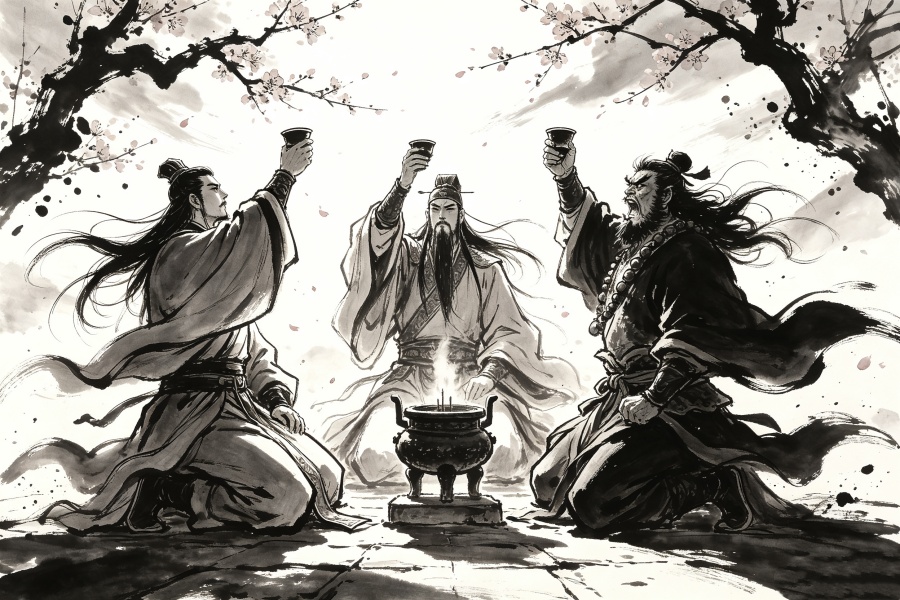
In the last years of the Eastern Han dynasty, the court is corrupt and the country is in chaos. The Yellow Turban army rises up, attacks cities, and seizes food. The emperor orders all regions to recruit soldiers. In Youzhou, Liu Bei meets Guan Yu, a tall red-faced man with a long beard, and Zhang Fei, a dark, strong butcher with a thunderous voice. The three brothers share life and death, and their brotherhood becomes one of the most famous stories in Chinese history.
东汉末年,皇帝年纪小,朝廷很腐败,天下大乱。老百姓的生活非常痛苦。
黄巾军起义了。他们到处攻打城市,抢夺粮食。皇帝很害怕,命令各地招募士兵,镇压黄巾军。
在幽州涿郡,有一个年轻人叫刘备。他是汉朝皇室后代,但是家里很穷,靠卖草鞋和草席生活。
刘备个子高,耳朵大,手很长。他性格温和,但是很有志向。他喜欢结交天下的英雄豪杰。
有一天,刘备在城里看到招兵的告示,忍不住叹了一口气。忽然,背后有人大声说: "大丈夫应该为国家出力,为什么叹气?"
刘备回头一看,看见一个高个子,红脸,长胡子。这个人叫关羽,字云长。他在家乡杀了坏人,所以逃到这里。
刘备很高兴,把自己的志向告诉了关羽。两个人越谈越投机,就一起去喝酒。
在酒馆里,他们看见一个又黑又壮的大汉,声音像打雷一样。刘备请他一起喝酒。这个大汉叫张飞,字翼德。他是杀猪卖肉的,最喜欢结交天下的豪杰。
三个人越聊越开心,都觉得相见恨晚。张飞说: "我家后院里有一个桃园,现在桃花开得正好。我们不如结拜为兄弟,一起干一番大事业!"
刘备和关羽都很赞成。第二天,他们在桃园里摆好香案,点上香,跪下对天发誓: "刘备、关羽、张飞,虽然不同姓,但愿意结为兄弟。从此同心协力,救困扶危,上报国家,下安百姓。不求同年同月同日生,但求同年同月同日死。"
按照年龄,刘备是大哥,关羽是二哥,张飞是三弟。他们请铁匠打造兵器: 刘备使用双股剑,关羽使用青龙偃月刀,张飞使用丈八蛇矛。
然后,他们带着五百多名士兵,去投奔太守刘焉,开始了英雄之路。从此, 刘、 关、 张 生死与共,写下了中国历史上最动人的兄弟情义。
东汉
the Eastern Han dynasty (25–220 CE)
Proper Noun
历史学家常常讨论东汉为什么会灭亡。
Historians often discuss why the Eastern Han dynasty fell.
朝廷
imperial court; government
Noun
如果朝廷不关心百姓,国家就很难稳定。
If the imperial court does not care about the people, it is hard for the country to remain stable.
腐败
corrupt; corrupted
Adjective / Verb
腐败的官员最终会受到惩罚。
Corrupt officials will eventually be punished.
天下大乱
the whole world is in great chaos
Idiom
战争让天下大乱,很多人失去了家园。
War threw the world into chaos, and many people lost their homes.
老百姓
common people; ordinary people
Noun
政府应该关心老百姓的生活。
The government should care about the lives of ordinary people.
黄巾军
the Yellow Turban army (a peasant rebel force in the late Eastern Han)
Proper Noun
历史课上,老师介绍了黄巾军起义的原因。
In history class, the teacher explained the reasons for the Yellow Turban uprising.
起义
to rise in rebellion; uprising
Verb / Noun
农民起义常常发生在社会矛盾严重的时候。
Peasant uprisings often occur when social conflicts are severe.
招募
to recruit
Verb
这家公司正在招募新员工。
This company is recruiting new employees.
镇压
to suppress
Verb
政府派军队镇压了叛乱。
The government sent troops to suppress the rebellion.
幽州
Youzhou (ancient administrative region in northern China)
Proper Noun
古代的幽州大概在今天的河北一带。
The ancient Youzhou was roughly in today's Hebei area.
涿郡
Zhuo Commandery (ancient commandery in today's Zhuozhou, Hebei)
Proper Noun
涿郡是三国故事开始的地方之一。
Zhuo Commandery is one of the places where the Three Kingdoms story begins.
刘备
Liu Bei (161–223), courtesy name Xuande, founding emperor of Shu Han
Proper Noun
刘备因为待人宽厚,得到很多人的支持。
Liu Bei received support from many people because he treated others generously.
汉朝
the Han dynasty (202 BCE–220 CE)
Proper Noun
汉朝对中国历史和文化影响很大。
The Han dynasty had a great influence on Chinese history and culture.
皇室后代
descendant of the imperial family
Noun Phrase
他总说自己是皇室后代,但生活并不富裕。
He always says he is a descendant of the imperial family, but his life is not wealthy.
草鞋
straw sandals
Noun
过去有些穷人靠卖草鞋生活。
In the past, some poor people made a living by selling straw sandals.
志向
ambition; aspiration
Noun
每个人都有自己的志向。
Everyone has their own ambitions.
结交
to make friends with
Verb
他喜欢结交来自不同地方的朋友。
He likes making friends with people from different places.
豪杰
hero; outstanding person
Noun
在乱世中,很多豪杰都想建立自己的事业。
In troubled times, many heroes wanted to establish their own careers.
告示
notice; announcement
Noun
门口贴着一张告示,告诉大家明天停水。
A notice was posted at the entrance telling everyone that the water would be cut off tomorrow.
叹气
to sigh
Verb
遇到困难时,叹气解决不了问题。
When you meet difficulties, sighing cannot solve the problem.
大丈夫
true man; great man
Noun
他认为大丈夫应该说到做到。
He believes a true man should keep his word.
关羽
Guan Yu (c. 160–220), courtesy name Yunchang, a famous general of Shu Han
Proper Noun
关羽在中国文化里常被看作忠义的象征。
In Chinese culture, Guan Yu is often seen as a symbol of loyalty and righteousness.
字
courtesy name (a traditional Chinese naming system)
Noun
古人除了名字,还有"字"。
In ancient times, besides a given name, people also had a courtesy name.
云长
Yunchang; the courtesy name of Guan Yu
Proper Noun
关羽字云长,这是很多人都知道的。
Guan Yu's courtesy name was Yunchang — many people know this.
酒馆
tavern; pub
Noun
晚上,他们喜欢去附近的小酒馆聊天。
In the evening, they like to go to a small nearby tavern to chat.
张飞
Zhang Fei (c. 165–221), courtesy name Yide, a famous general of Shu Han
Proper Noun
张飞以勇猛和直爽著称。
Zhang Fei was known for his bravery and straightforwardness.
翼德
Yide; the courtesy name of Zhang Fei
Proper Noun
张飞字翼德,是三国时期的名将。
Zhang Fei's courtesy name was Yide; he was a famous general of the Three Kingdoms period.
相见恨晚
to feel regret at having met too late
Idiom
他们聊了一个晚上,都觉得相见恨晚。
They chatted all evening and both felt they had met too late.
桃园
peach garden
Noun
春天,桃园里的花吸引了很多游客。
In spring, the flowers in the peach garden attract many visitors.
结拜
to become sworn brothers or sisters
Verb
在古代,结拜是一件很严肃的事情。
In ancient times, becoming sworn brothers was a very serious matter.
香案
incense altar
Noun
庙里放着一张香案,上面摆着水果。
An incense altar was placed in the temple, with fruit on it.
焚香
to burn incense
Verb
很多人会在春节去庙里焚香祈福。
Many people go to temples to burn incense and pray during Spring Festival.
发誓
to swear; to vow
Verb
他发誓以后再也不说谎。
He swore that he would never lie again.
同心协力
to work together with one heart
Idiom
只要大家同心协力,问题就能解决。
As long as everyone works together with one heart, the problem can be solved.
救困扶危
to help those in distress and support those in danger
Idiom
真正的英雄常常救困扶危,不求回报。
True heroes often help those in distress without seeking reward.
上报国家
to serve the country above
Phrase
古代读书人常常希望上报国家,下安百姓。
In ancient times, scholars often hoped to serve the country above and bring peace to the people below.
下安百姓
to bring peace to the common people
Phrase
一个好的领导者应该下安百姓。
A good leader should bring peace to the common people.
投奔
to go to seek shelter or support
Verb
战争开始后,很多人投奔了亲戚。
After the war began, many people went to seek shelter with relatives.
刘焉
Liu Yan, governor of Youzhou in the late Eastern Han dynasty
Proper Noun
刘焉是东汉末年的一位太守。
Liu Yan was a governor in the late Eastern Han dynasty.
生死与共
to share life and death together
Idiom
真正的朋友应该生死与共,互相支持。
True friends should share life and death and support each other.
虽然……但(是)…… (suīrán…dàn(shì)…)
This structure is used to express concession: "although X is true, Y is still the case."
The first clause introduced by 虽然 gives a fact, and the second clause introduced by 但(是) gives a contrasting result.
In spoken Chinese, 但是 is more common; in written Chinese, 但 alone is also very common. Do not use 但是 together with 虽然 in the same clause.
虽然天气很冷,但他还是去跑步了。
Although the weather was cold, he still went running.
虽然这道题很难,但是我还是做出来了。
Although this question was hard, I still solved it.
虽然他们认识不久,但已经成了好朋友。
Although they haven't known each other long, they have already become good friends.
又……又…… (yòu…yòu…)
This structure means "both X and Y" or "X and Y at the same time."
It is used to describe someone or something that has two qualities at the same time.
It can connect adjectives, verbs, or phrases. When used with adjectives, it often describes appearance, personality, or state.
这个苹果又大又甜。
This apple is both big and sweet.
她又聪明又努力。
She is both smart and hardworking.
他每天又工作又学习,非常辛苦。
He both works and studies every day — it's very hard.
把字句 (bǎ construction)
The 把 construction is used to emphasize the disposal or handling of an object.
The object is placed after 把, and the verb must be followed by other elements (such as 了, 给, 在, 到, etc.) — it cannot stand alone.
It is very common in Chinese when the speaker wants to emphasize what happens to the object.
我把作业写完了。
I finished my homework.
他把书放在桌子上了。
He put the book on the table.
请你把窗户打开。
Please open the window.
从此 (cóngcǐ)
This structure means "from then on" or "since then."
It is used to indicate that something started at a particular time in the past and continued afterward.
It often appears at the beginning of a sentence or after the subject. It is very common in narration and storytelling.
他们从此再也没有见过面。
They never saw each other again from then on.
从此,他每天早起锻炼身体。
From then on, he got up early every day to exercise.
那次事故以后,他从此变得很小心。
After that accident, he became very careful from then on.
越……越…… (yuè…yuè…)
This structure means "the more X, the more Y."
It shows that as one situation changes, another situation changes along with it.
It is often used with adjectives or verbs.
雨越大,路上的车越少。
The heavier the rain, the fewer cars on the road.
他越紧张,越容易出错。
The more nervous he is, the more easily he makes mistakes.
这本书越读越有意思。
The more you read this book, the more interesting it becomes.
A good story to read.