
Lesson 8: 三顾茅庐 Three Visits to the Thatched Cottage
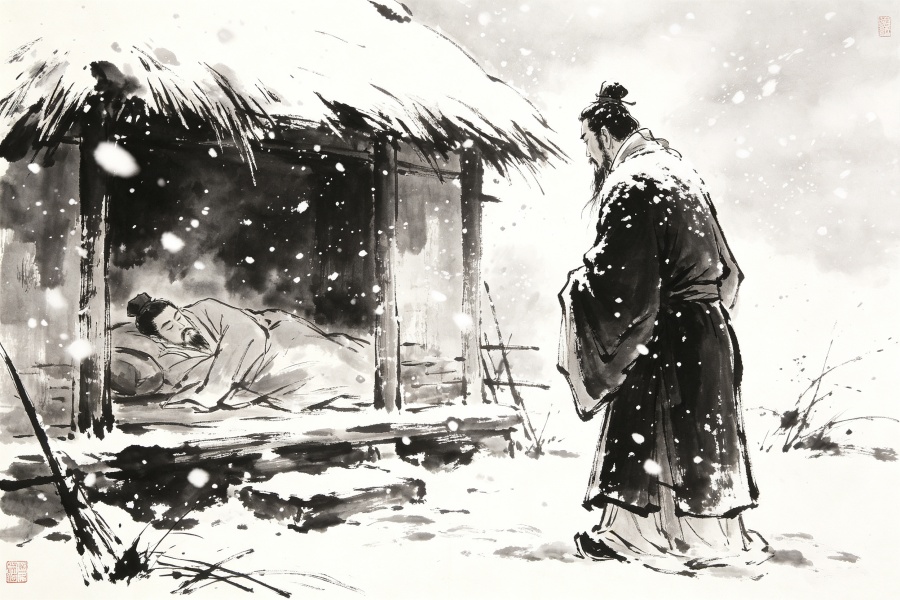
Liu Bei has generals but no strategist. Then he hears a name: Zhuge Liang, the Sleeping Dragon — a man so brilliant that whoever wins his loyalty wins the world. So Liu Bei goes to find him. Once. Twice. Three times. Through snow and silence, past his brothers' growing doubts, he waits at the door of a thatched cottage for a man who is still asleep. What happens when the door finally opens will change the course of history.
刘备在荆州的时候,手下虽然有关羽、张飞这样的猛将,但缺少一位有智慧的军师。他常常觉得,自己之所以不能成功,是因为没有好的人才帮助自己。
有一天,谋士徐庶告诉刘备: “在隆中有一个了不起的人才,叫诸葛亮,人称 ‘卧龙’。如果能得到他的帮助,您一定能成就大业。” 刘备听了,立刻决定去拜访诸葛亮。
第二天,刘备带着关羽和张飞来到隆中。他们找到了诸葛亮的茅庐,但是诸葛亮不在家。刘备只好失望地回去了。
过了几天,刘备又带着两个兄弟去拜访诸葛亮。那天下着大雪,路上非常难走。张飞忍不住说: “这么冷的天,何必去找一个种地的书生呢?” 刘备却说: “不管多难,我都要见到他。”
这一次,诸葛亮还是不在家。诸葛亮的弟弟诸葛均告诉刘备,哥哥出去了,不知道什么时候回来。刘备留下一封信,表达了自己的诚意,然后不得不回去了。
春天到了,刘备决定第三次去拜访诸葛亮。张飞和关羽都觉得不值得再去了,但刘备说: “我非见到诸葛亮不可!” 于是,三个人又出发了。
到了茅庐,诸葛亮正在睡觉。刘备没有打扰他,而是安静地在门外等候。张飞很生气,想冲进去把诸葛亮叫醒。关羽赶紧拦住他,说: “大哥这么有诚意,我们应该耐心等待。”
过了很久,诸葛亮终于醒了。他听说刘备在门外等了很久,非常感动。他请刘备进屋,两个人坐下来谈话。
诸葛亮对刘备说: “曹操拥有百万大军,不能和他硬拼。孙权占据江东,可以和他联合,但不能打他的主意。将军应该先取荆州,再取益州,然后等待时机,统一天下。” 刘备听了,非常佩服。
刘备诚恳地请诸葛亮出山帮助自己。诸葛亮看到刘备这么有诚意,终于答应了。从此,诸葛亮成为刘备最重要的军师,帮助刘备建立蜀汉政权。
三顾茅庐的故事告诉我们: 真正的人才不会轻易出山,只有用真诚和耐心,才能请到最优秀的人。刘备之所以能成功,是因为他懂得尊重人才。
荆州
Jingzhou was one of the nine ancient provinces of China, located in today's Hubei and Hunan area. It was a strategic location during the Three Kingdoms period. Liu Bei occupied Jingzhou for a long time.
Proper Noun
荆州在三国时期是非常重要的战略要地。
Jingzhou was a very important strategic location during the Three Kingdoms period.
军师
military adviser; strategist
Noun
诸葛亮是刘备最信任的军师。
Zhuge Liang was Liu Bei's most trusted military adviser.
之所以……是因为……
the reason why... is because...
Pattern
他之所以成功,是因为他付出了很多努力。
The reason he succeeded is that he put in a lot of effort.
人才
talent; talented person
Noun
这家公司非常重视人才。
This company attaches great importance to talent.
徐庶
Xu Shu, courtesy name Yuanzhi, an adviser in the late Eastern Han dynasty. He was originally Liu Bei's adviser but had to leave because his mother was detained by Cao Cao. Before leaving, he recommended Zhuge Liang to Liu Bei.
Proper Noun
徐庶向刘备推荐了诸葛亮,说他是个了不起的人才。
Xu Shu recommended Zhuge Liang to Liu Bei, saying he was a remarkable talent.
了不起
amazing; remarkable; extraordinary
Adjective
他一个人完成了这么难的项目,真了不起!
He completed such a difficult project by himself — truly remarkable!
隆中
Longzhong is an ancient place name, located in today's Xiangyang area of Hubei Province. Zhuge Liang lived in seclusion here when he was young, and the story of Liu Bei's three visits took place here.
Proper Noun
诸葛亮年轻时在隆中隐居,后来才出山帮助刘备。
Zhuge Liang lived in seclusion in Longzhong when he was young, and only later came out to help Liu Bei.
诸葛亮
Zhuge Liang (181–234), courtesy name Kongming, known as the Sleeping Dragon, was the chancellor of Shu Han during the Three Kingdoms period. He is one of the most famous politicians and military strategists in Chinese history. He helped Liu Bei establish the Shu Han regime and was known for "bending his back to the task until his dying day."
Proper Noun
诸葛亮是中国历史上最聪明的军师之一。
Zhuge Liang is one of the smartest military advisers in Chinese history.
卧龙
Wolong is Zhuge Liang's pseudonym, meaning "Sleeping Dragon." This title describes him as having enormous talent but living in seclusion, not yet revealing it.
Proper Noun
诸葛亮人称“卧龙”,意思是沉睡的龙,一旦醒来就会震惊天下。
Zhuge Liang was called the "Sleeping Dragon," meaning a sleeping dragon that would shock the world once it woke up.
成就大业
to achieve great things; to accomplish a great enterprise
Phrase
他从小就立志要成就大业。
He was determined to achieve great things since childhood.
拜访
to visit; to call on (formally)
Verb
明天我要去拜访一位老朋友。
Tomorrow I'm going to visit an old friend.
茅庐
thatched cottage; thatched hut
Noun
诸葛亮的茅庐非常简陋,但他在这里想出了很多好主意。
Zhuge Liang's thatched cottage was very simple, but he came up with many good ideas here.
失望
disappointed; to be disappointed
Adjective / Verb
听到这个消息,他非常失望。
Hearing this news, he was very disappointed.
何必
why bother; there is no need
Adverb
他只是开个玩笑,你何必生气呢?
He was just joking — why bother getting angry?
书生
scholar; intellectual
Noun
在古代,书生通常只会读书,不会打仗。
In ancient times, scholars usually only knew how to read books, not how to fight.
不管……都……
no matter... always...
Pattern
不管天气怎么样,我都要去。
No matter what the weather is like, I will go.
诸葛均
Zhuge Jun, Zhuge Liang's younger brother. When Liu Bei visited Zhuge Liang the second time, Zhuge Jun told him that his brother had gone out and no one knew when he would return.
Proper Noun
诸葛均是诸葛亮的弟弟,他一直住在隆中。
Zhuge Jun is Zhuge Liang's younger brother; he always lived in Longzhong.
表达
to express; to convey
Verb
他用自己的行动表达了对朋友的感谢。
He expressed his gratitude to his friend through his actions.
诚意
sincerity; good faith
Noun
他用诚意打动了客户,最终签下了合同。
He moved the client with his sincerity and finally signed the contract.
不得不
have no choice but to; cannot but
Adverb
因为下雨,我们不得不取消了比赛。
Because of the rain, we had no choice but to cancel the match.
值得
to be worth; worthwhile
Verb / Adjective
这本小说非常值得一读。
This novel is very worth reading.
非……不可
must; absolutely must
Pattern
我非去不可,你别拦我了。
I absolutely must go — don't stop me.
打扰
to disturb; to bother
Verb
他正在休息,我们不要打扰他。
He is resting; we shouldn't disturb him.
等候
to wait; to await
Verb
他在门口等候了半个小时。
He waited at the door for half an hour.
冲
to rush; to charge
Verb
他冲进房间,大喊了一声。
He rushed into the room and shouted loudly.
拦住
to stop; to block
Verb
警察拦住了那辆闯红灯的车。
The police stopped the car that ran the red light.
耐心
patient; patience
Adjective / Noun
教小孩子需要很多耐心。
Teaching young children requires a lot of patience.
拥有
to possess; to have; to own
Verb
他拥有一家很大的公司。
He owns a very large company.
百万
a million
Numeral
这个城市有超过一千万人口。
This city has a population of over ten million.
孙权
Sun Quan (182–252), courtesy name Zhongmou, the founder of the state of Wu during the Three Kingdoms period. He occupied Jiangdong and formed a tripartite balance of power with Cao Cao and Liu Bei.
Proper Noun
孙权占据江东,是三国时期的重要人物。
Sun Quan occupied Jiangdong and was an important figure during the Three Kingdoms period.
占据
to occupy; to hold
Verb
这支军队占据了整个城市。
This army occupied the entire city.
江东
Jiangdong is an ancient Chinese geographical name referring to the area south of the lower Yangtze River, roughly including today's southern Jiangsu, Zhejiang, and southern Anhui. It was the base of the Sun-Wu regime during the Three Kingdoms period.
Proper Noun
江东是孙权的地盘,他在这里建立了吴国。
Jiangdong was Sun Quan's territory; he established the state of Wu here.
联合
to unite; to form an alliance
Verb
两家公司联合起来,共同开发新市场。
The two companies united to jointly develop a new market.
益州
Yizhou is an ancient Chinese place name, roughly including today's Sichuan Province and Chongqing. It was the base of the Shu Han regime during the Three Kingdoms period.
Proper Noun
刘备按照诸葛亮的计划,先取荆州,后取益州。
Following Zhuge Liang's plan, Liu Bei first took Jingzhou and then Yizhou.
等待时机
to wait for the right moment
Phrase
做大事要学会等待时机,不能太着急。
To do great things, you must learn to wait for the right moment and not be too impatient.
诚恳
sincere; earnest
Adjective
他诚恳地向大家道歉。
He sincerely apologized to everyone.
出山
to come out of seclusion; to take up an official post
Verb
诸葛亮出山后,帮助刘备打下了江山。
After coming out of seclusion, Zhuge Liang helped Liu Bei conquer the empire.
答应
to agree; to promise
Verb
他答应帮我照顾小猫。
He agreed to help me take care of the kitten.
尊重
to respect; respect
Verb / Noun
我们应该尊重每个人的选择。
We should respect everyone's choices.
三顾茅庐
Sān Gù Máolú is an idiom derived from the story of Liu Bei visiting Zhuge Liang three times. It means sincerely and repeatedly inviting a talented person, and also describes respect and desire for talent.
Idiom
老板三顾茅庐,终于请到了那位著名的专家。
The boss made three visits to the thatched cottage and finally invited that famous expert.
之所以……是因为…… (zhī suǒyǐ…shì yīnwèi…)
This structure is used to explain the reason for a particular result or situation. 之所以 introduces the result or phenomenon, and 是因为 introduces the reason.
It is more formal and emphatic than 因为……所以……, and it puts the result first, which makes the reason feel more like an explanation.
他之所以成功,是因为他付出了很多努力。
The reason he succeeded is that he put in a lot of effort.
她之所以没来,是因为她生病了。
The reason she didn't come is that she was sick.
我之所以选择这个专业,是因为我对它很感兴趣。
The reason I chose this major is that I am very interested in it.
非……不可 (fēi…bùkě)
This structure means "must" or "absolutely must." It is a very emphatic way of expressing necessity or determination.
非 is placed before the verb or noun, and 不可 comes at the end of the phrase.
It is stronger than 必须 and often carries a tone of strong determination or insistence.
我非去不可,你别拦我了。
I absolutely must go — don't stop me.
他非要把这件事弄清楚不可。
He absolutely must get this matter clear.
今天非把作业写完不可。
Today I absolutely must finish my homework.
何必……呢? (hébì…ne?)
This structure is a rhetorical question meaning "why bother?" or "there is no need to..."
It is used to suggest that an action is unnecessary or not worth doing. 何必 is often followed by a verb phrase and ends with 呢 to soften the tone or make it more conversational.
It can also be used without 呢, but 呢 makes it sound more natural in spoken Chinese. It often carries a tone of mild reproach or persuasion.
他只是开个玩笑,你何必生气呢?
He was just joking — why bother getting angry?
这么近的路,何必打车呢?走路去吧。
It's such a short distance — why bother taking a taxi? Let's walk.
事情已经过去了,你何必再提呢?
The matter is already over — why bring it up again?
没有……而是…… (méiyǒu…érshì…)
This structure means "did not do X, but instead did Y."
It is used to contrast two actions: the first action did not happen, and the second action is what actually happened.
It is similar to 不是……而是……, but 没有……而是…… is used for past actions or situations, while 不是……而是…… is used for general statements or corrections.
他没有生气,而是笑了起来。
He didn't get angry, but instead started laughing.
她没有回家,而是去了图书馆。
She didn't go home, but instead went to the library.
我们没有放弃,而是继续努力。
We didn't give up, but instead continued to work hard.
可以……但不能…… (kěyǐ…dàn bù néng…)
This structure means "can do X, but cannot do Y." It is used to indicate that one action is permitted or possible, while another action is not allowed or not advisable.
It often appears in advice, warnings, or strategic discussions. 可以 introduces the permitted action, and 但不能 introduces the prohibited or unwise action.
你可以开玩笑,但不能伤害别人的感情。
You can joke, but you cannot hurt others' feelings.
我们可以竞争,但不能使用不公平的手段。
We can compete, but we cannot use unfair methods.
你可以不同意他的观点,但不能不尊重他。
You can disagree with his opinion, but you cannot disrespect him.
Subscribe
Login
0 Comments
Oldest