
Lesson 12: 蒋干中计 Jiang Gan Falls for a Trick
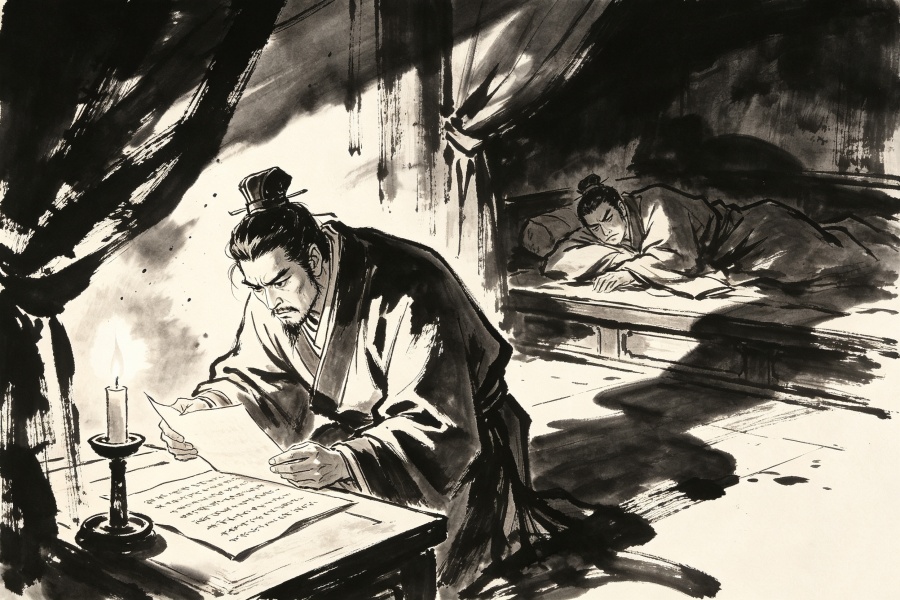
Cao Cao's million-man army is camped across the river, and Zhou Yu knows he cannot win a straight fight. Then a familiar face appears — Jiang Gan, an old classmate, claiming he just wants to catch up. Zhou Yu smiles and welcomes him warmly. That night, the two men drink and laugh like old friends. But when Jiang Gan wakes in the dark and sees a letter lying on the table, he cannot resist reading it. What he finds there will make Cao Cao kill his two best naval commanders — and hand Zhou Yu the victory before the battle even begins.
赤壁之战前,曹操带领百万大军驻扎在长江北岸。他准备渡过长江,攻打东吴。东吴的统帅周瑜只有几万士兵,形势非常危险。
曹操的军队大多数是北方人,不习惯水战,在船上常常晕船。只有蔡瑁和张允两位将军熟悉水战,负责训练曹操的水军。周瑜非常担心这两个人。
曹操手下的谋士蒋干说: “我和周瑜是老同学,我愿意去劝他投降。” 曹操听了很高兴,就派蒋干去东吴。
蒋干穿着普通的衣服,坐着一艘小船来到东吴。周瑜听说蒋干来了,立刻猜到了他的来意。他决定利用蒋干,设下一个反间计。
周瑜装作非常热情的样子,亲自出来迎接蒋干。他拉着蒋干的手说: “老朋友,你跑这么远来看我,我太高兴了!” 蒋干本来想劝周瑜投降,但看到周瑜这么热情,一时不知道怎么开口。
周瑜请蒋干喝酒,两个人边喝边聊,回忆过去的友情。周瑜装作喝醉了,摇摇晃晃地说: “今天晚上我们只谈朋友,不谈打仗的事。你就住在我这里吧。”蒋干只好答应。
半夜,周瑜装作睡得很沉。蒋干却睡不着,他偷偷爬起来,看见桌子上放着一封信。他拿起信一看,发现是蔡瑁和张允写给周瑜的。
信上说: “我们投降曹操只是暂时的,只要有机会,我们一定会杀了曹操,投靠东吴。” 蒋干看了,非常吃惊。他连忙把信藏进衣服里,悄悄回到床上。
过了一会儿,蒋干听到周瑜在梦里说: “蔡瑁、张允,你们放心,过几天我一定会有消息给你们。” 蒋干听了,更加相信那封信是真的。他决定连夜逃回曹营。
天还没亮,蒋干就偷偷溜出了东吴的营地,坐船回到了曹操那里。他把那封信交给曹操,说: “蔡瑁和张允要背叛您,投靠周瑜!”
曹操看了信,非常生气,立刻下令杀了蔡瑁和张允。可是,等他冷静下来,才明白自己中了周瑜的计。他后悔极了,但已经来不及了。
曹操失去了两个熟悉水战的大将,水军的训练也停止了下来。周瑜的反间计成功了,他为东吴除掉了一个大患。这就是著名的 “蒋干中计” 的故事。
赤壁
Chibi is an ancient place name, located in today's Chibi City, Hubei Province. In 208 CE, the Sun-Liu allied forces used a fire attack to defeat Cao Cao here, known as the "Battle of Red Cliffs" — a famous example in Chinese history of winning with fewer against more.
Proper Noun
赤壁之战是中国历史上最著名的战役之一。
The Battle of Red Cliffs is one of the most famous battles in Chinese history.
驻扎
to be stationed; to be encamped
Verb
军队在河边驻扎了三个月。
The army was stationed by the river for three months.
长江
The Yangtze River is the longest river in China and the third longest in the world. The Battle of Red Cliffs took place in the middle reaches of the Yangtze.
Proper Noun
长江是中国最长的河流,流经很多大城市。
The Yangtze River is the longest river in China, flowing through many big cities.
统帅
commander-in-chief; to command
Noun / Verb
他是这支军队的统帅,负责指挥所有战斗。
He is the commander-in-chief of this army, responsible for directing all battles.
周瑜
Zhou Yu (175–210), courtesy name Gongjin, a famous general of Eastern Wu during the Three Kingdoms period. He was handsome, skilled in music, and talented in military strategy. He was the commander of Eastern Wu's forces at the Battle of Red Cliffs.
Proper Noun
周瑜是东吴最杰出的将领之一,赤壁之战就是他指挥的。
Zhou Yu was one of Eastern Wu's most outstanding generals — he commanded the Battle of Red Cliffs.
水战
water warfare; naval battle
Noun
南方士兵熟悉水战,在船上比北方士兵灵活得多。
Southern soldiers are familiar with water warfare and are much more agile on boats than northern soldiers.
晕船
to get seasick
Verb
他第一次坐船就晕船了,吐得很厉害。
He got seasick the first time he took a boat and vomited badly.
蔡瑁
Cai Mao, a general of Jingzhou in the late Eastern Han dynasty. He originally served under Liu Biao and later surrendered to Cao Cao, where he was responsible for training Cao Cao's navy. In the story of Jiang Gan's trick, he was killed because of Zhou Yu's counter-espionage scheme.
Proper Noun
蔡瑁熟悉水战,是曹操水军的重要将领。
Cai Mao was familiar with water warfare and was an important general in Cao Cao's navy.
张允
Zhang Yun, a general of Jingzhou in the late Eastern Han dynasty. He surrendered to Cao Cao together with Cai Mao and was responsible for training the navy. He was later mistakenly killed by Cao Cao in the story of Jiang Gan's trick.
Proper Noun
张允和蔡瑁一起负责训练曹操的水军。
Zhang Yun and Cai Mao were jointly responsible for training Cao Cao's navy.
水军
navy; naval force
Noun
曹操的水军虽然人数多,但训练不足。
Although Cao Cao's navy had many men, its training was insufficient.
蒋干
Jiang Gan, an adviser under Cao Cao in the late Eastern Han dynasty. He claimed to be Zhou Yu's old classmate and volunteered to persuade Zhou Yu to surrender. Instead, he fell for Zhou Yu's counter-espionage scheme, causing Cao Cao to mistakenly kill Cai Mao and Zhang Yun.
Proper Noun
蒋干自以为聪明,结果中了周瑜的计。
Jiang Gan thought he was clever, but in the end he fell for Zhou Yu's trick.
劝
to persuade; to advise; to urge
Verb
我劝他不要抽烟,但他不听。
I advised him not to smoke, but he didn't listen.
反间计
counter-espionage scheme; stratagem of sowing discord among enemy ranks
Noun
周瑜用反间计让曹操杀掉了自己的水军将领。
Zhou Yu used a counter-espionage scheme to make Cao Cao kill his own naval commanders.
装作
to pretend; to feign; to act as if
Verb
他装作没看见我,直接走了过去。
He pretended not to see me and walked straight past.
迎接
to welcome; to greet; to meet
Verb
我们早早地来到机场迎接客人。
We arrived at the airport early to welcome the guests.
来意
purpose of one's visit; intention in coming
Noun
他一进门就说明了来意,想借一些书。
As soon as he entered, he explained the purpose of his visit — he wanted to borrow some books.
回忆
to recall; to remember; memory
Verb / Noun
看到这张照片,我回忆起了童年的快乐时光。
Seeing this photo, I recalled the happy times of my childhood.
摇摇晃晃
staggering; swaying; unsteady
Idiom / Adjective
他喝醉了酒,摇摇晃晃地走回家。
He got drunk and staggered home.
半夜
midnight; the middle of the night
Noun
他半夜醒来,发现外面下起了大雨。
He woke up in the middle of the night and found it was raining heavily outside.
沉
deep (of sleep); heavy; to sink
Adjective / Verb
他睡得很沉,连闹钟都没听到。
He slept very deeply and didn't even hear the alarm clock.
藏
to hide; to conceal; to store
Verb
他把钱藏在了床底下,不让别人发现。
He hid the money under the bed so no one would find it.
悄悄
quietly; secretly; without making noise
Adverb
他悄悄地走进了房间,没有惊动任何人。
He quietly entered the room without disturbing anyone.
消息
news; information; message
Noun
他听到这个消息后,高兴得跳了起来。
After hearing this news, he jumped up with joy.
连夜
the same night; through the night
Adverb
他接到电话后,连夜赶回了家。
After receiving the phone call, he rushed home through the night.
营地
camp; encampment
Noun
士兵们回到了营地,准备休息。
The soldiers returned to the camp and prepared to rest.
溜
to slip away; to sneak off
Verb
他趁大家不注意,悄悄地溜出了房间。
He took advantage of everyone's inattention and quietly slipped out of the room.
冷静
calm; cool-headed; sober
Adjective
遇到紧急情况时,一定要保持冷静。
When encountering an emergency, you must stay calm.
后悔
to regret; to feel remorse
Verb
我很后悔没有早点告诉你这件事。
I deeply regret not telling you about this earlier.
来不及
there is not enough time; too late
Verb Phrase
火车就要开了,我们来不及吃饭了。
The train is about to leave — we don't have time to eat.
失去
to lose; to be deprived of
Verb
他因为粗心失去了这次难得的机会。
He lost this rare opportunity because of carelessness.
训练
to train; training
Verb / Noun
运动员们每天都在刻苦训练。
The athletes train hard every day.
停止
to stop; to halt; to cease
Verb
因为下大雨,比赛暂时停止了。
Because of the heavy rain, the match was temporarily stopped.
成功
to succeed; successful
Verb / Adjective
经过多次尝试,他终于成功了。
After many attempts, he finally succeeded.
除掉了
got rid of; eliminated
Verb Phrase
他们终于除掉了那个大坏蛋。
They finally got rid of that big villain.
蒋干中计
Jiang Gan Falls for a Trick is a famous story in Romance of the Three Kingdoms. Jiang Gan, an adviser under Cao Cao, claimed to be Zhou Yu's old classmate and went to Eastern Wu to persuade him to surrender. Instead, he fell for Zhou Yu's counter-espionage scheme, causing Cao Cao to mistakenly kill his two naval commanders, Cai Mao and Zhang Yun.
Proper Noun
蒋干中计的故事告诉我们,过于自信往往会让人上当。
The story of Jiang Gan falling for a trick tells us that being overconfident often leads people to be fooled.
装作 (zhuāngzuò)
Structure: 装作 + [noun phrase / verb phrase / adjective phrase]
装作 is a verb meaning "to pretend" or "to feign." It is followed by a description of the false appearance or behavior that someone deliberately puts on.
It can be followed by a noun phrase (装作非常热情的样子), a verb phrase (装作喝醉了), or an adjective phrase.
It is very similar to 假装, but 装作 often emphasizes the outward performance or appearance, while 假装 is more neutral.
In the story, Zhou Yu uses 装作 three times to show how deliberately and convincingly he acts in order to trick Jiang Gan.
他装作没听见我的话,继续往前走。
He pretended not to hear me and continued walking forward.
她装作很开心的样子,其实心里很难过。
She pretended to look happy, but actually she was very sad inside.
孩子装作睡着了,不想让妈妈发现他没写作业。
The child pretended to be asleep, not wanting his mother to find out he hadn't done his homework.
偷偷 (tōutōu)
Structure: 偷偷 + [verb phrase] / 偷偷地 + [verb phrase]
偷偷 is an adverb meaning "secretly," "stealthily," or "on the sly." It is used before a verb to describe an action done without others knowing.
It can be used with or without 地 — 偷偷地 is slightly more formal, while 偷偷 alone is more common in spoken Chinese. It often implies that the action is done quietly, carefully, or in a way that avoids attention.
In the story, 偷偷 is used twice: once when Jiang Gan secretly gets up to look at the letter, and once when he secretly slips out of the camp.
他偷偷地把礼物放在了桌子上。
He secretly put the gift on the table.
她偷偷看了他一眼,然后低下了头。
She secretly glanced at him, then lowered her head.
孩子们偷偷地溜进了花园,想摘一些花。
The children secretly slipped into the garden, wanting to pick some flowers.
连忙 (liánmáng)
Structure: 连忙 + [verb phrase]
连忙 is an adverb meaning "hurriedly," "promptly," or "at once." It is used before a verb to describe an action done quickly because of urgency or a sudden situation.
It often implies that the person acts without delay, sometimes out of nervousness or excitement.
In the story, 连忙 shows how panicked Jiang Gan was when he realized he had found important information — he immediately hid the letter so no one would see it.
听到有人敲门,他连忙站起来去开门。
Hearing someone knock, he hurriedly stood up to open the door.
看到老师走进教室,学生们连忙坐好。
Seeing the teacher enter the classroom, the students hurriedly sat up straight.
他不小心把水洒了,连忙拿纸去擦。
He accidentally spilled the water and hurriedly grabbed a tissue to wipe it up.
本来 (běnlái)
Structure: 本来 + [original intention / situation] + 但/可是 + [contrasting result]
本来 is an adverb meaning "originally," "at first," or "it was originally the case that." It is used to describe a situation or intention that existed at first but then changed or was contrasted with reality.
It often appears with 但, 可是, or 不过 to introduce the change or contrast. It can also be used alone to mean "originally" or "by rights."
In the story, 本来 highlights the contrast between Jiang Gan's original plan (to persuade Zhou Yu to surrender) and what actually happened (he was so overwhelmed by Zhou Yu's warmth that he couldn't even bring it up).
我本来想去旅行的,但是因为工作太忙,最后没去。
I originally wanted to travel, but because work was too busy, I didn't go in the end.
他本来是个医生,后来改行做了老师。
He was originally a doctor, but later changed careers and became a teacher.
这件事本来很简单,没想到变得这么复杂。
This matter was originally very simple — I didn't expect it to become so complicated.
更加 (gèngjiā)
Structure: 更加 + [adjective / verb phrase]
更加 is an adverb meaning "even more" or "all the more." It is used to indicate that a quality or action increases in degree compared to before.
It is similar to 更 but slightly more formal and emphatic. It can be used with adjectives (更加相信, 更加努力) or verbs (更加喜欢, 更加担心). In the story, 更加相信 shows that after hearing Zhou Yu's sleep talk, Jiang Gan's belief in the letter's authenticity increased even further.
听了他的解释,我更加糊涂了。
After hearing his explanation, I became even more confused.
看到大家的努力,他更加坚定了自己的决心。
Seeing everyone's efforts, he became even more determined.
下雨天让这个城市显得更加安静。
Rainy days make this city seem even quieter.
Subscribe
Login
0 Comments
Oldest