
- 3 Sections
- 15 Lessons
- Lifetime
Expand all sectionsCollapse all sections
- PART 1: 英雄崛起 Heroes Rise7
- PART 2: 蜀汉崛起 The Rise of Shu4
- PART 3: 赤壁之战 The Battle of Red Cliffs4
Lesson 2: 曹操献刀 Cao Cao Offers a Dagger
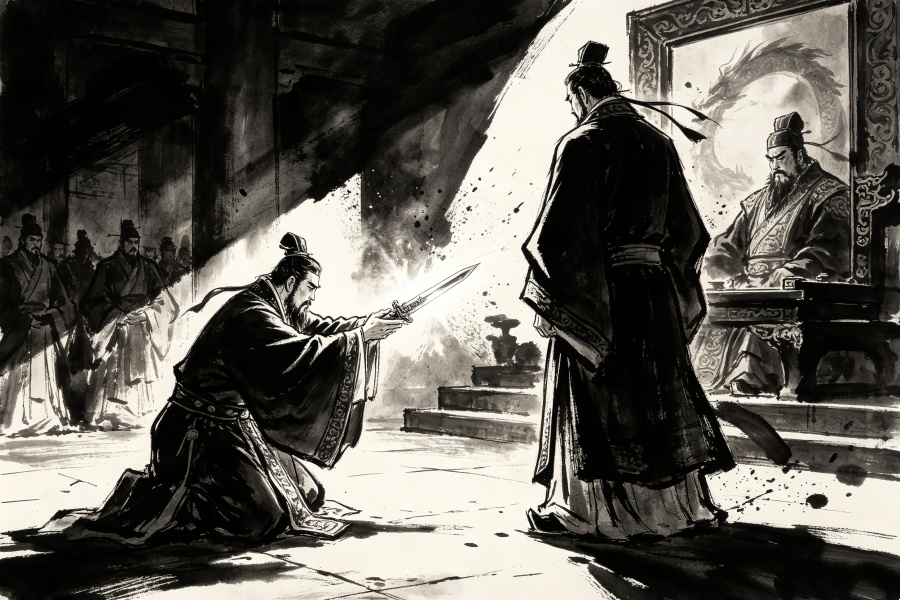
Dong Zhuo rules the court with terror, and no one dares to stand against him. But one night, in a quiet room full of weeping ministers, a single man laughs. His name is Cao Cao — and he has a plan. Borrowing a legendary dagger that cuts through iron like mud, he walks straight into the tyrant's chamber. One moment decides everything: a mirror, a turning head, a blade half-drawn. What happens next turns Cao Cao from an unknown official into a name that will shake the empire.
Dōnghàn mònián, Dǒng Zhuó dài bīng jìn jīng, kòngzhì le cháotíng. Tā fēicháng cánbào, suíyì shāhài dàchén hé bǎixìng. Hěnduō fǎnduì tā de dàchén bèi tā shāhài. Huángdì chéng le tā de kuǐlěi, méiyǒu rén gǎn fǎnkàng tā.
东汉末年,董卓带兵进京,控制了朝廷。他非常残暴,随意杀害大臣和百姓。很多反对他的大臣被他杀害。皇帝成了他的傀儡,没有人敢反抗他。
In the last years of the Eastern Han dynasty, Dong Zhuo brought his troops into the capital and took control of the court. He was extremely cruel and killed ministers and common people at will. Many ministers who opposed him were killed by him. The emperor became his puppet, and no one dared to resist him.
Dǒng Zhuó jìn jīng hòu, búdàn méiyǒu bāngzhù cháotíng, fǎn'ér zìjǐ zhǎngwò le cháozhōng dàquán. Dàchén Wáng Yǔn fēicháng tònghèn Dǒng Zhuó, wèile chúdiào Dǒng Zhuó, tā rìyè xiǎng bànfǎ.
董卓进京后,不但没有帮助朝廷,反而自己掌握了朝中大权。大臣王允非常痛恨董卓,为了除掉董卓,他日夜想办法。
After Dong Zhuo entered the capital, he not only did not help the court, but instead took control of the government himself. The minister Wang Yun deeply hated Dong Zhuo. In order to get rid of Dong Zhuo, he thought of ways day and night.
Yǒu yì tiān, Wáng Yǔn jiǎzhuāng guò shēngrì, yāoqǐng le yìxiē dàchén dào jiā lǐ shāngliang dàshì. Dàjiā shuō zhe shuō zhe dōu kū le qǐlái, zhǐyǒu yí ge rén hāhā dàxiào.
有一天,王允假装过生日,邀请了一些大臣到家里商量大事。大家说着说着都哭了起来,只有一个人哈哈大笑。
One day, Wang Yun pretended to celebrate his birthday and invited some ministers to his home to discuss important matters. As they talked, everyone began to cry, but one man laughed out loud.
Zhè ge rén jiào Cáo Cāo, zì Mèngdé. Tā xiào zhe shuō: “Nǐmen kū néng bǎ Dǒng Zhuó kū sǐ ma? Wǒ yǒu bànfǎ chúdiào tā!” Wáng Yǔn wèn tā yǒu shénme bànfǎ.
这个人叫曹操,字孟德。他笑着说: "你们哭能把董卓哭死吗?我有办法除掉他!" 王允问他有什么办法。
This man was Cao Cao, whose courtesy name was Mengde. He laughed and said, "Can your crying kill Dong Zhuo? I have a plan to get rid of him!" Wang Yun asked him what his plan was.
Cáo Cāo shuō: “Tīngshuō nǐ yǒu yì bǎ Qīxīng Bǎodāo, xuē tiě rú ní. Wǒ yuànyì jiè zhè bǎ dāo, jiǎzhuāng xiàn gěi Dǒng Zhuó, chèn tā bú zhùyì, cìshā tā!” Wáng Yǔn tīng le fēicháng gǎndòng, bǎ bǎodāo jiāo gěi le Cáo Cāo.
曹操说: "听说你有一把七星宝刀,削铁如泥。我愿意借这把刀,假装献给董卓,趁他不注意,刺杀他!" 王允听了非常感动,把宝刀交给了曹操。
Cao Cao said, "I heard you have a Seven-Star Treasure Dagger that can cut through iron like mud. I am willing to borrow this dagger, pretend to offer it to Dong Zhuo, and take the chance when he is not paying attention to assassinate him!" Wang Yun was deeply moved and handed the dagger to Cao Cao.
Dì-èr tiān, Cáo Cāo dài zhe bǎodāo lái jiàn Dǒng Zhuó. Dǒng Zhuó zhèng zuò zài chuáng shàng, Lǚ Bù zhàn zài pángbiān. Cáo Cāo duì Dǒng Zhuó shuō: “Wǒ de mǎ tài shòu le, zǒu bú kuài.”
第二天,曹操带着宝刀来见董卓。董卓正坐在床上,吕布站在旁边。曹操对董卓说: "我的马太瘦了,走不快。"
The next day, Cao Cao came to see Dong Zhuo with the treasure dagger. Dong Zhuo was sitting on the bed, and Lü Bu was standing beside him. Cao Cao said to Dong Zhuo, "My horse is too thin and cannot run fast."
Dǒng Zhuó jiù ràng Lǚ Bù qù gěi Cáo Cāo xuǎn yì pǐ hǎo mǎ. Lǚ Bù yì chūqù, Dǒng Zhuó jiù cè shēn tǎng xià xiūxi. Cáo Cāo xīn xiǎng: “Jīhuì lái le!” Tā zhèng yào bá dāo.
董卓就让吕布去给曹操选一匹好马。吕布一出去,董卓就侧身躺下休息。曹操心想: "机会来了!"他正要拔刀。
Dong Zhuo then told Lü Bu to go and choose a good horse for Cao Cao. As soon as Lü Bu went out, Dong Zhuo turned over and lay down to rest. Cao Cao thought to himself, "Here's my chance!" He was about to draw the dagger.
Dǒng Zhuó cóng jìngzi lǐ kàn dào le Cáo Cāo de dòngzuò, měng de huítóu wèn: “Nǐ yào gàn shénme?” Zhè shí, Lǚ Bù yě zhènghǎo qiān mǎ huílái le.
董卓从镜子里看到了曹操的动作,猛地回头问: "你要干什么?" 这时,吕布也正好牵马回来了。
Dong Zhuo saw Cao Cao's movement in the mirror and suddenly turned around and asked, "What are you doing?" At that moment, Lü Bu also happened to return with the horse.
Cáo Cāo xià huài le, lìkè guì xià, shuāngshǒu jǔ zhe bǎodāo shuō: “Wǒ dédào le yì bǎ Qīxīng Bǎodāo, xiǎng xiàn gěi chéngxiàng.” Dǒng Zhuó jiē guò bǎodāo kàn le kàn, juéde hěn búcuò, jiù ràng Cáo Cāo chūqù le.
曹操吓坏了,立刻跪下,双手举着宝刀说: "我得到了一把七星宝刀,想献给丞相。" 董卓接过宝刀看了看,觉得很不错,就让曹操出去了。
Cao Cao was terrified. He immediately knelt down, held up the dagger with both hands, and said, "I obtained a Seven-Star Treasure Dagger and wanted to present it to you, Chancellor." Dong Zhuo took the dagger, looked at it, thought it was quite good, and let Cao Cao leave.
Cáo Cāo zhīdào Dǒng Zhuó hěn kuài jiù huì huáiyí tā, suǒyǐ yì chū xiàngfǔ, qí shàng mǎ jiù fēikuài de táo zǒu le. Tā táo chū le Luòyáng chéng, liányè gǎn lù, pǎo le jǐ bǎi lǐ lù.
曹操知道董卓很快就会怀疑他,所以一出相府,骑上马就飞快地逃跑了。他逃出了洛阳城,连夜赶路,跑了几百里路。
Cao Cao knew that Dong Zhuo would soon suspect him, so as soon as he left the chancellor's residence, he mounted his horse and fled quickly. He escaped from Luoyang and traveled through the night, covering hundreds of miles.
Guǒrán, Dǒng Zhuó hòulái xiǎng le xiǎng, juéde bú duìjìn, shuō: “Zhè Cáo Cāo, gāngcái hǎoxiàng shì xiǎng shā wǒ!” Tā lìkè xiàlìng quánguó tōngjī Cáo Cāo.
果然,董卓后来想了想,觉得不对劲,说: "这曹操,刚才好像是想杀我!" 他立刻下令全国通缉曹操。
Sure enough, Dong Zhuo later thought about it and felt something was wrong. He said, "This Cao Cao — it seemed like he wanted to kill me just now!" He immediately ordered a nationwide manhunt for Cao Cao.
Cáo Cāo suīrán méi néng chénggōng cìshā Dǒng Zhuó, dàn tā de yǒnggǎn hé jīzhì què ràng tā míng yáng tiānxià. Cóngcǐ, Cáo Cāo kāishǐ zhāobīng-mǎimǎ, zǒu shàng le zhēngduó tiānxià de dàolù.
曹操虽然没能成功刺杀董卓,但他的勇敢和机智却让他名扬天下。从此,曹操开始招兵买马,走上了争夺天下的道路。
Although Cao Cao failed to assassinate Dong Zhuo, his bravery and quick thinking made him famous throughout the land. From then on, Cao Cao began to recruit soldiers and buy horses, embarking on the path to compete for the empire.
董卓
Dǒng Zhuó
Dong Zhuo (d. 192), a cruel warlord of the late Eastern Han dynasty
Proper Noun
董卓是东汉末年有名的残暴军阀。
Dǒng Zhuó shì Dōnghàn mònián yǒumíng de cánbào jūnfá.
Dong Zhuo was a famously cruel warlord in the late Eastern Han dynasty.
朝廷
cháotíng
imperial court; government
Noun
如果朝廷不关心百姓,国家就很难稳定。
Rúguǒ cháotíng bù guānxīn bǎixìng, guójiā jiù hěn nán wěndìng.
If the imperial court does not care about the people, it is hard for the country to remain stable.
残暴
cánbào
cruel and violent; brutal
Adjective
那个残暴的国王最终被人民推翻了。
Nàge cánbào de guówáng zuìzhōng bèi rénmín tuīfān le.
That cruel king was eventually overthrown by the people.
傀儡
kuǐlěi
puppet; figurehead
Noun
他只是个傀儡,真正做决定的是别人。
Tā zhǐshì ge kuǐlěi, zhēnzhèng zuò juédìng de shì biérén.
He is just a puppet; someone else makes the real decisions.
王允
Wáng Yǔn
Wang Yun (137–192), a minister in the late Eastern Han dynasty
Proper Noun
王允为了除掉董卓,想了很多办法。
Wáng Yǔn wèile chúdiào Dǒng Zhuó, xiǎng le hěnduō bànfǎ.
Wang Yun thought of many ways to get rid of Dong Zhuo.
痛恨
tònghèn
to hate deeply; to detest
Verb
他痛恨那些欺骗老百姓的人。
Tā tònghèn nàxiē qīpiàn lǎobǎixìng de rén.
He deeply hates those who deceive ordinary people.
除掉
chúdiào
to get rid of; to eliminate
Verb
他们想除掉这个坏人,但一直找不到机会。
Tāmen xiǎng chúdiào zhège huàirén, dàn yìzhí zhǎo bú dào jīhuì.
They wanted to get rid of this villain but could never find a chance.
假装
jiǎzhuāng
to pretend
Verb
他假装睡着了,其实一直在听。
Tā jiǎzhuāng shuìzháo le, qíshí yìzhí zài tīng.
He pretended to be asleep, but actually he was listening all along.
商量
shāngliang
to discuss; to talk over
Verb
这件事很重要,我们需要一起商量。
Zhè jiàn shì hěn zhòngyào, wǒmen xūyào yìqǐ shāngliang.
This matter is important; we need to discuss it together.
曹操
Cáo Cāo
Cao Cao (155–220), courtesy name Mengde, founder of Wei and a major figure of the Three Kingdoms
Proper Noun
曹操不仅是军事家,也是一位诗人。
Cáo Cāo bùjǐn shì jūnshìjiā, yě shì yí wèi shīrén.
Cao Cao was not only a military strategist but also a poet.
孟德
Mèngdé
Mengde; the courtesy name of Cao Cao
Proper Noun
曹操字孟德,这是历史上有名的。
Cáo Cāo zì Mèngdé, zhè shì lìshǐ shàng yǒumíng de.
Cao Cao's courtesy name was Mengde — this is famous in history.
办法
bànfǎ
method; way; solution
Noun
遇到问题不要着急,我们一定能找到办法。
Yùdào wèntí búyào zháojí, wǒmen yídìng néng zhǎodào bànfǎ.
Don't worry when you meet problems; we will definitely find a solution.
七星宝刀
Qīxīng Bǎodāo
the Seven-Star Treasure Dagger; a legendary sharp dagger in Romance of the Three Kingdoms
Proper Noun
传说七星宝刀非常锋利,能削铁如泥。
Chuánshuō Qīxīng Bǎodāo fēicháng fēnglì, néng xuē tiě rú ní.
Legend says the Seven-Star Treasure Dagger is extremely sharp and can cut through iron like mud.
削铁如泥
xuē tiě rú ní
(of a blade) able to cut through iron as if it were mud; extremely sharp
Idiom
这把剑削铁如泥,是一件难得的宝物。
Zhè bǎ jiàn xuē tiě rú ní, shì yí jiàn nándé de bǎowù.
This sword can cut through iron like mud — it is a rare treasure.
献给
xiàn gěi
to present to; to offer to
Verb
他把这幅画献给了博物馆。
Tā bǎ zhè fú huà xiàn gěi le bówùguǎn.
He presented this painting to the museum.
刺杀
cìshā
to assassinate
Verb
刺客想刺杀国王,但没有成功。
Cìkè xiǎng cìshā guówáng, dàn méiyǒu chénggōng.
The assassin tried to assassinate the king but failed.
感动
gǎndòng
to be moved; touched
Verb / Adjective
他的故事让所有在场的人都非常感动。
Tā de gùshi ràng suǒyǒu zàichǎng de rén dōu fēicháng gǎndòng.
His story deeply moved everyone present.
吕布
Lǚ Bù
Lü Bu (d. 199), courtesy name Fengxian, a famous warrior of the late Eastern Han dynasty
Proper Noun
吕布是三国时期最勇猛的武将之一。
Lǚ Bù shì Sānguó shíqī zuì yǒngměng de wǔjiàng zhī yī.
Lü Bu was one of the fiercest warriors of the Three Kingdoms period.
丞相
chéngxiàng
chancellor; prime minister (in ancient China)
Noun
古代丞相的权力很大,常常帮助皇帝处理国家大事。
Gǔdài chéngxiàng de quánlì hěn dà, chángcháng bāngzhù huángdì chǔlǐ guójiā dàshì.
In ancient times, the chancellor held great power and often helped the emperor handle state affairs.
镜子
jìngzi
mirror
Noun
她站在镜子前整理衣服。
Tā zhàn zài jìngzi qián zhěnglǐ yīfu.
She stood in front of the mirror adjusting her clothes.
动作
dòngzuò
movement; action
Noun
他的动作很快,大家都没看清。
Tā de dòngzuò hěn kuài, dàjiā dōu méi kàn qīng.
His movements were so fast that no one could see clearly.
跪下
guìxià
to kneel down
Verb
他跪下向父母道歉。
Tā guìxià xiàng fùmǔ dàoqiàn.
He knelt down to apologize to his parents.
怀疑
huáiyí
to suspect; suspicion
Verb / Noun
警察怀疑他和小偷有关系。
Jǐngchá huáiyí tā hé xiǎotōu yǒu guānxi.
The police suspect he has a connection with the thief.
逃跑
táopǎo
to run away; to escape
Verb
小偷看见警察就逃跑了。
Xiǎotōu kànjiàn jǐngchá jiù táopǎo le.
The thief ran away as soon as he saw the police.
洛阳
Luòyáng
Luoyang; the capital of the Eastern Han dynasty
Proper Noun
洛阳是东汉的首都,历史非常悠久。
Luòyáng shì Dōnghàn de shǒudū, lìshǐ fēicháng yōujiǔ.
Luoyang was the capital of the Eastern Han dynasty and has a very long history.
连夜
liányè
the same night; through the night
Adverb
他连夜赶回家里,因为母亲生病了。
Tā liányè gǎn huí jiā lǐ, yīnwèi mǔqīn shēngbìng le.
He hurried home through the night because his mother was sick.
通缉
tōngjī
to manhunt; to pursue and arrest (a wanted person)
Verb
警察在全国通缉那个危险人物。
Jǐngchá zài quánguó tōngjī nàge wēixiǎn rénwù.
The police are hunting for that dangerous person nationwide.
名扬天下
míng yáng tiānxià
to become famous throughout the land
Idiom
他的英雄事迹让他名扬天下。
Tā de yīngxióng shìjì ràng tā míng yáng tiānxià.
His heroic deeds made him famous throughout the land.
招兵买马
zhāobīng-mǎimǎ
to recruit soldiers and buy horses; to raise an army
Idiom
为了争夺天下,他开始招兵买马。
Wèile zhēngduó tiānxià, tā kāishǐ zhāobīng-mǎimǎ.
In order to compete for the empire, he began to recruit soldiers and buy horses.
勇敢
yǒnggǎn
brave; courageous
Adjective
勇敢的人不怕困难。
Yǒnggǎn de rén bú pà kùnnan.
Brave people are not afraid of difficulties.
机智
jīzhì
quick-witted; resourceful
Adjective
他非常机智,很快就想出了解决办法。
Tā fēicháng jīzhì, hěn kuài jiù xiǎng chū le jiějué bànfǎ.
He was very quick-witted and soon came up with a solution.
争夺
zhēngduó
to fight for; to compete for
Verb
很多球队都想争夺这个冠军。
Hěnduō qiúduì dōu xiǎng zhēngduó zhège guànjūn.
Many teams want to compete for this championship.
天下
tiānxià
the world; the empire; all under heaven
Noun
古人常说"天下兴亡,匹夫有责"。
Gǔrén cháng shuō "tiānxià xīngwáng, pǐfū yǒu zé".
The ancients often said, "Every man is responsible for the rise and fall of the world."
为了…… (wèile…)
This structure means "in order to" or "for the purpose of." It introduces the goal or purpose of an action. It can appear at the beginning of a sentence or after the subject. The clause after 为了 gives the action taken to achieve the goal.
为了通过考试,他每天复习到很晚。
Wèile tōngguò kǎoshì, tā měitiān fùxí dào hěn wǎn.
In order to pass the exam, he reviews until very late every day.
为了身体健康,我们应该多运动。
Wèile shēntǐ jiànkāng, wǒmen yīnggāi duō yùndòng.
For the sake of good health, we should exercise more.
她为了帮助朋友,放弃了自己的休息时间。
Tā wèile bāngzhù péngyou, fàngqì le zìjǐ de xiūxi shíjiān.
In order to help her friend, she gave up her own rest time.
不但……反而…… (búdàn…fǎn'ér…)
This structure means "not only did X not happen, but instead Y happened." It is used when the result is the opposite of what was expected. The first clause often contains a negative expression like 没有, 不, or 没. The second clause with 反而 gives the surprising or contrary result. It is stronger than 不但……而且…… because it emphasizes contrast.
他不但没有生气,反而笑了起来。
Tā búdàn méiyǒu shēngqì, fǎn'ér xiào le qǐlái.
Not only did he not get angry, but instead he started laughing.
吃了药以后,他的病不但没有好,反而更严重了。
Chī le yào yǐhòu, tā de bìng búdàn méiyǒu hǎo, fǎn'ér gèng yánzhòng le.
After taking the medicine, his illness not only didn't improve but instead became worse.
天气不但没有变暖,反而越来越冷了。
Tiānqì búdàn méiyǒu biàn nuǎn, fǎn'ér yuè lái yuè lěng le.
The weather not only didn't get warmer but instead became colder and colder.
趁…… (chèn…)
This structure means "taking advantage of" or "while." It introduces a favorable opportunity or situation for doing something. The clause after 趁 gives the action taken during that opportunity. It is often used in spoken and written Chinese.
趁天气好,我们去公园散步吧。
Chèn tiānqì hǎo, wǒmen qù gōngyuán sànbù ba.
While the weather is nice, let's go for a walk in the park.
他趁我不注意,拿走了我的书。
Tā chèn wǒ bú zhùyì, ná zǒu le wǒ de shū.
He took my book while I wasn't paying attention.
趁年轻,我们应该多学习。
Chèn niánqīng, wǒmen yīnggāi duō xuéxí.
While we are young, we should study more.
一……就…… (yī…jiù…)
This structure means "as soon as X happens, Y happens." It describes two actions or events that happen immediately one after another. Pay attention to tone changes: 一 is yí before a 4th-tone word, and yì before 1st, 2nd, or 3rd tone.
他一听到这个消息,就立刻赶回家。
Tā yì tīngdào zhège xiāoxi, jiù lìkè gǎn huí jiā.
As soon as he heard the news, he hurried home immediately.
孩子们一放学,就跑向操场。
Háizimen yí fàngxué, jiù pǎo xiàng cāochǎng.
As soon as the children finished school, they ran to the playground.
他一生气,就不说话。
Tā yì shēngqì, jiù bù shuōhuà.
As soon as he gets angry, he stops talking.
×
📖 Vocab
术语
词性
pīn yīn
English
0:00
0:00
Subscribe
Login
0 Comments
Oldest
Newest
Most Voted
